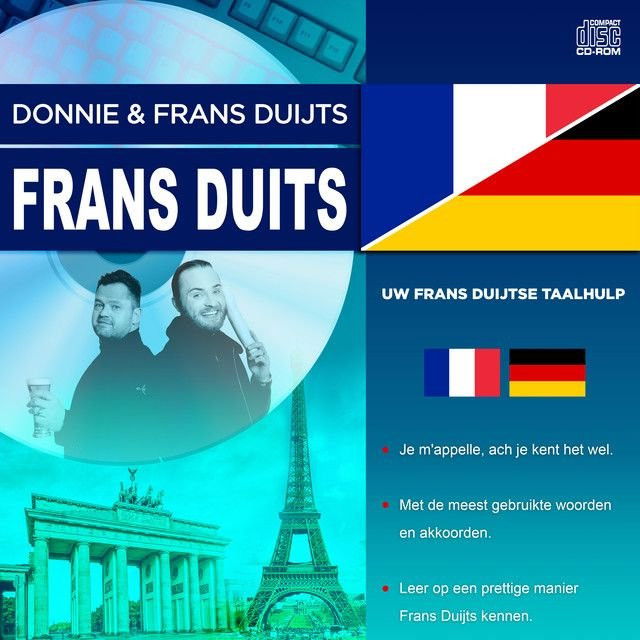
Frans Duits by Donnie, Frans Duijts
A party song with a very simple problem
The meaning of Frans Duits Donnie, Frans Duijts starts with a joke that is easy to hear even for listeners who do not speak Dutch. A man meets someone he likes, but the moment she starts talking, he is lost. She speaks in French and German, he does not understand, and his confidence falls apart.
"Frans Duits" - Donnie, Frans Duijts
Ach, je het het wel
Gap, ik weet niet eens wat het betekent
Loading lyrics...
Unable to load lyrics
We're unable to display the lyrics at this time. Please try again later.
That setup gives the song its comic spark. But it also explains why the track worked so well in the Netherlands: it combines a pub-singalong hook with Donnie’s playful rap style and Frans Duijts’ schlager-friendly presence. Donnie, born Donny Björn Stefan Ellerström, is a Dutch rapper and singer known for mixing hip-hop with Dutch popular song forms, a blend later associated with his self-described “kibbelingsound,” according to his career overview on Wikipedia.
Watch the official Frans Duits
music video
What the song is really saying
At its core, the song is about flirtation disrupted by a language barrier. The narrator is interested right away, but every exchange becomes a mess. He hears phrases like je m'apelle
and auf wiedersehen
, yet he admits he does not really know what they mean in the moment.
That matters because the song never presents him as smooth or in control. Instead, he becomes the butt of the joke. He tries to improvise, guesses at words, and finally relies on gestures instead of speech. The comedy comes from overconfidence crashing into reality.
Interpretation: beneath the humor, the track is about how attraction often begins before understanding does. They feel the pull first, then discover that connection is harder than they hoped.
The chorus turns confusion into a punchline
The chorus is where the song locks in its identity. The repeated idea that she speaks een beetje Frans en Duits
turns a failed conversation into a catchy refrain. It is not just plot summary; it is the whole comic engine.
There is also a second layer to the title and hook. “Frans Duits” sounds like “French-German,” but it also cues the guest artist Frans Duijts. When the song throws in Hé Frans Duijts, Frans?
, it folds the feature into the joke itself. That pun makes the collaboration feel built into the writing, not added later.
For American listeners, that is a big part of why the song travels even without full lyrical understanding. The structure is broad, repetitive, and musical enough to communicate the gag quickly.
How the verses build the story
The verses move like short scenes from a night out:
- They meet someone intriguing.
- She speaks, and the narrator freezes.
- He tries scraps of foreign language.
- He falls back on body language and bravado.
- He still cannot close the gap.
Small phrases sharpen each beat. When he says ik weet niet eens
, the song stresses confusion instead of romance. Later, the idea of using handen en voeten
shows that communication has dropped to its most basic form: gestures, facial expressions, and desperation.
That keeps the song lively. Rather than turning serious, it keeps finding new ways to restage the same embarrassment.
Why the humor works
Donnie’s writing here depends on deliberate foolishness. He uses half-correct expressions, awkward cultural references, and clumsy flirting to show a narrator who thinks he is resourceful but clearly is not. The song does not celebrate mastery; it celebrates the mess.
That is where Frans Duijts helps. He has a strong association with Dutch singalong music, so his presence grounds the song in a warm, communal party atmosphere rather than sharp satire. The result feels inclusive: listeners laugh at the narrator, but they can also recognize themselves in him.
Interpretation: the track suggests that nightlife flirting is often performance. People act more confident than they are, especially when they feel out of their depth.
Sound, style, and the Donnie formula
Musically, “Frans Duits” fits the crossover lane Donnie became known for in the early 2020s. Wikipedia notes that since 2020 he has blended hip-hop with levenslied and party-pop styles, with “Frans Duits” listed among the key examples. That matters because the song’s meaning is carried as much by sound as by words.
The production is upbeat, bouncy, and built for repetition. The chorus lands like a terrace chant or bar anthem, while the verses leave room for Donnie’s conversational delivery. Frans Duijts adds a more classic, full-throated melodic touch, making the track feel both comic and communal.
This mix helps explain its success. According to Wikipedia’s chart summary, “Frans Duits” reached No. 19 on the Dutch Top 40 and No. 10 on the Dutch Single Top 100. That reception suggests listeners heard more than a one-line joke; they heard a durable party record with a strong cultural hook.
A song about not understanding
One clever thing about the meaning of Frans Duits Donnie, Frans Duijts is that the song itself lets listeners share the narrator’s confusion. If someone does not speak Dutch, French, or German, they experience a smaller version of the same uncertainty. Yet the performance is so expressive that the main emotion still gets through.
That makes the song more universal than it first appears. Plenty of pop songs are about heartbreak or desire. This one is about the awkward middle stage, when attraction is real but communication is weak.
The takeaway behind the laugh
“Frans Duits” is a novelty hit with a solid human idea underneath it. It turns miscommunication into rhythm, repetition, and character comedy. The narrator wants a romantic connection, but all he can really manage is panic, guessing, and a memorable hook.
In that sense, the song is not just about foreign languages. It is about the everyday fear of sounding foolish in front of someone impressive. That is why the joke lasts beyond the first listen.
Disclaimer: This article offers an informed interpretation of the song based on the lyrics, artist context, and public information. As with any song, meaning can vary from listener to listener.








