That’s What I Believe by Donnie McClurkin
The meaning of That's What I Believe Donnie McClurkin centers on active faith. This is not a quiet, private meditation. It is a gospel testimony about coming to God with need, trusting divine promises, and expecting real change.
"That's What I Believe" - Donnie McClurkin
You'd keep me in perfect peace, yes You would
(You'd keep me in perfect peace)
Loading lyrics...
Unable to load lyrics
We're unable to display the lyrics at this time. Please try again later.
Donnie McClurkin has long been known for music that joins personal struggle with public worship. In that setting, this song works like a declaration. They present belief not as a vague feeling, but as a decision to stand on promises of peace, deliverance, salvation, and healing.
A Gospel Song Built on Expectation
At its core, the song says that faith means showing up with confidence. The speaker comes needing help and leaves expecting transformation. Early lines refer to God’s promise of perfect peace
, then connect that promise to a focused mind and a sincere heart. In simple terms, the song argues that trust opens the door to comfort and strength.
The chorus makes the message plain. When they sing I came for deliverance
, the line frames worship as an encounter with purpose. This is not passive listening. The speaker arrives with pain, bondage, or burden, and answers that need with belief.
Interpretation: The song’s deepest meaning is not only that God can help, but that the believer must receive that help by faith. The repeated claim that that’s what I believe
turns theology into testimony.
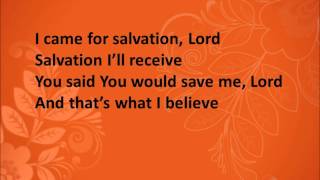
Watch the official That's What I Believe
music video
How the Lyrics Move From Promise to Personal Claim
One of the strongest features of the song is its step-by-step movement. It begins with remembered promises. It then moves into personal response. Finally, it rises into public declaration.
That sequence matters:
- God has already promised peace, presence, and provision.
- The believer answers those promises with trust.
- That trust becomes expectation for change.
- The congregation is invited to share that same faith.
The middle section sharpens this idea. The speaker says they will not leave unchanged, using the brief phrase never gonna be the same
. Paraphrased, that means worship is not only emotional release. It is presented as a turning point.
By faith I receive it
Won't leave here like I came
This short passage captures the song’s emotional center. Faith is described as something immediate and practical. The person does not just hope in the abstract; they receive, claim, and expect.
Deliverance, Salvation, and Healing All Mean More Than One Thing
The song repeats several key needs: deliverance, salvation, hearing God’s word, and healing. In gospel music, each of these can carry both spiritual and everyday meaning.
Deliverance can mean freedom from sin, fear, addiction, grief, or oppression. Salvation points to redemption in the Christian sense, but also to rescue and renewal. Healing may refer to the body, but in worship language it often includes emotional wounds and inward restoration.
That range gives the song broad power. A listener may hear one line as a prayer for physical recovery, while another hears it as release from guilt or despair. McClurkin leaves room for both.
Interpretation: That openness is part of why the song connects so strongly in church settings. It meets different forms of need without changing its core message: God’s promises are available, and faith reaches for them.
Why the Repetition Is the Point
Some listeners who do not know gospel traditions may notice how often the main ideas return. In this song, repetition is not filler. It is the method.
Gospel songs often build meaning through insistence. Each repeated statement deepens conviction, much like a sermon response or congregational prayer. When McClurkin circles back to healing and deliverance, they are reinforcing trust until it becomes communal certainty.
That design also mirrors the emotional journey of faith. People often need to say something more than once before they fully believe it. So the song’s repeated phrases sound like spiritual practice, not just songwriting structure.
How the Sound Supports the Message
McClurkin’s style sits within contemporary gospel, shaped by church call-and-response, strong lead vocals, and a rising arrangement. Their broader career, documented by the Gospel Music Hall of Fame and Encyclopaedia Britannica, shows a consistent focus on testimony-driven gospel performance.
In this song, the likely impact comes from layered vocals, steady rhythmic support, and dynamic repetition. The arrangement is built to grow. Instead of chasing surprise, it aims for assurance.
That matters for meaning. A calm opening around promise and peace gives way to stronger declarations of healing and salvation. The music gradually sounds like a room full of people agreeing together. Production and performance, then, do more than decorate the lyric. They stage belief as something shared.
Artist Context Makes the Song Hit Harder
McClurkin’s public ministry and music often return to survival, recovery, and faith after suffering. That context shapes how many listeners hear this song. Even without attaching every line to biography, they bring a reputation for testimony music that treats belief as lived experience rather than theory.
Because of that, the song can feel especially direct. It is not written like a distant doctrinal essay. It sounds like someone urging a congregation to trust God now, in the middle of need, not later when life is easier.
The Lasting Meaning of That’s What I Believe
The meaning of That's What I Believe Donnie McClurkin is ultimately about confidence in divine promises. The song teaches that belief should move from memory to confession to expectation. It starts with what God said and ends with what the believer dares to receive.
For many listeners, that is why the song endures. It gives language to the moment when hope becomes a choice. Rather than asking whether change is possible, it answers with faith.
Interpretation disclaimer: This reading is an informed interpretation based on the lyrics, gospel tradition, and Donnie McClurkin’s public artistic context. Individual listeners may hear its message differently.








