Why Donny Hathaway's 'The Ghetto' Still Hits
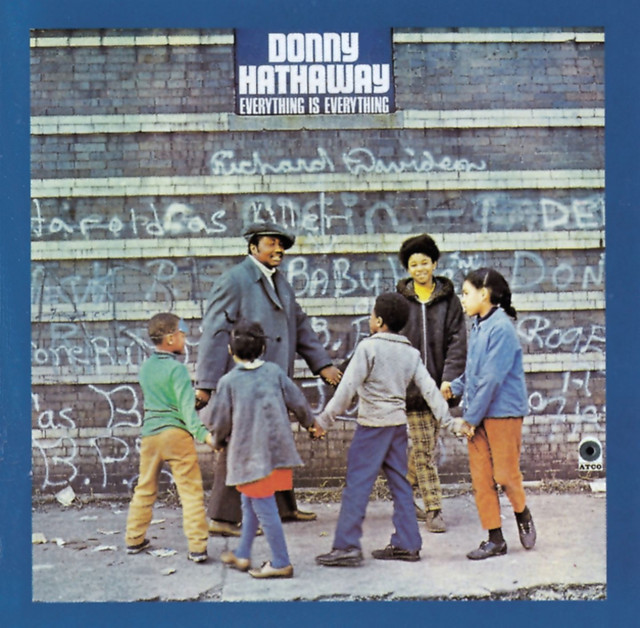
The meaning of The Ghetto Donny Hathaway starts with a bold choice: they made a song that says very little in a traditional lyrical sense, yet communicates a great deal. Released in 1969 as the lead single from Everything Is Everything, the track is widely described as a socially conscious, mostly instrumental soul-jazz statement. It was written by Donny Hathaway and Leroy Hutson, with production by Hathaway and Ric Powell.
"The Ghetto" - Donny Hathaway
Mm-hmm
Yes, this is the ghetto, sure 'nuff now
Loading lyrics...
Unable to load lyrics
We're unable to display the lyrics at this time. Please try again later.
Instead of a clean plot, the song offers a living environment. The repeated title, street-corner chatter, and restless groove make the neighborhood feel present, not abstract. That is why the song still lands: they are not just hearing about hardship; they are hearing what it feels like to live inside it.
More Than a Hook, It Becomes a Place
At the center of the song is the repeated phrase The ghetto
. Hathaway uses it less like a lyric hook and more like a drumbeat of reality. By saying the name over and over, they turn the setting into the whole message.
Interpretation: the repetition suggests that life in this space is cyclical. Problems return. Routines repeat. Escape is difficult. When the ad-lib says We ain't gettin' out
, the idea is blunt: the song hints at social confinement, not just a bad day.
That matters because the track came out in 1969, when many Black artists were making direct work about inequality, urban life, and political frustration. Hathaway’s version is unusual because it does not lecture. It immerses.
Watch the official The Ghetto
music video
Small Phrases, Big Social Meaning
Even though the lyrics are sparse, a few lines sharpen the song’s picture. When the voice says You better get a job
, the song points to economic pressure and judgment. Another line, Everything is everything
, sounds almost comforting, but in context it feels mixed: part reassurance, part survival slogan.
Then the mood darkens. Snatches of talk like give me your money
suggest danger and disorder. These are not detailed scenes. They are flashes, like overheard moments on a block where many things happen at once.
Interpretation: Hathaway and Hutson seem less interested in one character than in a whole social ecosystem. Poverty, crime, style, boredom, humor, and resilience all occupy the same space. That complexity keeps the song from becoming one-note misery.
The Sound Does the Heavy Lifting
A huge part of the meaning of The Ghetto Donny Hathaway comes from the arrangement. The recording is known for its Afro-Cuban feel, with congas, timbales, and a long, cinematic groove. Hathaway also played Wurlitzer electric piano and bass on the track, and he arranged and conducted it.
That musical design matters. The groove is warm, but it is also tense and circular. The percussion pushes forward while the vamp keeps returning to the same pocket. It feels like motion without release.
Street Noise as Storytelling
The production adds ambient details that make the song feel almost documentary-like. Sources note that the background includes the sound of men talking on a street corner and a baby crying, identified as Hathaway’s daughter Lalah. Those touches turn the song into a soundscape.
Rather than describing neighborhood life line by line, they let listeners hear fragments of it. The result is vivid: community is there, but so is stress. Beauty is there, but so is noise.
Pain, Pride, and Community at Once
One reason the song endures is that it refuses easy categories. It is clearly socially aware, but it is not only bleak. The groove has energy, style, and collective force. Even the repeated chants feel communal, as if many voices are carrying the same truth together.
Interpretation: the song may be read in two ways at once:
- as a critique of conditions that trap people in poverty and fear
- as a statement of presence, where life in the neighborhood has rhythm, culture, and dignity
That dual feeling is key. Hathaway does not flatten the ghetto into a stereotype. They present it as human, crowded, pressured, and alive.
Why the Mostly Instrumental Approach Works
Many protest or socially conscious songs rely on clear verses. Hathaway chooses the opposite. Because the track runs nearly seven minutes and remains largely instrumental, listeners have room to sit inside its mood.
That decision makes the song feel bigger than a slogan. It became a modest chart hit, reaching No. 87 on the Billboard Hot 100 and No. 23 on the Hot Soul Singles chart, but its long life comes more from influence than chart position. Later versions, live performances, and hip-hop sampling all show how durable its groove and message have been.
What the Song Finally Says
In the end, the meaning of The Ghetto Donny Hathaway is not hidden in complicated poetry. It lives in repetition, atmosphere, and tension. The song suggests that the ghetto is not just a location. It is a condition shaped by inequality, daily pressure, and endurance.
Just as important, Hathaway’s performance says that people inside that condition are still vibrant and visible. The music swings. The neighborhood speaks. The title keeps returning because the issue keeps returning.
That is what makes the song powerful more than fifty years later: it sounds like a warning, a witness, and a pulse of life all at once.
Disclaimer: This interpretation is based on the recording, available credits, and the song’s historical context. As with any art, listeners may hear its meaning differently.







