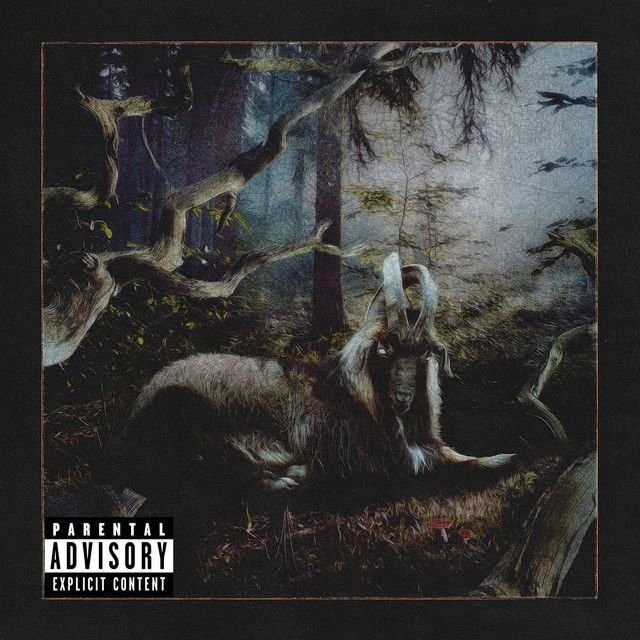
EAST by Earl Sweatshirt: Chaos With a Purpose
Why the meaning of EAST Earl Sweatshirt still sparks debate
The meaning of EAST Earl Sweatshirt keeps drawing people back because the song sounds jagged, cryptic, and almost hostile to easy answers. Instead of giving listeners a neat story, Earl Sweatshirt gives them fragments: memory, grief, pride, poison, family, and survival.
"EAST" - Earl Sweatshirt
Thirty racks of weed, no fat in the collard greens
Off top was me, no cap, I don't bottle things
Loading lyrics...
Unable to load lyrics
We're unable to display the lyrics at this time. Please try again later.
Released on Feet of Clay in 2019, the track arrived after the grief-heavy world of Some Rap Songs, the album Earl linked to his father’s death and to taking bigger creative risks. That matters here. Earl, born Thebe Kgositsile, is known for dense writing and a deep, inward style shaped by underground rap and lo-fi experimentation. In that context, “EAST” is not random. It is a hard, compressed portrait of a mind under pressure.

Watch the official EAST
music video
The song’s core idea: damage, endurance, and self-definition
At its center, “EAST” sounds like a statement of survival after innocence is gone. Earl moves through wealth, numbness, old pain, and spiritual fatigue, then keeps standing anyway. When they say my innocence was lost in the East
, the line works like the song’s emotional anchor. They are not describing one simple event. They are marking a before-and-after point in life.
Interpretation: the “East” may be a real place, but it also reads like a zone of hard experience. It could mean a neighborhood, a period of movement, or a mental landscape where trust disappeared. What matters is the loss itself: the speaker is no longer protected from reality.
The song also keeps returning to self-reliance. Earl says we all that we need
, which sounds tough and almost comforting. But the next emotional turn undercuts that comfort. This is not warm unity. It feels more like a survival rule learned after disappointment.
A speaker who is close to people, but still alone
One of the most revealing details is how quickly the song shifts between intimacy and distance. Earl mentions a girlfriend, grandmother, and father, yet none of those relationships feel stable or easy. Even affection gets interrupted by confusion, memory loss, or emotional withdrawal.
When they rap I lost my phone
, the line is funny on the surface, but it also becomes a symbol. Losing the device means losing contact, losing proof, and even losing feelings. In the song, modern connection is fragile. Love can disappear with the object that stores it.
Later, the line don’t call me brother no more
pushes that distance further. Earl sounds unwilling to accept fake closeness. They are drawing a boundary around who gets to claim kinship.
Family shadows run through the verses
Family images in “EAST” are brief but important. Grandmother rings suggest inheritance and memory. “Pop dukes” brings in the father figure directly, with longing and uncertainty attached. Earl’s complicated relationship with his father has been part of how listeners read his work, especially because Earl said that not getting full closure left him to figure things out alone.
That history does not “explain” every line, but it adds weight to this moment:
The wind whispered to me, “Ain’t it hard?”
Paraphrased, the world itself seems to ask whether carrying all this pain is difficult. The answer is obvious. The song is full of hardness, but it never pretends that hardness feels good.
How the beat changes the meaning
A big reason “EAST” became so talked about is the production. The beat loops a warped, accordion-like sample in a way that feels circular and uneasy. Many listeners found it funny, irritating, or hypnotic. That reaction is part of the point.
The instrumental does not support the verses in a smooth way. It traps them. Its repetitive wobble makes the song feel like a march through cramped thoughts. Instead of offering relief, the beat keeps pressing the same tension into the listener’s head.
Interpretation: this sound mirrors cognitive dissonance, which Earl names directly with cognitive dissonance shining
. The production and lyrics are both unstable, but carefully so. They create a world where clarity exists only in flashes.
Images of poison, prayer, and roots
The writing in “EAST” is packed with symbols. A canteen full of poison suggests dependence: the very thing that harms them is also what they carry to survive. Prayer appears too, but not in a peaceful church setting. It arrives in a haunted landscape, which makes spirituality feel desperate rather than settled.
Then there are the roots. Near the end, Earl describes growth that is widespread but not uniform. Some roots are flexible, some are wicked. That image fits the whole song. People come from tangled histories. They grow in damaged ground. Not all growth is clean.
Why the song felt shocking in 2019
By 2019, Earl had already moved far from the more straightforward rap of his early career. Critics had long praised his technical skill, and his later work embraced lo-fi loops, compressed vocals, and abstract writing. “EAST” pushed that style into an extreme form, so some listeners heard bold art while others heard a dare.
That split reaction matters because it reflects the song’s theme. Earl is not trying to be easy company here. They are making music that refuses comfort, just as the lyrics refuse neat emotional closure.
Final takeaway on EAST
The meaning of EAST Earl Sweatshirt is less about solving a puzzle than recognizing a state of being. The song captures a person shaped by grief, distrust, memory, and endurance, still trying to speak clearly inside a warped world.
Its strangest choice, the beat, is also its clearest message: this is what it sounds like when someone keeps moving after innocence is gone.
Disclaimer: This article offers interpretation based on the lyrics, artist context, and public information. Since Earl Sweatshirt writes in an abstract style, different readings can also be valid.








