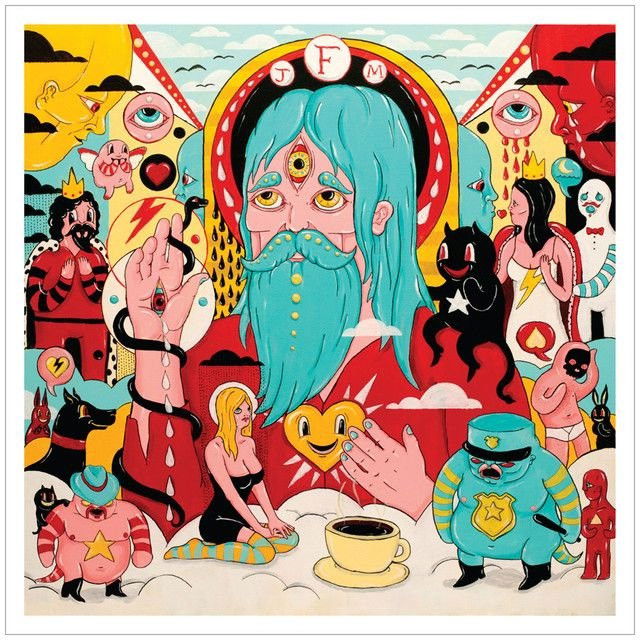
Hollywood Forever Cemetery Sings by Father John Misty
The meaning of Hollywood Forever Cemetery Sings Father John Misty starts with a bold contrast: lust and death in the same place. On the surface, the song tells a strange, vivid story about intimacy in a cemetery. Under that surface, it becomes a portrait of reckless desire, emotional confusion, and the way romance can feel theatrical when people are young, altered, and unsure what they really believe.
"Hollywood Forever Cemetery Sings" - Father John Misty
What are people gonna think
When I show up to one of several funerals
Loading lyrics...
Unable to load lyrics
We're unable to display the lyrics at this time. Please try again later.
Released in 2012, the song helped define the early Father John Misty persona on Fear Fun, the debut album Joshua Tillman made after leaving Fleet Foxes. That context matters. This was the period when they leaned into a character who sounded half sincere, half mocking, and fully aware of how messy modern desire can look.
A Love Song Set Against Death
The song’s central image is unforgettable: a couple getting physical at Hollywood Forever Cemetery. That setting is not just there for shock. It turns romance into something haunted, public, and slightly absurd.
The narrator opens with Jesus Christ, girl
, a phrase that sounds shocked, amused, and overwhelmed all at once. From there, they place the moment next to funerals, family grief, and social embarrassment. In plain terms, the song asks what happens when private desire crashes into public rituals of death.
Interpretation: the cemetery setting makes the couple’s passion look both intense and immature. They are acting as if desire can overpower mortality, but the graves around them keep proving otherwise.

Watch the official Hollywood Forever Cemetery Sings
music video
The Narrator Is Not Fully in Control
A key part of the song’s meaning is that the speaker does not sound stable or certain. They move quickly between swagger, confusion, and guilt. That instability shapes the whole track.
When the song mentions several funerals
for a grandfather, it creates a surreal, almost comic exaggeration. Whether listeners take that literally or as dark humor, the effect is the same: grief has become blurred, repetitive, and hard to process.
Later, the narrator remembers desire through a druggy haze, mentioning Adderall and weed
. That detail matters because it undercuts any simple reading of the scene as pure romance. Their memory is clouded. Their body is present, but their mind seems detached.
Desire and doubt in the same breath
One of the song’s sharpest turns comes when the speaker says I’m unsure of so many things
. After all the bravado, that confession changes the emotional center. It suggests that the song is not really about rebellion alone. It is also about uncertainty after the rush wears off.
Why the Refrain Hits So Hard
The repeated line Someone's gotta help me dig
works as the song’s emotional anchor. On one level, it fits the cemetery imagery. On another, it sounds like a cry for help.
Interpretation: “dig” may suggest burial, emotional labor, or the need to face consequences. The narrator wants pleasure without weight, but the refrain keeps pulling them back toward responsibility, mortality, and mess.
That double meaning is what gives the song depth. A lesser song would treat the cemetery as a joke. This one keeps asking what lies underneath the joke.
We should let this dead guy sleepIn context, that line sounds funny at first, but it also reminds listeners that the couple’s drama is tiny beside actual death.
Hollywood, Fantasy, and Performance
The title points to Hollywood Forever Cemetery, a real Los Angeles landmark known for famous burials and a strong cultural presence. That makes the setting more than gothic scenery. It ties the song to image-making, fame, and self-mythology.
Father John Misty often writes about performance: how people act out identities in love, in art, and in cities built on illusion. Here, the lovers seem to perform their own decadence. They are not just having an experience; they are almost staging one.
That idea lines up with how some critics heard the track. An A.V. Club essay described the song as a vehicle for fantasy and reinvention, especially through its glamorous, cemetery-in-LA imagery. That response is useful because it shows how the song can function symbolically: not just as a scene, but as an escape story.
How the Sound Deepens the Meaning
The production is a big reason the song lingers. Rather than sounding sparse or mournful, it feels heavy, driving, and seductive. The drums push forward, while the guitars bloom in a hazy wall of sound.
That matters because the music does not treat death as stillness. It makes death feel cinematic, almost sensual. The result is tension: the arrangement invites movement and desire, while the lyrics keep bringing listeners back to graves, funerals, and unease.
Their vocal delivery adds another layer. They sing with both drama and distance, as if they know the scene is ridiculous but still cannot resist it. That balance between commitment and irony is central to Father John Misty’s early work.
So What Is the Song Really Saying?
At its core, the meaning of Hollywood Forever Cemetery Sings Father John Misty is about trying to feel alive in the shadow of death. The song turns sex, grief, drugs, and Hollywood imagery into one unstable emotional experience.
Interpretation: it can be heard in two main ways:
- as a darkly comic story about reckless young desire
- as a deeper meditation on escapism, where pleasure becomes a way to avoid fear, grief, and uncertainty
Both readings fit. The song is memorable because it never fully chooses between satire and sincerity.
Final Take
“Hollywood Forever Cemetery Sings” lasts because it is more than shock value. It captures the weird mix of glamour, emptiness, longing, and self-awareness that Father John Misty does so well.
It lets listeners laugh at the scene, then feel the sadness beneath it. That tension is the song’s real power.
Disclaimer: This interpretation is based on the lyrics, recording context, and public critical discussion. As with most songs, meaning can vary from listener to listener.









