
Why Filter's 'It's Gonna Kill Me' Feels So Trapped
The meaning of It's Gonna Kill Me Filter comes down to a relationship that feels both addictive and destructive. The song presents someone who cannot think clearly, cannot act freely, and keeps circling the same painful truth: this connection is consuming them.
"It's Gonna Kill Me" - Filter
This girl's trying to kill me
She's my favorite piece of plastic held to my ear
Loading lyrics...
Unable to load lyrics
We're unable to display the lyrics at this time. Please try again later.
On the surface, the words are simple. Underneath, they suggest obsession, emotional dependence, and the way a romance can start to erase a person's sense of self. That tension fits Title of Record, Filter's 1999 second album, a record shaped by stress, reinvention, and personal fallout.
A love song with panic in its chest
The clearest clue is how the speaker describes the woman as a dangerous force. Early on, they say she is trying to kill me
, but the line feels more emotional than literal. It sounds like the pain of wanting someone so badly that the desire itself becomes toxic.
Then comes the strange image of a piece of plastic
held to the ear. Paraphrased, the woman is tied to the telephone, which suggests a relationship lived through calls, waiting, mixed signals, and distance. That image gives the song a modern kind of loneliness: the person is always connected, but never secure.
Interpretation: the track may be about how technology intensifies obsession. The phone keeps the relationship alive, but it also keeps the speaker suspended in uncertainty.
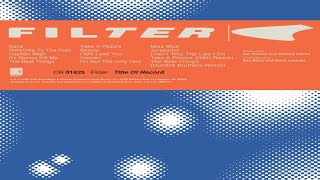
Watch the official It's Gonna Kill Me
music video
The real subject behind the song
There is useful context here. Title of Record was released on August 24, 1999, as Filter's second album, and it blended alternative rock, industrial metal, and hard rock during a difficult period for the band. Richard Patrick later revealed in anniversary liner notes that "Take a Picture," "Skinny" and "It's Going to Kill" were written about his relationship with D'arcy Wretzky during the making of the album. The album is also co-credited to Geno Lenardo on this track, and Patrick said Lenardo wrote the entire music for it.
Those facts matter because they anchor the song in lived experience, even if listeners should avoid treating every line as diary truth. The song is personal, but still stylized.
How the verses show someone losing control
The verses are full of blank spaces. The speaker keeps asking basic questions about where to go, what to say, and what things mean, only to answer with I don't know
. That repetition is not filler. It is the emotional point.
Instead of telling a detailed story, the song creates a mental state. The person is overwhelmed, passive, and dependent on the other person's cues. When they seem ready to speak for themselves, they fold back into whatever you say
. In plain terms, the relationship has become one-sided.
Three key emotional beats
- Attraction arrives with danger.
- Communication turns into confusion.
- The speaker loses confidence and agency.
That pattern makes the chorus feel earned rather than dramatic.
Why the chorus lands so hard
When the song returns to it's gonna kill me
, it works like a final diagnosis. The speaker is no longer just frustrated. They believe this attachment is slowly destroying them.
Interpretation: the phrase can mean several things at once:
- emotional exhaustion
- sexual obsession
- jealousy and dependence
- the fear of staying in a relationship they cannot control
Because the hook is so blunt, it leaves space for listeners to project their own version of heartbreak onto it. That is part of why the song still connects.
Night walking, dreaming, screaming
One of the strongest sections links physical movement with emotional unrest. The speaker talks about spending the night walking home, then dreaming, then screaming. Paraphrased, they are alone, restless, and unable to settle their mind.
I spent the night walking home
Spent the last night dreaming
I spent the last night screaming
This short sequence shows the cost of the relationship. It follows them out into the street, into sleep, and into their private thoughts. There is no calm anywhere.
The sound matches the emotional spiral
Filter's wider sound on Title of Record mixed heavy guitars with electronic textures and sharper melodic hooks. Reviews at the time often noted the album's tension and dynamics, and that matters for this song. Its structure mirrors the lyric's trapped feeling: repetition, pressure, and release that never fully frees the speaker.
Because Geno Lenardo wrote the music for this track, the arrangement deserves special attention. The riff-driven weight gives the song physical force, while the industrial edge makes it feel mechanical and claustrophobic. Instead of sounding romantic, it sounds cornered.
That production choice strengthens the song's meaning. The relationship does not feel warm or open. It feels like a loop.
Two strong ways to read it
Interpretation 1: A toxic romance. This is the most direct reading. The lyrics point to attraction mixed with fear, submission, and emotional damage.
Interpretation 2: Communication addiction. The phone image hints that the real trap is not only the woman, but the constant cycle of calling, waiting, and needing contact. In that reading, the song is about dependence itself.
Both can be true at once, which gives the track its staying power.
Why this song matters on Title of Record
The album went platinum in the United States and became one of Filter's defining releases. While songs like "Take a Picture" became bigger hits, this track helps explain the record's emotional center. It captures a person caught between desire and damage, speaking in short bursts because they can barely make sense of what they feel.
That is the heart of the meaning of It's Gonna Kill Me Filter: love as compulsion, confusion as a symptom, and repetition as proof that the speaker is stuck inside something they know is hurting them.
Disclaimer: This interpretation is based on the lyrics, album context, and public comments from the band. Like most songs, it can support more than one meaning.








