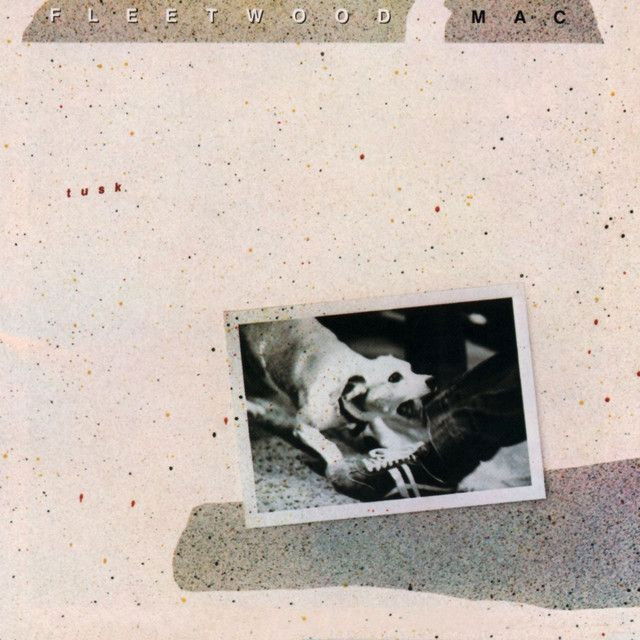
Why 'Tusk' Is Fleetwood Mac at Their Wildest
The meaning of Tusk Fleetwood Mac becomes clearer when they stop treating it like a puzzle with one answer and start hearing it as a burst of jealousy, desire, and rebellion.
"Tusk" - Fleetwood Mac
Provided by LyricFindWhy don't you ask him if he's going to stay?
Why don't you ask him if he's going away?
Why don't you tell me what's going on?Loading...Loading lyrics...
Unable to load lyrics
We're unable to display the lyrics at this time. Please try again later.
The Core Meaning Hides in Plain Sound
When people ask about the meaning of Tusk Fleetwood Mac, they often expect a neat storyline. But this song works differently. It gives just a few lines, then lets repetition, rhythm, and noise do the emotional heavy lifting.
At the lyric level, the song sounds like someone cornered by doubt. The speaker keeps pressing for the truth: is another person staying, leaving, or hiding something? Short lines like going to stay
and who's on the phone
suggest suspicion and emotional chaos.
Interpretation: the real subject is not the title word at all. It is the pain of wanting clarity from someone who will not speak plainly.

Watch the official Tusk
music video
A Love Song Stripped of Romance
What makes the lyric so striking is how little comfort it offers. Instead of asking for love, the speaker rejects empty reassurance. The sharpest moment comes when they push past sentiment and say don't say that you love me
before demanding tell me that you want me
.
That shift matters. Love can sound noble, but desire is immediate and honest. In this song, they seem to prefer raw truth over polished promises.
Interpretation: that is why the track feels so tense. It is not begging for tenderness. It is demanding emotional honesty, even if the answer hurts.
Lindsey Buckingham Built It to Resist Expectations
Factually, Tusk was written and sung by Lindsey Buckingham and released in 1979 as the title track from Fleetwood Mac's double album Tusk (Wikipedia). After the giant success of Rumours, many listeners expected another smooth, radio-friendly hit. Buckingham instead pushed toward something stranger.
He later described the track as the album's centerpiece and said it embodied a rebellion against expectations (Wikipedia). That context is important for meaning. The song is not only about romantic confusion; it also acts like a creative refusal.
So the meaning of Tusk Fleetwood Mac can be heard on two levels:
- a speaker demanding truth in a relationship
- a band refusing to repeat its old formula
Those two ideas fit together. Both are about rejecting safe, pretty surfaces.
The Title Is More Vibe Than Symbol
Listeners often search for a hidden code in the word Tusk
. But Buckingham reportedly said the title had no specific deeper meaning and was chosen because it sounded good (Wikipedia).
That does not make the title meaningless. It means the word works more like texture than plot. It feels primitive, hard, and slightly threatening. Even if there is no official symbol attached to it, the sound of the word helps create the song's mood.
Interpretation: many hear "tusk" as a stand-in for brute instinct. It suggests something animal, forceful, and hard to control, which matches the song's emotional state.
Why the Production Feels Like a Breakdown in Public
The sound of "Tusk" explains as much as the words do. Producers Richard Dashut and Ken Caillat helped turn Buckingham's riff into a drum-heavy, loop-driven track, using tape looping to create a hypnotic pulse (Wikipedia). That repeating beat makes the song feel obsessive, like a thought they cannot stop replaying.
Then comes the famous USC Trojan Marching Band. Mick Fleetwood helped bring in the band, and the group was recorded at Dodger Stadium with a mobile setup (Wikipedia). Instead of smoothing the song out, the horns and percussion make it bigger, stranger, and more chaotic.
That choice changes the meaning. A small relationship argument suddenly sounds like a parade, a ritual, or a public meltdown. Critics at the time called it eerie, dissonant, and mesmerizing rather than easy or accessible (Wikipedia).
How the Sound Supports the Lyrics
A few key choices carry the message:
- Repetition makes the anxiety feel trapped in a loop.
- Heavy drums turn emotional doubt into physical force.
- Marching-band blasts make private tension sound huge and theatrical.
- Group chants blur the line between inner voice and crowd noise.
In simple terms, the production says: this is not calm heartbreak. This is obsession with a beat.
Is It About a Specific Relationship?
Because Fleetwood Mac's history is full of real romantic fallout, some listeners connect "Tusk" to Lindsey Buckingham and Stevie Nicks. That idea appears often in fan discussions, but there is no firm evidence in the available sources that Buckingham confirmed the lyric is directly about that relationship.
So the safest reading is broader. The song captures a familiar emotional pattern: mistrust, need, and the urge to force honesty from someone who keeps their distance.
That wider reading may be why the song lasts. Even with very few words, it nails the feeling of being stuck between desire and doubt.
Why "Tusk" Still Matters
"Tusk" reached No. 8 on the Billboard Hot 100 and became one of Fleetwood Mac's most unusual hits (Wikipedia). That chart success matters because it proves something rare: a genuinely weird song can still connect with a mass audience.
The meaning of Tusk Fleetwood Mac is powerful because it lives in friction. The lyrics ask for truth, while the music sounds unstable and unruly. The title means little in a literal sense, but everything in an emotional one.
Takeaway: they turned a few nervous lines into a full-body experience of suspicion and desire. More than a standard breakup song, "Tusk" is what happens when relationship tension, artistic rebellion, and rhythm all charge at once.
Disclaimer: This article mixes verified background with clearly labeled interpretation. Because the song is intentionally abstract, some meanings remain open to listeners.







