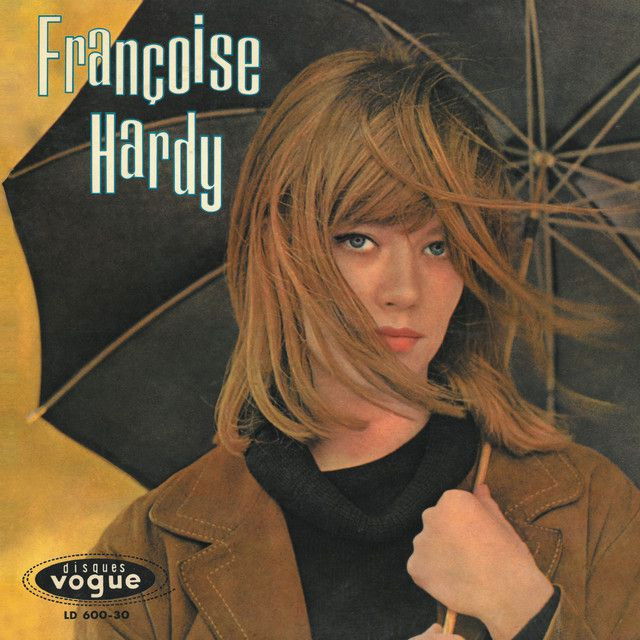
Why 'Le Temps de l'amour' Still Feels Young
The meaning of Le Temps de l'amour Françoise Hardy comes down to a simple but lasting idea: youth feels endless while it is happening, yet people understand its value most clearly after it has passed. Françoise Hardy's 1962 classic turns first love into a whole season of life—one filled with friends, excitement, innocence, and a little pain.
"Le Temps de l'amour" - Françoise Hardy
Le temps des copains
Et de l'aventure
Loading lyrics...
Unable to load lyrics
We're unable to display the lyrics at this time. Please try again later.
Rather than telling one detailed story, the song speaks in broad, shared emotions. That choice is a big reason it has lasted. It does not describe only one romance. It describes the age when romance seems to explain everything.
A Love Song About a Whole Time of Life
At its core, the song says that love is not just a person or a moment. It is a period of awakening. The famous refrain centers on le temps de l'amour
, which the lyric links to friendship and adventure. In plain terms, the song treats young love as part of a bigger world opening up.
That world feels carefree on the surface. The lyric suggests that when time moves on, young people think of nothing
, as if the future is too far away to matter. But the song does not pretend youth is painless. It briefly admits des blessures
—wounds or hurts—before returning to warmth and joy.
Interpretation: This balance is essential. The song is not naive because it knows growing up includes disappointment. Still, it argues that the emotional heat of first love outweighs those hurts in memory.
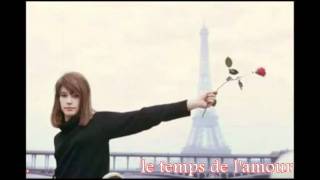
Watch the official Le Temps de l'amour
music video
The Big Idea Inside the Chorus
The chorus is memorable because it holds two opposite truths at once. It says this time is long et court
—both long and short. That paradox captures adolescence perfectly. While they are living it, it feels endless. Looking back, it seems brief.
The last idea in the refrain matters just as much: On s'en souvient
. They remember it. That repeated thought shifts the whole song. What first sounds like a present-tense celebration slowly reveals itself as a memory piece.
C'est long et c'est court
Ça dure toujours
On s'en souvient
In other words, the actual phase does not last forever, but the feeling does. That is the emotional trick of the song. Youth ends; its glow remains.
How the Verses Build a Universal Memory
One reason the song feels so universal is its point of view. It does not stay locked inside one private confession. Instead, it speaks about what people believe when they are young. The line about being twenty and feeling like les rois du monde
expands the message from romance to identity.
This is not just about falling in love with someone else. It is also about falling in love with life itself. The lyric imagines a time when the sky still looks wide open and the self feels limitless.
A quick timeline helps show the song's structure:
- Youth begins as a season of friends, movement, and adventure.
- Love enters and makes the heart race.
- Happiness feels natural and complete.
- Time passes.
- Memory preserves the feeling better than life can.
That final move is why the song still resonates. It is less about plot than recognition.
Françoise Hardy's Persona Matters
Hardy became one of the defining voices of French pop in the yé-yé era of the early 1960s, a moment shaped by youth culture, radio hits, and stylish melancholy. Basic biographical details and discography records are widely documented by sources such as Britannica and Discogs.
That context matters for meaning. Hardy often projected cool restraint rather than theatrical passion. Their vocal approach here is soft, poised, and clear. Because they do not oversing the emotion, the song feels more believable. The memory sounds cherished, not exaggerated.
The credited writers listed for the song are André Salvet, Jacques Dutronc, and Lucien Morisse. Dutronc would later become a major French pop figure himself, which adds another layer of period significance to the track's creation.
Why the Sound Feels So Bright
The arrangement helps explain why the song lands so quickly. The production is light and melodic, with a crisp beat and a buoyant pop flow that reflects the energy of youth. Instead of sounding heavy or tragic, it moves with a gentle forward motion, as if life is opening door after door.
That matters because the lyric already includes pain. The music chooses not to dwell on it. It frames those hurts as part of the ride, not the whole story. The result is a song that feels sunlit even when it gestures toward sadness.
Interpretation: The contrast between mild melancholy and bright pop is the point. Young love rarely feels purely happy or purely sad. It feels intense, fast, and unforgettable.
Two Strong Ways to Read the Song
There are at least two convincing readings of the meaning of Le Temps de l'amour Françoise Hardy.
First reading: a direct celebration of first love
In this view, the song simply honors the age when love first becomes central. Friendship, adventure, warmth, and happiness all belong to that discovery.
Second reading: a nostalgic song disguised as a present-tense one
This reading hears the repeated remembering as the real destination. Even while the lyric describes young love, it is already placing that experience in the past. The singer seems to know that what lasts is not youth itself, but the memory of how youth felt.
Both readings work, and the song is stronger because it holds both at once.
Why It Still Connects Across Generations
American listeners sometimes discover Hardy through film, playlists, or retrospectives on French pop. Even without fluent French, they often connect to the mood immediately. That is because the idea is nearly universal: everyone has a season that seemed ordinary while they lived it and sacred once it was gone.
That is why this song still matters. It captures the moment when love feels like weather, destiny, and identity all at once.
Final takeaway
The meaning of Le Temps de l'amour Françoise Hardy is not just romance. It is the memory of becoming young, hopeful, and briefly convinced that joy can last forever. The song endures because it knows that belief is temporary—and that remembering it is permanent.
Disclaimer: This interpretation is based on the released lyrics, performance, and historical context. As with any song, listeners may hear meanings that differ from this reading.








