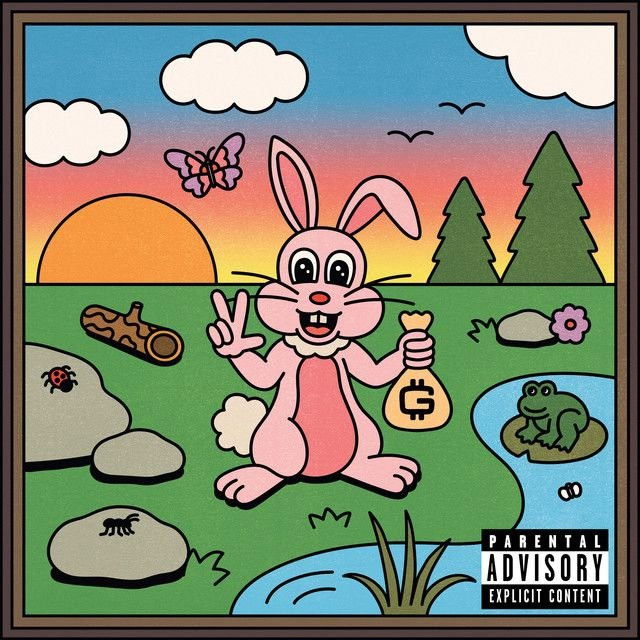
Gang Signs by Freddie Gibbs, ScHoolboy Q
They don’t just flash affiliation; they unpack what it costs. In Gang Signs, Freddie Gibbs and ScHoolboy Q turn a simple salute into a code of survival, ambition, and memory. The track weighs the desire to “be legit” against the realities of street bonds, with the hook’s daily ritual acting as both pride and burden.
"Gang Signs" - Freddie Gibbs ft. ScHoolboy Q
I've been ridin' in the 'Dor with the dope shit
Ridin' in the Volvo with the dope shit
Loading lyrics...
Unable to load lyrics
We're unable to display the lyrics at this time. Please try again later.
Street codes and the bigger picture
The meaning of Gang Signs Freddie Gibbs, ScHoolboy Q hinges on a tension: advancement without erasure. When Gibbs drops a line like Every day I need a dope flip
, he’s not glamorizing danger so much as charting how hustle became habit. The aim, stated plainly, is I just wanna be legit
—legality as the real victory.
Q mirrors this with hard-earned clarity. A line such as Way too Crip to go live
signals that some loyalties are nonnegotiable, even in a social-media age. Together, they’re saying success doesn’t cancel the code; it complicates it.

Watch the official Gang Signs
music video
Who’s speaking, and why it matters
Both verses are first-person dispatches addressed to peers and watchers—rival crews, police, and the music industry. Gibbs leans into outlaw charisma and mobility (Volvo, Cutlass, drop-offs), while Q threads in legal stakes and community impact. When he notes being at the Grammys still strapped
, the point isn’t spectacle—it’s that accolades don’t equal safety.
The chorus’s mantra, throw a gang sign
, loops like a pledge. Interpretation: it’s a daily check-in with identity, not a call to recruit. That salute acknowledges all the people and risks that shaped them.
What happens across the song (a quick map)
- Habit and hustle: Gibbs opens with routine motion and the need to flip product, sketching the muscle memory of survival.
- Aspirations and image: He mocks clout-chasing while claiming legitimacy through work, not optics.
- Escalation and consequences: References to retaliation show how quickly pride can turn lethal, reminding listeners these aren’t movie stakes.
- Community and courts: Q pivots to loved ones and cases, anchoring the track in real families and legal pressures.
- The refrain returns: Each time they
throw a gang sign
, the history resets—homage and warning in one gesture.
Symbols, signals, and what they mean
- The sign itself: It’s shorthand for lineage and mutual protection. Interpretation: It’s less about provocation and more about an internal passport.
- Vehicles and jewelry: Status markers that also connote escape routes and targets—mobility can be both freedom and exposure.
- Weapons and numbers: Retaliation lines like
we take nine
frame a zero-sum logic of safety. Interpretation: The math is brutal, designed to deter rather than invite. - Anti-police stance: Their blunt phrasing toward law enforcement channels a long hip-hop tradition of protesting over-policing and bias.
How the sound carries the message
A subdued, weighty bassline keeps the mood steady and unflashy, letting syllables do the work. The cadence nods to harmonized Midwest rapid-fire flows—Gibbs has said he aimed to honor groups like Do or Die and Bone Thugs-N-Harmony when crafting this record. That lineage shows in the way he braids melody with grit.
Q’s verse cuts through with a grainier texture, landing heavy on consonants. The mix leaves room for ad-libs and short pauses, which feel like eye contact in a conversation you can’t dodge. The sonic restraint mirrors the theme: discipline over spectacle.
Visual language: the rabbit and the turtle
In the animated video, Gibbs appears as a pink rabbit and Q as a tattooed green turtle. It’s playful, but the choices land. The rabbit signals agility and hustle; the turtle evokes armored patience. Even as cartoon figures, they flip off cops, count money, and socialize, compressing menace and humor into a surreal day-in-the-life. The color palette—neon pop over urban grays—suggests how danger and fun blur in memory.
Context that sharpens the subtext
The single arrived as Gibbs’s profile surged—he’d recently received a Best Rap Album Grammy nomination for Alfredo. That moment matters: industry validation sits beside ongoing street realities. The line about being at the Grammys still strapped
reads like a thesis—success changes rooms, not rules.
Gibbs also described the track as overdue for him and Q, a natural link between Indiana-to-L.A. hustle stories and L.A. set life. That cross-regional bridge helps explain why the hook feels both specific and universal.
Alternate reads worth considering
- Interpretation: A cautionary loop. The chorus is a reminder that cycles are hard to break, even when you want to go “legit.”
- Interpretation: A heritage salute. The sign functions like a family crest, asserting dignity in spaces that otherwise erase it.
Bottom line
Gang Signs is less a recruitment poster than a field report. The meaning of Gang Signs Freddie Gibbs, ScHoolboy Q rests in how they honor their origins while admitting the cost. The salute is a key—opening doors to belonging, but also to rooms they may never fully exit.
Disclaimer: Song meanings are interpretive and may differ from the artists’ intent.







