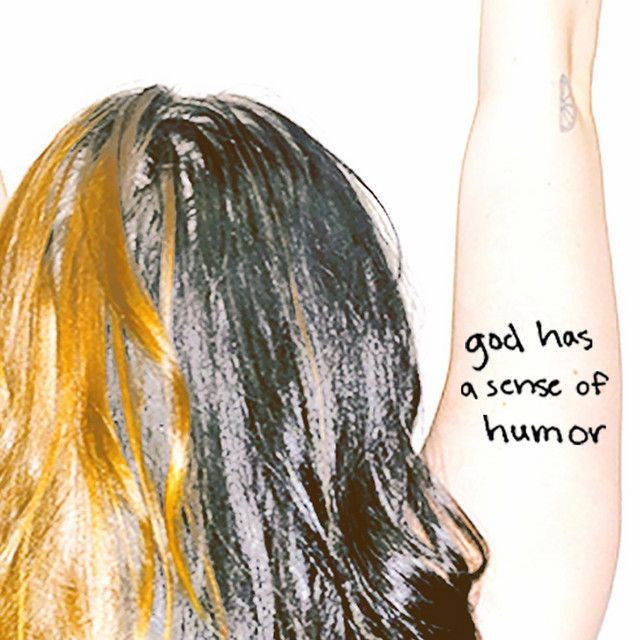
god has a sense of humor by GAYLE
They turn private doubts into a public confession. GAYLE’s song asks what it costs to keep believing when life feels random. The title jokes about divinity, but the feeling is serious: how do you carry grief, pressure, and uncertainty without going numb?
"god has a sense of humor" - GAYLE
That's when I realized that we aren't here forever
And I wonder what she saw when she got to the other side
Loading lyrics...
Unable to load lyrics
We're unable to display the lyrics at this time. Please try again later.
A candid search for meaning in the mess
The core meaning of god has a sense of humor GAYLE is acceptance without answers. The narrator cycles through loss, teen pressure, and faltering prayer. Instead of promising certainty, they choose survival tools: honesty, a little laughter, and space for not-knowing.
Interpretation: The song suggests that meaning is made, not found. When life refuses to explain itself, they reach for gallows humor and community. This isn’t nihilism; it’s humility. The title frames faith as a conversation, not a verdict.

Watch the official god has a sense of humor
music video
Who’s speaking, and why it matters
The voice is first-person, looking back and forward at once. A memory opens the door with When I was thirteen
, grounding the song in real loss. The tone is matter-of-fact, not melodramatic. That restraint makes the emotion hit harder.
By using everyday language—no heavy theology—the narrator invites listeners who have felt doubt in quiet moments. Lines like I feel no comfort
name a feeling many hide. The result is intimacy: a journal entry sung out loud.
From loss to uneasy faith: the story beats
- Early loss shakes their worldview. Death is not abstract anymore, and questions rush in.
- Mid-teens pressure builds. Happiness feels like an assignment nobody can pass, and control is a joke.
- Prayer becomes another test. They try to believe, feel alone, and wonder if effort itself widens the gap.
Across these beats, the narrator doesn’t find an answer; they find a stance. They let both sadness and humor exist at once, a choice that recurs in the chorus.
The chorus as a coping strategy
In the hook, the narrator resets the frame:
There’s no right or wrong, it’s just a little complicated There’s no rhyme or reason ’cause it’s only what you make it
Those lines trade certainty for agency. Interpretation: If rules are unclear, the response is to keep moving, loving, and trying anyway. That’s where the song’s dark humor lives. The narrator admits they could cry or laugh until I choke
, and the laugh wins—barely.
The phrase stuck here being human
lands like a shrug and a hug. It’s a weary truth, but it builds solidarity. And when they say I’m not in on the joke
, it captures the sting of feeling small in a big, absurd world.
Symbols, ironies, and the title’s twist
Sky and ground appear as mirrors: looking up brings no comfort; looking down spotlights mortality. Kneeling, prayer, and the word “God” work as symbols of longing more than doctrine. The “joke” in the title is not cheap sarcasm; it’s a way to hold pain at arm’s length long enough to breathe.
Interpretation: “God has a sense of humor” can mean two things at once. Either the universe is random and feels ironic, or, if a higher power exists, they allow a messy, human world where growth comes through confusion. The tension is the point.
How the sound carries the questions
The production stays close to the voice—clean guitar, restrained percussion, and conversational phrasing—so words lead. Subtle dynamic lifts in the chorus widen the emotional frame without turning it into a power ballad. That choice keeps the focus on the inner debate.
Fact: The song was written by Ryan Linvill, Sarah Alison Solovay, and Taylor Gayle Rutherfurd (GAYLE). The arrangement fits GAYLE’s style of confessional pop: clear melodies, stacked vocals, and just enough lift to underline a line without overshadowing it. Interpretation: the simplicity feels intentional, matching a theme of living with questions rather than fixing them.
Alternate readings worth considering
- Deconstruction diary: The narrator maps a move from inherited faith to self-made meaning, using humor to soften the loss of certainty.
- Secular acceptance: “God” functions as metaphor. The song is about randomness and resilience, not religion.
Both readings share a heart: the courage to say “I don’t know” and keep going.
Takeaway for listeners
At its core, this track argues for grace—toward ourselves and others—when answers fail. The joke may not land, but the human part does: we’re all learning as we go, together.
Note on interpretation
Song meanings are subjective. This analysis reflects one informed reading based on lyrics, vocal delivery, and common pop conventions.









