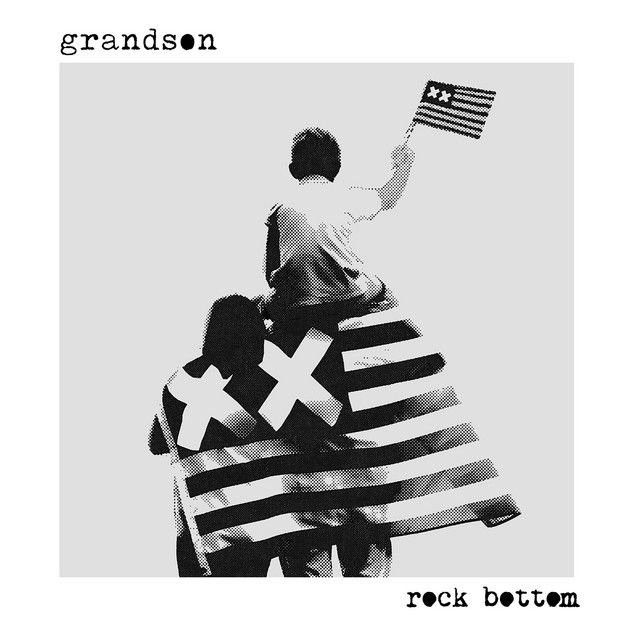
Why 'Rock Bottom' Feels Bigger Than One Breakdown
The meaning of Rock Bottom grandson starts with a collapse, but it does not stay there. The song sounds like one person hitting a personal low point, yet the lyrics keep widening until that private crisis feels tied to a broken culture, a rigged idea of success, and a system losing legitimacy.
"Rock Bottom" - grandson
And where the fuck do we go now?
First I was floating through the atmosphere
Loading lyrics...
Unable to load lyrics
We're unable to display the lyrics at this time. Please try again later.
That wide-angle view fits grandson's larger work. In coverage of the Modern Tragedy era, he described a neighboring song, A Modern Tragedy Vol. 3, as dealing with self-destructive tendencies and the social conditions that push a person toward breakdown. That context helps explain why "Rock Bottom" feels both intimate and political.
The Crash at the Center
At its core, the song is about disillusionment. The speaker once felt lifted up, full of motion and possibility, but now they are trapped under the weight of reality. That contrast appears in the jump from floating through the atmosphere
to rock bottom
. In plain terms, the song moves from hope to fallout.
What makes the chorus powerful is not just the fall. It is the confusion after the fall. The repeated question, how did we get here?
, turns the song into more than a diary entry. They are not only asking what happened to one life; they are asking what happened to a whole generation's promises.

Watch the official Rock Bottom
music video
Sold a Dream, Then Left Behind
The first verse attacks the script many people are taught to follow. Keep quiet, behave, work hard, build a stable life, and peace will come. The song presents that message as a bargain that no longer works.
Instead of comfort, the speaker finds emptiness. When they say they were told to bite my tongue
, the line suggests pressure to stay obedient and not challenge unfair rules. The image of the suburban ideal is there too, but it arrives as a dead-end fantasy rather than a reward.
Interpretation: This part of the song is less about rejecting adulthood itself and more about rejecting a false social contract. If people do everything they are told and still feel abandoned, then the system—not just the individual—deserves blame.
From Personal Anxiety to Social Anger
The second verse makes the song's politics sharper. Advice from an older neighbor to get a normal job is presented as survival logic, not inspiration. In other words, work becomes something a person does merely to remain afloat, not to build meaning.
That bleak shift matters. The line about the signs being obvious suggests the speaker now sees patterns they missed before: economic pressure, shallow authority, and leaders who ask for trust while proving unworthy of it. The brief refrain look who's in control
lands like a bitter punchline.
Here is the song's key move: it turns burnout into social critique. The speaker is not simply saying, "I failed." They are saying they were handed a map that led nowhere.
The Hook Makes the Despair Communal
The chorus is simple, but it carries the song's deepest meaning. It asks where to go after a collapse. That is not the same as asking how to feel better. It is a larger question about direction, purpose, and what comes after trust dies.
Tell me how did we get here?
And where do we go now?
Those lines are the emotional engine of the song. They turn pain into a shared emergency. The repeated wording sounds like a chant at a protest as much as a thought in someone's head.
Interpretation: The hook works because it balances two truths at once. It admits helplessness, but it also begins an inquiry. Once they ask the question out loud, silence is no longer possible.
How the Sound Carries the Meaning
Grandson's music often blends rock attack with electronic tension, and "Rock Bottom" uses that mix to mirror mental and social overload. The beat is direct, the guitars feel abrasive, and the vocal delivery pushes urgency over polish. Nothing about the track sounds settled.
That matters for meaning. A cleaner or softer arrangement might have made the song sound reflective. Instead, the production sounds cornered and agitated. The stomping rhythm gives the chorus a public, rally-like energy, while the rough edges make the verses feel unstable.
The nonsense syllables in the breakdown are also effective. Rather than offering clarity, they create a sense of spiraling momentum, as if language itself has hit a wall. In a song about collapse, that loss of neat expression feels intentional.
Artist Context Matters Here
Grandson built their reputation on songs that tie personal unrest to civic anger. During this period, they were moving toward the release of A Modern Tragedy Vol. 3, and critics regularly framed that body of work around anxiety, alienation, and political frustration. "Rock Bottom" fits that pattern closely.
That context helps explain why the song connected with listeners. It arrived in a late-2010s climate of distrust, burnout, and generational fatigue. The song does not offer policy or easy hope. What it offers is recognition: the feeling that despair is not random, and that many people are living inside the same pressure system.
A Reasonable Final Reading
So what is the meaning of Rock Bottom grandson? Most directly, it is a song about hitting an emotional low after believing in a life plan that fails to deliver. More broadly, it is about realizing that personal breakdown can be shaped by public conditions.
Its strongest idea is that collapse is both inner and outer. The speaker feels lost, but the world around them also looks corrupted, exhausted, and unstable. That is why the song still lands: it captures the moment when private pain turns into political awareness.
That reading is an interpretation based on the lyrics, the song's sound, and grandson's broader artistic context. Other listeners may hear different shades of meaning, and that openness is part of the song's power.









