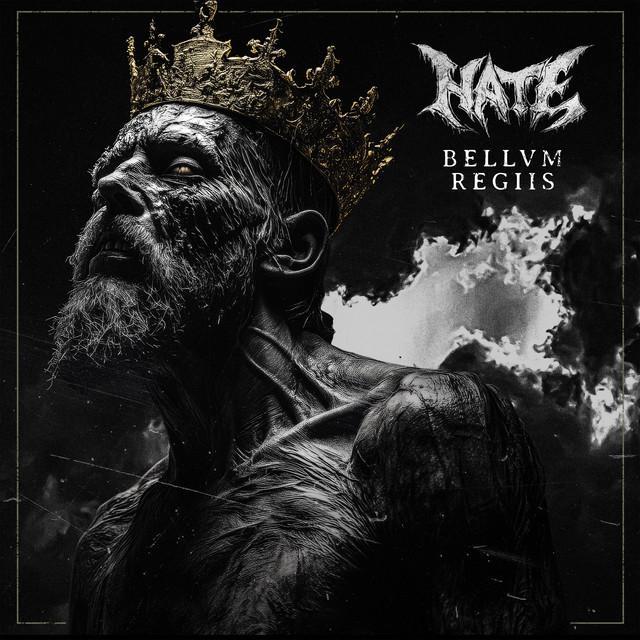
Iphigenia by Hate: Sacrifice in a War-Torn Myth
The meaning of Iphigenia Hate centers on sacrifice under pressure: the kind demanded by war, power, and inherited belief. The song does not sound like a simple plot song. Instead, it uses mythic language to ask what remains when empires fall, courage is tested, and people are told to die for something larger than themselves.
"Iphigenia" - Hate
Beyond the horizon of dreams
Born to strength
Loading lyrics...
Unable to load lyrics
We're unable to display the lyrics at this time. Please try again later.
Hate, the long-running Polish extreme metal band, are known for blackened death metal that blends aggression with ritual and historical imagery. In that setting, "Iphigenia" feels built to carry ancient tragedy into modern war language. The title points toward the Greek figure Iphigenia, whose story is tied to sacrificial death in classical myth, a connection widely outlined in standard myth summaries such as Encyclopaedia Britannica.
Why the Title Matters More Than the Plot
The title is the key interpretive clue. In Greek myth, Iphigenia becomes a symbol of a life offered up so others may move forward. That matters here because the lyrics keep returning to troops, kings, graves, and sacrifice.
Interpretation: Rather than retelling the myth scene by scene, the band seem to use Iphigenia as a symbol for all ritualized loss in wartime. The song asks what happens when people are taught that dying for a cause is holy, necessary, or glorious.
The opening image, with ante-deum silence
and a horizon beyond dreams, places the listener in a world older than ordinary politics. It feels sacred, but also cold. From there, the song shifts quickly into action and command.
A Voice Calling Others Into the Fire
One of the most striking things in the lyrics is the commanding voice. It tells someone to move, endure, and face destruction. Phrases like Born to strength
and face the void
make the speaker sound less like a vulnerable person and more like a witness forged by war.
That voice creates tension. On one hand, it praises courage. On the other, it keeps exposing the emptiness around that courage. The listener hears troops moving forward while death surrounds them. They hear appeals to honor, but also warnings about poisoned souls and disbelief.
Interpretation: The speaker may be a fallen warrior, a mythic guide, or even the spirit of sacrifice itself. Their authority is real, yet they do not sound naïve. They know the cost.
The Song's Core Conflict: Courage vs. Ideology
At the heart of the meaning of Iphigenia Hate is a conflict between bravery and manipulation. The song respects endurance, but it deeply questions the systems that demand blood.
The clearest line of attack comes when the lyric argues that war is the religion
of weak hearts and minds. That idea reframes everything around it. War is not presented as pure heroism. It becomes a belief system that feeds on fear, obedience, and tribal identity.
That is why another key moment lands so hard: Swear allegiance to no one
. After all the images of kings, troops, and empire, the song suddenly rejects blind service. This matters because it prevents the track from becoming a simple celebration of battle.
A Compact Story Hidden in the Images
The narrative is fragmented, but it still moves in a rough arc:
- A sacred silence opens the world.
- Warriors are called into conflict.
- Death and graves define the battlefield.
- The speaker urges courage but rejects empty loyalty.
- Sacrifice becomes the final surviving truth.
That final step is crucial. The song does not say empire lasts. It says empire fades. What remains is the human act of facing death without surrender.
Symbols of Graves, Sea, and Kings
The imagery is dense but consistent. Graves appear again and again, turning war into a cycle that keeps producing the dead. The sea image, especially the idea of an ocean of death
, makes destruction feel vast and impersonal.
The kings are more mysterious. In the repeated phrase light of the Kings
, the light could mean judgment, authority, destiny, or the long shadow of history.
One night open the crypt
And look in their eyes
This brief passage shifts the focus from abstract glory to the dead themselves. The crypt image strips away romance. The fallen hold no emotion anymore. Whatever cause once inspired them is gone; only the result remains.
Interpretation: The song may be saying that power loves the language of honor, but the grave tells the simpler truth.
How the Sound Supports the Meaning
Even without needing full production notes, the style strongly shapes the song's message. Hate's blackened death metal approach usually relies on pounding drums, serrated guitar tone, and a stern vocal presence. That kind of arrangement turns the lyrics into something ritualistic rather than conversational.
Fast passages can make the commands feel urgent, while slower, heavier moments can make the sacrifice feel ceremonial. The likely effect is a tension between motion and doom: troops advancing, history collapsing, and a single will trying to remain unbroken.
That matters because the words alone could read like ancient poetry. The music gives them weight. It turns sacrifice from an idea into an atmosphere.
Final Reading: What the Song Seems to Say
The strongest reading is that "Iphigenia" is about the nobility of courage inside a corrupt structure. It honors those who endure, but it does not trust empire, war, or obedience. In that sense, the song is tragic rather than triumphant.
For listeners searching for the meaning of Iphigenia Hate, the title's mythic echo helps explain the whole track: sacrifice can be remembered as holy, but that does not make the system demanding it just. The song's power comes from holding both thoughts at once.
Disclaimer: This interpretation is based on the released lyrics, the song title's mythic reference, and Hate's broader artistic style. As with most metal songs, meaning can remain open to more than one valid reading.







