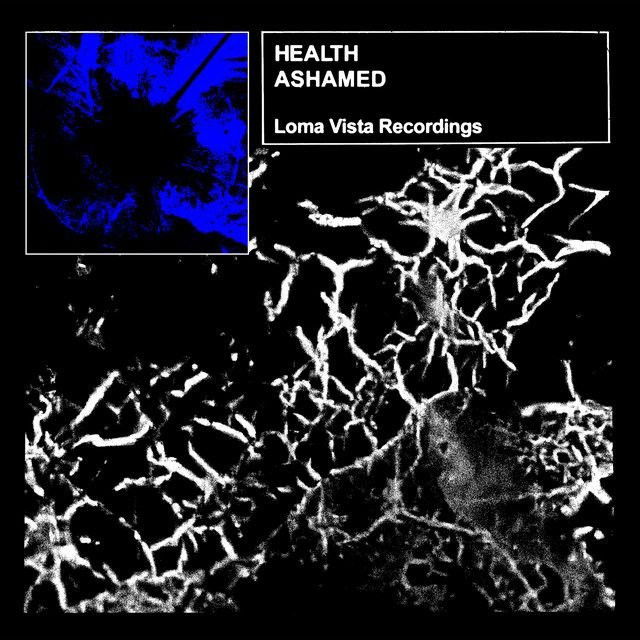
ASHAMED by HEALTH
A person calls after dark, breaks a boundary, and confesses a feeling they can hardly say out loud. ASHAMED is HEALTH at their most exposed—an industrial lullaby for someone who believes they don’t deserve to exist. This guide unpacks the meaning of ASHAMED HEALTH, how the lyrics work, and why the sound makes the story hit so hard.
"ASHAMED" - HEALTH
But I got nowhere to go
I know I shouldn't call after dark anymore
Loading lyrics...
Unable to load lyrics
We're unable to display the lyrics at this time. Please try again later.
The Confession at the Center
The core message is about radical self-rejection and the grief of hurting someone you still want near. The narrator keeps reaching out despite knowing they shouldn’t. They admit isolation with the refrain no one in this world
, which turns the song into a closed room with no exit.
Interpretation: The track frames shame as a loop. They confess I can't change
while also saying You can't change for me
. That stalemate fuels the spiral: love can’t save them, and they can’t fix themselves.
Who Speaks in the Dark—and To Whom?
The voice is first person, speaking to a you who has set limits. Lines about late-night contact and not being able to face them suggest a strained, intimate tie—an ex, a caretaker, or a friend acting as a lifeline.
When the singer says I can't look at your face
, they imply both guilt and fear. They don’t want to see the pain they’ve caused, or the boundary they’re violating by calling again.
A Night in Five Beats
Here’s a clean way to follow the narrative:
- They show up or call, knowing it’s wrong, because they have nowhere else to go.
- They admit mutual stalemate: neither person can do the other’s changing.
- Blame circulates; accountability hurts. They concede it makes sense if the other person blames them.
- Isolation peaks: there is
no one in this world
to catch them. - Despair blooms: they’re
too young to die
but feel “old enough” to consider it, which reveals a mind torn between fear and exhaustion.
The Hook That Cuts Deep
The song’s thesis is the blunt refrain about being ashamed. Interpretation: This is not a throwaway line; it’s the character’s worldview. Shame becomes existential, a belief that their flaw is original, not fixable. That’s why the smaller apologies don’t land—this is bigger than one mistake.
Words That Return Like Scars
Three motifs keep circling back:
- Change:
I can't change
/You can't change for me
makes recovery feel impossible. The song rejects the fantasy that love can do the work therapy or time must do. - Blame: The narrator accepts being the target of blame, but that acceptance curdles into self-annihilation instead of growth.
- Face and silence: Not looking at their face and having “nothing to say” show shame’s speechlessness. When shame peaks, people often hide.
Interpretation: The repeated no one in this world
isn’t only loneliness. It’s also a social death—being alive but feeling erased.
How the Sound Cages the Feeling
HEALTH’s production binds a fragile melody inside hard-edged machinery. Expect serrated synths, blown-out percussion, and a low, pulsing bass, with Jacob Duzsik’s glassy vocal nearly weightless above the grind. That contrast—soft voice, harsh world—makes every confession feel smaller than the noise, which is the point.
The arrangement leans on repetition. As the same phrases return, synths and drums press closer, like walls moving in. Interpretation: The mix sounds claustrophobic on purpose. It mirrors the thought loop of shame and the way intrusive ideas crowd out air.
Credit-wise, the song was written by Ajay Bhattacharyya, Jacob Duzsik, and John Famiglietti. Bhattacharyya’s pop instincts meet HEALTH’s industrial palette, yielding a hook that feels simple, singable, and devastating.
Two Plausible Readings
- Relationship relapse: Interpretation: The narrator keeps relapsing into contact with a person who cannot be their savior. Their shame comes from crossing boundaries they promised to respect.
- Existential depression: Interpretation: The you may also be a mirror or a part of the self. In that view, the song is a dialogue with their own reflection, afraid to look and unable to change yet.
Both readings fit the language of blame and the unfixable. Either way, the crisis is inward, even when it shows up as a late-night call.
Why It Sticks
Listeners don’t need every detail to feel the punch. The plain phrases—no one in this world
, too young to die
, ashamed of being born
—land like cold water. HEALTH turn a private collapse into a public hymn, which is why it lingers.
Takeaway
The meaning of ASHAMED HEALTH is a portrait of shame that won’t let go, sung by someone who knows the rules and breaks them anyway. The music’s icy pressure and the lyrics’ starkness make the same claim: love can witness you, but it can’t change you for you.
Disclaimer: Song interpretations are subjective. This analysis reflects one informed reading based on lyrics, performance, and known context.








