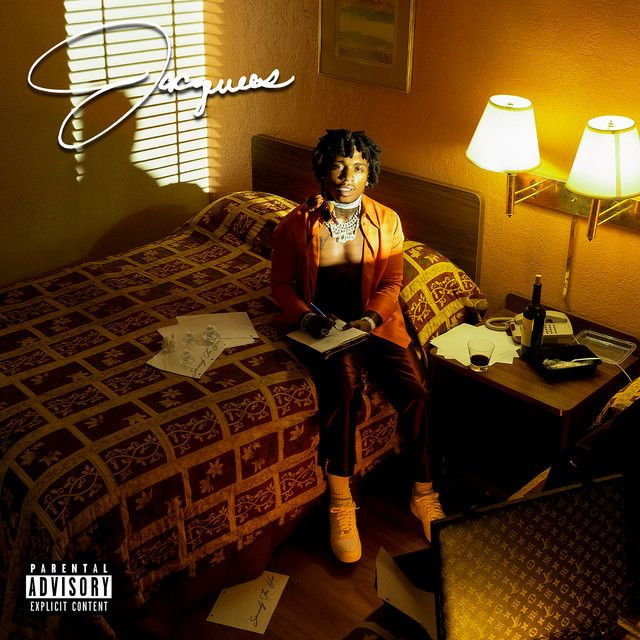
Tipsy by Jacquees
The meaning of Tipsy Jacquees starts with a drunk-dial premise, but the song lands because it turns that familiar moment into something more revealing: desire mixed with loneliness, confidence mixed with instability.
"Tipsy" - Jacquees
Provided by LyricFindYou know why I'm calling at 2AM, stop stalling, babe (stop stalling, babe, stop stalling)
I had one-too many, I need something to fall in, babe (I want you)
This ain't your regular rideLoading...Loading lyrics...
Unable to load lyrics
We're unable to display the lyrics at this time. Please try again later.
A 2 A.M. Call With More Than Lust Behind It
Jacquees builds the song around a simple setup. The narrator calls late at night after drinking and wants to come over. On the surface, it is a sensual R&B record about chemistry, attraction, and a blurred-hours reunion.
But the song is stronger than a basic come-on. The narrator admits why they are reaching out, saying it is because they are tipsy
and emotionally exposed. That confession matters. Instead of pretending to be fully in control, they sound needy, restless, and eager for closeness.
Interpretation: The song is not only about sex. It is also about using intimacy as a cure for emptiness. When the narrator asks the other person to fix me
, the line suggests more than physical comfort.
The Story Moves Fast, but the Feelings Are Clear
The plot unfolds in a straight line, which helps the emotion hit quickly. They call at 2 A.M., explain they have had too much to drink, and ask the other person not to ignore them.
Then the song moves into travel and anticipation. The narrator says they are on the way, asks the other person to stay available, and imagines what will happen once they arrive. Even before the reunion, the record is charged with expectation.
A few details sharpen that scene:
- the late-night timing
- the alcohol-heavy haze
- the urgency of the drive over
- the promise of physical affection
Those details make the song feel immediate. Lines like hope you ain't busy
and fall through for the night
sound casual, but they carry real desperation underneath.
Why the Chorus Feels So Sticky
The chorus is catchy because it compresses the whole song into one emotional cycle: drink, call, crave, repeat. The repeated phrases make the narrator sound stuck in a loop, almost as if intoxication always pushes them back toward this same person.
That repetition does two things at once. First, it gives the song its club-ready hook. Second, it shows how little emotional distance the narrator has from the person they want.
Interpretation: The hook may be saying that this relationship has become a habit. Alcohol does not create the desire; it just removes the filter. What comes out is the truth they usually keep hidden.
Desire, Dependence, and the Need to Be Wanted
One of the most interesting parts of the meaning of Tipsy Jacquees is how it balances swagger with vulnerability. The narrator talks boldly about getting close and becoming frisky
, but they also sound like someone asking for validation.
That balance gives the song its tension. They want control, yet they admit the world feels unsteady. They speak with confidence, but the confidence is clearly shaped by alcohol.
The result is a familiar R&B contradiction: seduction as confession. The narrator is trying to sound smooth, yet every repeated request reveals how much they want reassurance from the other person.
The Car, the Phone, and the Bottle as Symbols
The imagery is simple, but it works. The phone call stands for access and emotional risk. Reaching out this late means the narrator is crossing a boundary they might respect in daylight.
The car ride suggests momentum and poor impulse control. Even though the song says someone else has the keys, the scene still feels unstable, because everything is happening under the influence and in a rush.
The alcohol reference, especially Hennessy, no chaser
, adds to that mood. It tells listeners this is not a light buzz. The drink becomes a symbol for rawness, lowered defenses, and messy honesty.
How Jacquees’ Sound Sells the Meaning
Jacquees is known for melodic, intimate R&B, and that style fits this song perfectly. His delivery is soft, slippery, and emotional, which keeps the track from sounding aggressive. Instead, it feels persuasive and late-night warm.
Production-wise, the song leans on a slow groove, roomy rhythm, and a hook built for repetition. That kind of arrangement mirrors intoxication. It does not rush forward in a sharp way; it sways. The beat creates the same dizzy, floating feeling the lyrics describe.
The vocal layering also matters. When the hook circles back again and again, the song feels less like a conversation and more like a thought the narrator cannot stop having.
Artist Context Helps Explain the Appeal
Jacquees has long worked in a lane where romance, pleading, and bedroom talk overlap. That is a big part of his brand as an R&B singer, as seen across his releases and public artist profiles from sources like Apple Music and TIDAL. In that context, "Tipsy" makes sense as another entry in his after-hours style.
The credited writers listed for the song are Denzel Mbeng Ayuk-Okata, Kelvin Raynard Brown, and Rodriquez Jacquees Broadnax. That credit lineup supports the sense that the song was carefully built around a clear mood rather than a complex storyline.
A Final Read on What "Tipsy" Is Saying
The best way to understand the meaning of Tipsy Jacquees is to hear it as a song about lowered defenses. Alcohol gives the narrator an excuse to call, but it also exposes what they already feel: attraction, dependence, and the need to be welcomed in.
That is why the song works. It captures a messy emotional zone many late-night R&B songs aim for but do not always reach. It is sexy, but it is also a little sad.
Takeaway
"Tipsy" turns a drunken come-over request into a portrait of craving. Beneath the smooth delivery, the song suggests that the narrator does not just want a body nearby; they want relief, connection, and proof that the door is still open.
Disclaimer: This interpretation is based on the released lyrics and musical presentation. Song meaning can vary by listener, and unless the artist confirms a single intent, multiple readings can be valid.







