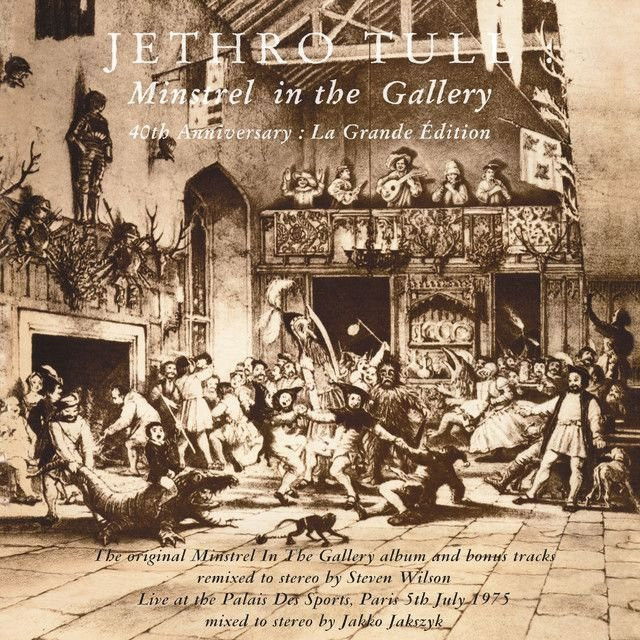
Baker St. Muse by Jethro Tull
The meaning of Baker St. Muse Jethro Tull starts with a crowded city street and ends somewhere deeper: inside the artist’s mind. This long 1975 track is not a simple story song. It is a suite of scenes, voices, jokes, and hard observations that turn Baker Street into a symbol of modern urban life.
"Baker St. Muse" - Jethro Tull
Shady gentleman. Fly-button. Feel.
In the underpass, the blind man stands. With cold flute hands.
Loading lyrics...
Unable to load lyrics
We're unable to display the lyrics at this time. Please try again later.
On the surface, Ian Anderson shows London as noisy, dirty, sexual, commercial, and lonely. Under that, he also asks what a songwriter is supposed to do with all that human mess. The answer seems to be in the title itself: they become a “muse,” taking in the city’s ugliness and turning it into art.
A Street Map of Confusion and Witness
Factually, “Baker St. Muse” appears on Minstrel in the Gallery, Jethro Tull’s 1975 album, released September 5, 1975, and written by Ian Anderson. The album was produced by Anderson and recorded in Monte Carlo with the Maison Rouge Mobile Studio, according to widely cited album documentation. It was also the band’s first album recorded outside the UK and reached No. 7 on the US Billboard 200.
The song itself runs over 16 minutes, and that matters. Its length allows Anderson to build a moving panorama instead of a tidy verse-chorus confession. They move from quick snapshots of strangers to social commentary, then to something close to autobiography.
Interpretation: Baker Street is not only a real London location. It becomes a corridor where the speaker meets the city’s performance of itself: sex, poverty, journalism, policing, class anxiety, and public indifference.
Watch the official Baker St. Muse
music video
The Refrain Turns a Place Into an Identity
The chorus is the clearest clue to the song’s emotional core. Anderson repeats variations around Baker Street Ruse
, Baker Street Bruise
, and Baker Street Muse
. Before and after those phrases, the song suggests failed connection: he cannot win someone over, cannot escape the damage, and cannot stop being shaped by the place.
That word chain does a lot of work. A ruse is a trick. A bruise is an injury. A muse is a source of inspiration. In other words, the city deceives, hurts, and inspires at the same time.
Interpretation: The refrain may describe the artist’s role. They are not above the street. They are marked by it, and their art comes from that mark.
Scenes of London at Ground Level
Early lines throw the listener into clipped images: a bus stop, a shop window, a shady gentleman
, a blind busker, and aggressive advertising. The style feels like someone scanning a street with restless eyes.
These fragments matter because the song does not romanticize the city. It notices exploitation and emptiness in ordinary details. Even playful phrases carry tension, as if every passing face is selling something or hiding something.
Later, the song gets harsher. There is drunkenness, sexual bargaining, and the ugly power play of men treating women as objects. Anderson pushes those scenes to the point of discomfort.
Interpretation: This is satire, not celebration. The ugliness is presented to expose moral decay, especially masculine vanity and public cruelty.
The “Crash-Barrier Waltzer” Heart of the Song
One of the most affecting passages centers on an older unhoused woman, called Baker Street casualty
. The speaker seems to want to help, but the system around her offers only control and removal. A policeman becomes part of a tragic dance rather than a rescuer.
This section shifts the song from cynical observation to human pity. The city is no longer just theatrical; it is cruel in practical ways. People are moved along, hidden, or ignored.
No bed, no bread nor butter
Move the old lady on
That brief moment captures the song’s social conscience. It shows poverty not as a statistic but as an everyday public inconvenience that others want erased.
Mother England, Minstrels, and Self-Portrait
The final stretch opens out from Baker Street to England itself. The speaker rejects fame, status symbols, and magazine approval. He sounds weary of the culture machine and suspicious of success on its terms.
Then comes one of the key self-definitions: one-line joker
. That phrase shrinks the artist into a barroom act, but it also sounds defensive. He knows he can be seen as merely clever, merely eccentric, merely performative.
From there, the song turns toward the idea of the minstrel, a figure that links this track to the album’s title. According to album notes and commentary summarized in references on Minstrel in the Gallery, the minstrel image was central to Anderson’s thinking during this era. In “Baker St. Muse,” that figure becomes a modern street observer: half poet, half satirist, half outsider.
Interpretation: The song suggests that the artist’s duty is not to flatter the nation but to report what they see, even if it comes out cynical.
Why the Music Feels So Restless
The arrangement helps explain the meaning of Baker St. Muse Jethro Tull. Minstrel in the Gallery is often described as a blend of progressive rock, hard rock, and folk rock, and this track uses that mix to mirror emotional instability. Acoustic passages can feel reflective, while electric surges sound mocking or agitated.
That constant movement matters because the song itself is unstable. It lurches between empathy and sarcasm, private confession and public theater. The band’s shifting dynamics make Baker Street feel alive, overcrowded, and impossible to reduce to one mood.
Final Take on the Song’s Meaning
So what is “Baker St. Muse” really saying? At its core, it presents the city as a bruising source of artistic truth. Baker Street is where modern life looks cheap, sad, absurd, and sometimes tender. The speaker cannot fix it, cannot fully escape it, and cannot stop turning it into song.
That is why the title lands so well. The muse is not pure beauty. Here, inspiration comes from grime, contradiction, and moral unease.
Disclaimer: This interpretation separates documented facts about the song and album from reasonable critical reading of the lyrics. Like many Jethro Tull songs, “Baker St. Muse” is deliberately layered and open to more than one meaning.








