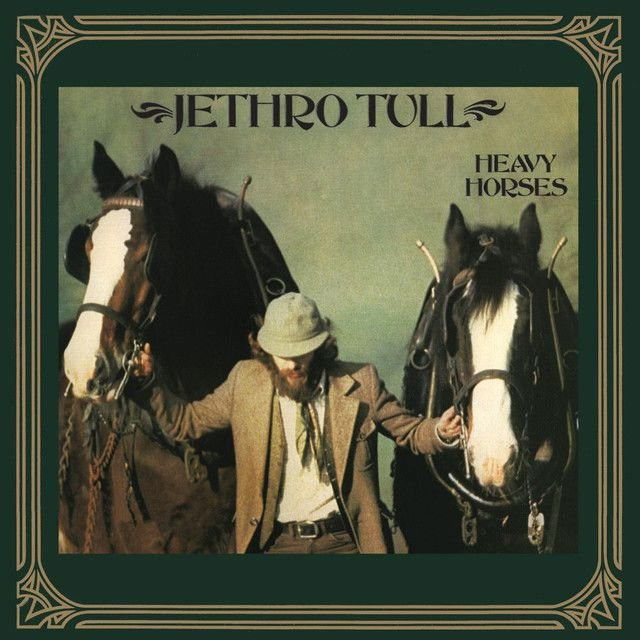
Why 'Heavy Horses' Still Pulls So Hard
The meaning of Heavy Horses Jethro Tull starts with a simple image: farm horses at work, powerful and nearly obsolete. But the song does more than praise animals. It turns them into a symbol for useful things a modern world pushes aside.
"Heavy Horses" - Jethro Tull
An October's day, towards evening
Sweat-embossed veins standing proud to the plough
Loading lyrics...
Unable to load lyrics
We're unable to display the lyrics at this time. Please try again later.
Released on Jethro Tull's 1978 album Heavy Horses, the track was written and produced by Ian Anderson. It runs nearly nine minutes and blends progressive rock with folk textures, a style noted in coverage of the song and album history. Anderson later described it as an ode to horses and said it was about creatures once seen as majestic being left on the social scrap heap when machines took over.
More Than Farm Nostalgia
On the surface, the song carefully observes draft horses in motion. Anderson notices their bodies, their harnesses, the fields, and the weather around them. Short phrases like iron-clad feather-feet
and towards evening
make the scene feel tactile and lived-in, as if the listener is standing at the edge of the field.
But the writing is not just scenic. The horses represent labor with dignity. They are huge, strong, and calm, yet they are also vulnerable because the world no longer needs them. That is why the repeated warning the tractor is on its way
hits so hard. It is not only about farm equipment. It is about replacement.
Interpretation: the song treats the heavy horse as a stand-in for any older craft, worker, or tradition dismissed as inefficient once newer systems arrive.
Watch the official Heavy Horses
music video
The Chorus Turns Admiration Into Loss
The refrain is where the song's emotional core becomes clear. When Anderson sings move the land under me
, he makes the horse feel almost mythic. The animal does not merely cross a field; it reshapes the earth and carries history with it.
That grandeur makes the next thought sadder. The chorus shifts from motion and usefulness to scarcity and unemployment. The horses are now down to the few
. In plain terms, the song says their strength still exists, but society has withdrawn its purpose.
This contrast is central to the meaning of Heavy Horses Jethro Tull. The world has not stopped needing strength, patience, and steadiness. It has only stopped valuing the forms in which those qualities once appeared.
A Future Hidden Inside the Past
One of the song's most interesting turns is that it does not stay in mourning mode. Midway through, Anderson imagines preserving the bloodline and protecting these animals from ridicule. He wants them kept out of sight from those who laugh at their size and old-fashioned role.
Then the lyric suddenly looks ahead. The song imagines a future when fuel runs out and the climate turns harsher, and people once again need what they ignored.
They'll beg for your strength
your gentle power
That brief moment matters because it changes the song from elegy to warning. Progress may feel permanent, but it can also be fragile. The old world may return not because people become sentimental, but because they discover that some older forms of knowledge were never useless.
Interpretation: this is less a literal prediction than a moral reversal. The mocked thing becomes necessary again.
Sound That Feels Like Hooves and Weather
The production helps sell that idea. The song appeared on the 1978 album Heavy Horses, recorded at Maison Rouge in London, and it became one of the band's live staples. Its long structure gives the music room to breathe like a landscape rather than a pop single.
The arrangement moves with weight. The rhythm section creates a grounded pull, while the acoustic colors keep the song tied to folk tradition. Then the piece opens up into a more orchestral middle passage. Reports on the song note that Martin Barre co-wrote that section, and Darryl Way contributed a violin solo that many critics singled out.
That matters because the music makes the horses feel noble, not quaint. Barre's guitar and Way's violin lift the song from rural snapshot to something almost cinematic. The title is Heavy Horses, and the music sounds heavy in the best sense: muscular, spacious, and weather-beaten.
Why the Images Feel So Vivid
Anderson fills the lyric with physical details: leather, wood, brass, wind, straw, mud, dust. Those objects create a world built by hands, animals, and seasons. Even when the song becomes symbolic, it never floats away from the ground.
Another key image is the way the horses are compared to machines of war and labor. They stand like tanks, but unlike tractors, they are alive. That contrast is subtle and smart. Machines may be efficient, yet the horses carry presence, memory, and relationship.
This is why the song avoids becoming a simple anti-technology rant. It does not say every new tool is evil. It asks what gets lost when efficiency becomes the only measure of value.
The Lasting Meaning of Heavy Horses Jethro Tull
The reason the song still connects is that almost everyone knows some version of this story. A skill becomes outdated. A town changes. A kind of work disappears. Something sturdy and meaningful is treated as if it belongs in storage.
In that sense, the horses are not only horses. They can also represent older people, rural communities, handmade work, or traditions that seem unfashionable until a crisis reveals their worth.
That is the lasting meaning of Heavy Horses Jethro Tull: progress can be real, but so is amnesia. The song asks listeners to honor strength before it vanishes, not after.
Disclaimer: This interpretation is based on the lyrics, recorded performance, and documented comments from Ian Anderson. As with any song, listeners may hear meanings beyond the ones discussed here.








