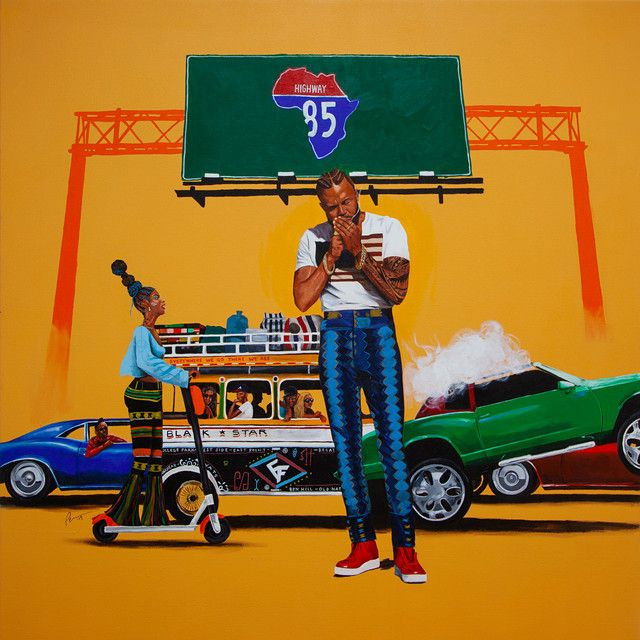
Jungle Fever by Jidenna
A family story hidden inside a loaded phrase
The meaning of Jungle Fever Jidenna starts with a phrase that already carries history. In popular culture, “jungle fever” has long been used as a crude label for interracial desire. Jidenna takes that phrase and flips it into something more personal: a story about how their parents met, what they survived, and how their child identity was shaped by both love and struggle.
"Jungle Fever" - Jidenna
Had to pay for undergrad, and my teeth, studied math
Black funky engineer, like his parents, had that flair
Loading lyrics...
Unable to load lyrics
We're unable to display the lyrics at this time. Please try again later.
The song appears on 85 to Africa, Jidenna’s second studio album, released in 2019 through Wondaland and Epic. According to the album’s credits, “Jungle Fever” was written by Jidenna Theodore Mobisson with Eleanor Kateri Tannis, Christian Gregory, and Miles C. James, and produced by Christian Gregory and Miles James. On that album, Jidenna mixed hip-hop with highlife, afrobeats, and afro-fusion influences, which helps explain why this song feels intimate but still rhythmic and cinematic.
Watch the official Jungle Fever
music video
What the song is really about
At its core, the song is about inheritance. Jidenna traces their father’s immigrant story, their mother’s economic hardship, and the way both lives flow into the child speaking in the song.
The key emotional turn comes in the chorus. After describing the parents’ past, the narrator lands on And here I am
. That short line matters because it turns history into identity. The point is not just that two people met. It is that their choices, mistakes, labor, and sacrifice became a person.
Interpretation: The song is not celebrating the stereotype in its title. It is reclaiming it. Jidenna turns a phrase often used from the outside into a family memoir told from the inside.
The father verse: migration, duty, and survival
The first verse paints the father as a complex man. He drives a cab on Massachusetts Avenue, studies math, drinks heavily, and sends money back home while his country is in conflict. In a few lines, Jidenna sketches immigration as both achievement and burden.
The father is not idealized. He has discipline, but also pain. The lyric about starting young with palm wine suggests habits formed early and carried across borders. The detail about sending support back home while a war unfolds shows divided responsibility: one life in America, another still tied to Africa.
That is why the song’s title becomes sharper here. The father does not simply “arrive” in America and fall in love. He enters a world where race shapes how that love will be seen.
The mother verse: everyday struggle made tender
The second verse shifts to the mother and gives the song its warmest details. She is described as a sixties hippie, but also as someone doing temporary work and stretching money. The image of making syrup in a frying pan captures a household where resourcefulness stands in for comfort.
Jidenna balances humor and hardship well here. The verse includes pop-culture memories, but the emotional center is clear: the mother keeps the family going. When the narrator says they try to rise early like their mother, the song frames work ethic as love passed down through routine.
A short phrase like living simply
says a lot. It does not sound bitter. It sounds grateful.
How the chorus turns biography into identity
The chorus is simple on purpose. The narrator repeats that they work like their father, wake early like their mother, and even look like them. Those repeated lines make the song feel almost like a spoken family album.
One small phrase, just like you
, carries the whole idea. The singer is not only describing resemblance. They are admitting that identity is made from imitation, memory, and inherited habits.
Mom, I try to get up early just like you
Pop, I work all night, I'm workin' just like you
This is the article’s only longer lyric excerpt, and even here the meaning is larger than the words themselves. The lines connect labor to love. Their parents may not have left behind wealth, but they left behind example.
Why the production matters so much
“Jungle Fever” would not hit the same way over a harsh beat. The production is smooth, patient, and lightly melodic. It gives the song room to feel reflective instead of defensive.
That matters because the content includes war, addiction, poverty, and racial tension. A softer groove keeps those subjects from turning the song into a lecture. Instead, it feels like someone thinking out loud over music that honors memory.
Factual context: 85 to Africa was widely noted for its polished, cross-genre sound. Reviews often praised the album’s production even when they were mixed on some lyrics. That backdrop helps “Jungle Fever” stand out as one of the record’s more direct and emotionally grounded tracks.
A title about race, but a song about belonging
The phrase “jungle fever” usually points listeners toward interracial romance. That is part of the song, but only part. Jidenna uses that social label to ask a deeper question: what does it mean to be the child of two very different histories?
Their father’s story carries African migration, duty, and masculine pressure. Their mother’s story carries counterculture freedom, economic instability, and care work. The narrator stands in the middle.
So the meaning of Jungle Fever Jidenna is really about mixed inheritance. Not only mixed race, but mixed class experience, mixed geography, mixed memory. The song suggests that identity is not neat. It is built from contradiction.
A final reading of “And here I am”
The most revealing phrase may be the bed rumbles
, which turns a private moment into the origin point of a life. But Jidenna does not stay in that joke. They move quickly to consequence: And here I am
.
That shift is the whole song in miniature. Attraction becomes family. History becomes body. Parents become blueprint.
Interpretation: The song is ultimately about gratitude without simplification. Jidenna sees flaws clearly, but still honors both parents. They do not erase hardship; they turn it into lineage.
Why the song still resonates
Listeners respond to “Jungle Fever” because it sounds specific. It names streets, habits, jobs, and memories. Those concrete details make the song feel true.
At the same time, its message is broad enough to reach many people in the United States: children often understand their parents better only after they grow up. This song captures that moment with empathy.
Disclaimer: This interpretation is based on the released recording, songwriting context, and public album credits. As with any song, meaning can remain partly subjective unless the artist explains every line directly.









