What “Mother Nature’s Son” Really Means
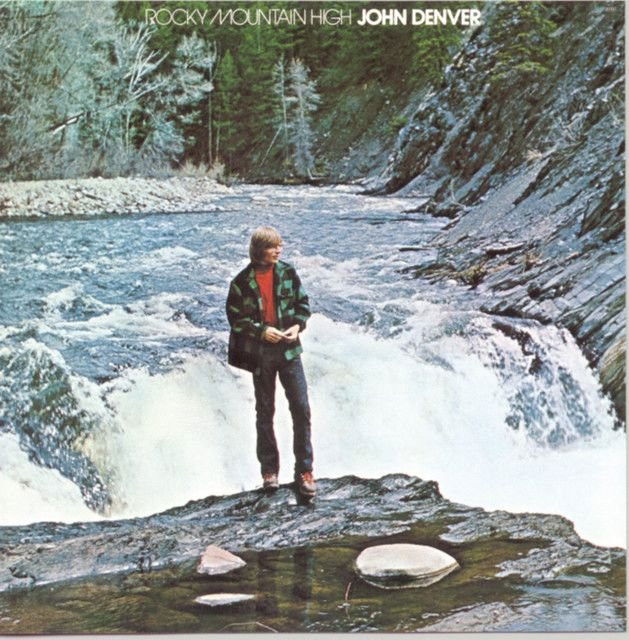
The meaning of Mother Nature's Son John Denver is a little tricky from the start, because the song is widely known as a Beatles composition written by Paul McCartney and credited to Lennon-McCartney. It appeared on The Beatles in 1968, often called the White Album. Still, the song itself is clear in spirit: it is a gentle meditation on peace, simplicity, and feeling at home in nature.
"Mother Nature's Son" - John Denver
All day long I'm sitting singing songs for everyone
Sit beside a mountain stream See her waters rise
Loading lyrics...
Unable to load lyrics
We're unable to display the lyrics at this time. Please try again later.
For listeners in the United States, that calm mood may also explain why the song is sometimes mentally linked with artists like John Denver, whose work also celebrated the outdoors. Factually, though, the song was written by Paul McCartney, with the standard Lennon-McCartney credit, and released by The Beatles on the White Album in 1968.
A Quiet Song About Belonging
At the heart of the song, the narrator presents themself as Mother Nature’s son
. That phrase matters because it frames nature as family, teacher, and home all at once. The singer is not visiting the natural world as a tourist. They belong to it.
The opening image of a poor young country boy
gives the song an earthy, humble point of view. That detail does not ask for pity. Instead, it strips away status and places value on a simple life. The song suggests that joy can come from singing, observing, and being present rather than chasing money or power.
Watch the official Mother Nature's Son
music video
How the Lines Build the Theme
The lyrics move through a series of calm scenes. They sit, sing, watch water, and rest in a field. Nothing dramatic happens, and that is the point. The song turns stillness into meaning.
When the narrator sits by a stream and hears the water, the natural world becomes a kind of music. The phrase mountain stream
is not just scenery. It shows that the singer hears beauty in ordinary motion. Likewise, the image of field of grass
places them in open space, where life feels slow and grounded.
Later, the daisies are described almost like singers. That personification matters because it blurs the line between human art and nature’s own song. In other words, the narrator is not performing over nature. They are joining it.
The Chorus Without a Heavy Message
There is no big, argumentative chorus here. Instead, the repeated title phrase works like a gentle identity statement. By returning to Mother Nature’s son
, the song keeps reminding listeners that this is less a story than a state of being.
The wordless vocal passages also matter. Those “do do do” sections do not advance the plot, but they deepen the mood. They sound playful, loose, and childlike. That gives the song a sense of innocence, as if language itself is not always needed when someone feels deeply at peace.
Artist Context Behind the Song
For factual context, Paul McCartney has said the song was inspired by a lecture by Maharishi Mahesh Yogi during the Beatles’ time in India, where the phrase “Mother Nature’s son” stood out to him. That background has been discussed in Beatles sources and McCartney commentary, including The Beatles Bible and McCartney-related archival material at PaulMcCartney.com.
That context helps explain why the song feels spiritual without sounding tied to one formal religion. It reflects a late-1960s interest in retreat, meditation, and getting closer to the natural world. Interpretation: in that sense, the song can be heard as a soft answer to modern chaos. Rather than protest loudly, it simply steps outside.
How the Sound Carries the Meaning
The production is a big reason the song feels so intimate. The arrangement is sparse and acoustic, with gentle guitar and understated accompaniment. Beatles recording references note the use of brass arranged by George Martin, which adds warmth without breaking the song’s fragile mood; this is documented in sources like The Beatles Bible.
That balance matters. The acoustic core keeps the song close to the ground, while the subtle arrangement gives it a soft glow. Nothing in the performance feels rushed. McCartney’s vocal delivery is tender and relaxed, which helps the listener believe that the singer truly means what they say.
Two Strong Interpretations
Pastoral peace
The simplest reading is also the strongest: this is a pastoral song about enjoying the earth. The narrator finds happiness in water, sun, grass, and song. In this reading, the message is straightforward. Nature is enough.
A quiet rejection of modern life
Interpretation: there is also a more subtle reading. By identifying with the land rather than society, the song may be pushing back against materialism, noise, and competition. The singer’s life looks modest, but it feels rich. That contrast gives the song quiet depth.
Why the Song Still Connects
Part of the lasting appeal of the meaning of Mother Nature's Son John Denver search trend may be that listeners keep looking for songs that feel restorative. This one does. It imagines a world where listening is more important than owning, and where beauty is already present for anyone who slows down enough to notice it.
That is why the song still feels fresh. It does not force a lesson. It simply creates a space where peace sounds possible.
Final Take on Its Lasting Meaning
In the end, “Mother Nature’s Son” is about kinship with the natural world, joy in simplicity, and the healing power of attention. Its images of streams, grass, and sunlight build a vision of life that is humble but deeply fulfilled.
That reading is an interpretation based on the song’s lyrics, sound, and historical context. Like all art, the song can mean something slightly different to each listener.








