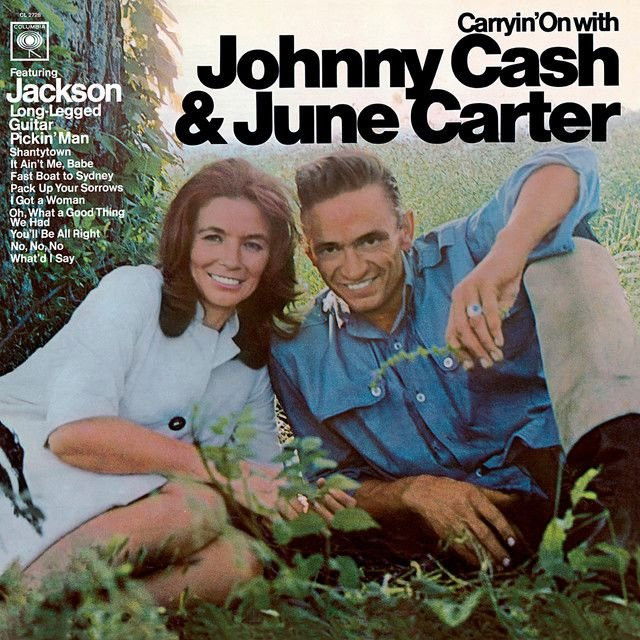
Why 'Jackson' Turns Marriage Into a Duel
The meaning of Jackson Johnny Cash, June Carter Cash starts with a simple idea: this is a song about a couple whose romance has cooled, but whose chemistry has not disappeared. Instead of speaking softly, they spar. They brag, mock, and dare each other to go find excitement somewhere else.
"Jackson" - Johnny Cash, June Carter Cash
We've been talkin' 'bout Jackson, ever since the fire went out
I'm goin' to Jackson, I'm gonna mess around
Loading lyrics...
Unable to load lyrics
We're unable to display the lyrics at this time. Please try again later.
That tension is why the song still feels fresh. It is not a sad ballad about a dead relationship. It is a witty duet where hurt feelings, sexual pride, and playfulness all ride together.
A Marriage Story Told Through Trash Talk
At the center of the song is a marriage that began in heat and now lives in routine. The famous opening phrase, married in a fever
, tells listeners that their love once felt impulsive and blazing. Soon after, the image of the fire going out makes clear that the first rush did not last.
From there, both partners use Jackson as a fantasy destination. He says he is goin' to Jackson
to reclaim swagger and attention. She fires back that he will only embarrass himself. Their threats sound comic, but they reveal a real fear: each wants proof that they are still desirable.
Interpretation: Jackson works less as a map location than as a stage for reinvention. It is the place where each spouse imagines becoming bigger, hotter, and freer than married life allows.
Watch the official Jackson
music video
Why Jackson Matters More as a Symbol
Songwriter Billy Edd Wheeler said he did not have a specific Jackson in mind; he liked the word's sharp sound, according to background collected in the song's reference history. That matters because it pushes listeners away from geography and toward symbolism.
In the song, Jackson means at least three things:
- escape from domestic boredom
- a test of wounded ego
- a fantasy of sexual and social power
That is why the destination can hold both menace and comedy. He imagines crowds admiring him. She predicts they will laugh at the big-talkin' man
. Both are really arguing over who has more power after the honeymoon glow faded.
The Best Lines Show Two Different Dreams
Each verse sharpens the contrast between their self-images. He believes the city will welcome him and restore his confidence. She imagines the exact opposite and answers with delightful mockery.
One of her best moments is the image of him returning humbled, while she says she will be dancin' on a Pony Keg
. The point is not only that she doubts him. It is that she has her own fantasy life too. She is not a passive wife waiting at home. She can compete.
We got married in a fever
hotter than a pepper sprout
Those two short lines do a lot of work. They summarize the past, explain the present, and set up the whole battle. They tell listeners this conflict grows from disappointment, not from indifference.
How Johnny and June Sell the Meaning
The Cash-Carter version became the best-known recording after its 1967 release, reaching No. 2 on Billboard's country chart and winning a Grammy in 1968. Those facts help explain its staying power: audiences heard not just a clever lyric, but a perfect performance match.
Johnny Cash's voice brings weight and confidence. June Carter Cash answers with quick, bright, cutting timing. He sounds sure of himself; she sounds unimpressed and one step ahead. Their interplay turns the song into theater.
Interpretation: The duet works because neither voice dominates. The meaning lives in the clash. If one singer sounded truly cruel or truly heartbroken, the song would darken. Instead, they sound amused, irritated, and attracted all at once.
The Production Keeps the Fight Moving
Produced by Don Law and Frank Jones, the recording moves at a brisk pace and leans on classic country rhythm. The arrangement is tight rather than lush, which fits the lyric's back-and-forth design.
The beat gives the argument a bounce. Guitar, bass, and percussion keep things light on their feet, so the song never sinks into melodrama. Even when the couple trade insults, the groove suggests motion, performance, and a little bit of fun.
That musical choice is crucial. A slower version might sound bitter. This one swings. The sound says the relationship is strained, but not lifeless.
Is This a Breakup Song or a Flirtation?
There are two strong ways to hear the song.
Interpretation 1: It is a near-breakup duet. Both partners feel trapped, and Jackson is a coded threat of cheating, leaving, or starting over.
Interpretation 2: It is a flirtation disguised as a fight. The teasing itself is proof that they still know how to excite each other. Their banter becomes a strange form of intimacy.
Both readings fit. That ambiguity is part of the song's brilliance. Even the ending, with ain't never comin' back
, can sound either reckless or playful depending on how a listener hears the performance.
Why the Song Still Connects
Part of the meaning of Jackson Johnny Cash, June Carter Cash is its honesty about marriage. Long relationships are not only tender. They can also be competitive, theatrical, and funny. "Jackson" captures the moment when disappointment turns into boasting, and boasting turns into foreplay.
It also remains culturally visible. The song has appeared in film and TV, including Walk the Line, which helped introduce it to newer listeners. Its reputation has also stayed strong in country history, including a recent placement on a major greatest-country-songs list.
In the end, "Jackson" is about two people trying to outtalk the boredom that has entered their home. They may dream of escape, but the deeper drama is right there between them.
Disclaimer: This interpretation blends documented background with critical reading of the lyrics and performance. Like many classic songs, "Jackson" can support more than one meaning.








