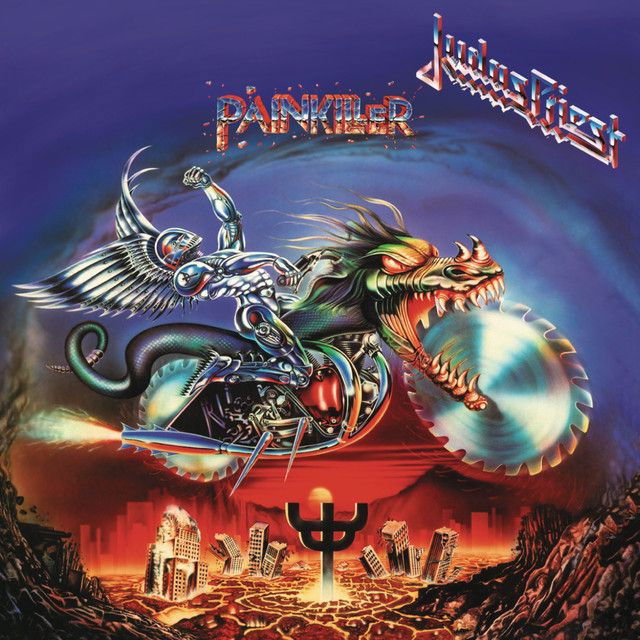
Leather Rebel by Judas Priest
Judas Priest turn a leather-clad outlaw into a symbol of speed, danger, and metal pride.
"Leather Rebel" - Judas Priest
Provided by LyricFindHero of the night
Blood and thunder
Rushing through meLoading...Loading lyrics...
Unable to load lyrics
We're unable to display the lyrics at this time. Please try again later.
Why the meaning of Leather Rebel Judas Priest still hits
The meaning of Leather Rebel Judas Priest is not hard to feel, even if some details stay open to interpretation. The song builds a character who seems part biker, part street warrior, and part heavy metal myth. They do not present a realistic person so much as an exaggerated force of will.
That matters because Judas Priest have long treated metal as both sound and image. Their use of leather, chrome, motorcycles, and night-life style shaped the genre’s visual language, something often noted in coverage of the band’s history and Rob Halford’s image in metal culture.[1][2] In that context, “Leather Rebel” feels like more than a story song. It sounds like a self-portrait of metal attitude.
Watch the official Leather Rebel
music video
The outlaw at the center of the song
From the opening, the lyrics push a heroic but dangerous image. The figure is introduced with force and motion, driven by instinct and adrenaline. Short phrases like Hero of the night
and all alone I walk through fire
suggest someone who lives outside normal rules.
Interpretation: They are not meant to be admired for kindness or realism. They represent total commitment to a chosen identity. This rebel accepts risk, isolation, and even self-destruction if it means living intensely.
That idea grows stronger in the verses. The singer keeps describing a person who thrives under pressure, seeks conflict, and treats the city like a stage. When the lyric says master of the streets
, it frames the rebel as a ruler of urban darkness, someone who turns danger into power.
The chorus turns a person into a myth
The chorus is where the song stops being just a portrait and becomes an anthem. Calling the figure lightning in the dark
makes them feel sudden, electric, and almost supernatural. The line with a burning heart
adds emotion to all that force.
That balance is important. Without it, the song could sound like empty tough talk. Instead, Judas Priest give the rebel a pulse. They are not cold. They are driven by passion, hunger, and belief.
Interpretation: The chorus suggests that rebellion here is not only about breaking rules. It is about staying alive inside a world that can feel mechanical, hostile, or weak. The “leather rebel” becomes a symbol of refusal: refusal to submit, slow down, or disappear.
Power, prophecy, and self-invention
Another key part of the song is its confidence about destiny. The lyrics do not describe doubt. They describe someone who already sees fame and legend ahead. That shows up in the repeated future-looking language, where the narrator imagines becoming a story others will tell.
This makes the song feel almost comic-book grand, but that is part of its appeal. Judas Priest often work in a heightened style, where emotion and identity are pushed to full volume rather than muted realism. In “Leather Rebel,” the character writes their own myth by sheer will.
A quick map of the lyric movement
- The rebel appears as a night-driven force.
- They move through fire, conflict, and city life.
- The chorus crowns them as an icon.
- The later lines predict glory and legend.
That progression turns the song from action scene to self-coronation.
How the sound carries the message
“Leather Rebel” appears on Painkiller (1990), an album released after Judas Priest’s more polished late-1980s period and widely recognized as a major return to speed and aggression.[3][4] The record is credited to Judas Priest and produced by Chris Tsangarides.[3] The songwriters for “Leather Rebel” are K.K. Downing, Rob Halford, and Glenn Tipton.
Musically, the track sounds like a machine built for pursuit. The guitars slash forward in tight, fast patterns. The drums push with near-motorized force. Halford’s voice cuts through the mix with a sharp, commanding edge.
Interpretation: That sonic design mirrors the lyrics exactly. The listener does not just hear a rebel; they hear momentum, pressure, and impact. The production makes the song feel like chrome, sparks, and speed.
A song about metal itself?
There is also a broader reading that may explain why the track has lasted. Because Judas Priest helped define heavy metal style, “Leather Rebel” can be heard as a statement about the culture they helped build. Leather is not random clothing here. It points to a whole visual world of studs, bikes, nightlife, toughness, and performance.
Under that reading, the song is almost meta. The rebel is the metal fan, the frontman, and the genre itself. Loud. dramatic. hard to tame. The song celebrates an identity that outsiders may see as excessive, but insiders experience as freedom.
Final take on its lasting pull
The meaning of Leather Rebel Judas Priest comes down to transformation. Judas Priest take a leather-clad street outlaw and turn them into a symbol of fearless self-definition. The song is about motion, danger, and pride, but also about becoming who they choose to be.
That is why it still works. Even without a detailed plot, it captures a fantasy many rock and metal songs chase: to move through the dark with power, purpose, and style.
Disclaimer: This article offers interpretation based on the lyrics, performance, and known band context. Song meanings can remain open, and listeners may hear something different.







