Why 'Victim Of Changes' Still Cuts Deep
The meaning of Victim Of Changes Judas Priest starts with collapse. On the surface, the song tells a story about a woman whose drinking and drifting have damaged a relationship. But the deeper power comes from how Judas Priest turn that story into something bigger: a portrait of addiction, regret, aging, and emotional whiplash.
"Victim Of Changes" - Judas Priest
The liquor you give stems your will to live and gets right to my brain
Don't you know you're driving me insane?
Loading lyrics...
Unable to load lyrics
We're unable to display the lyrics at this time. Please try again later.
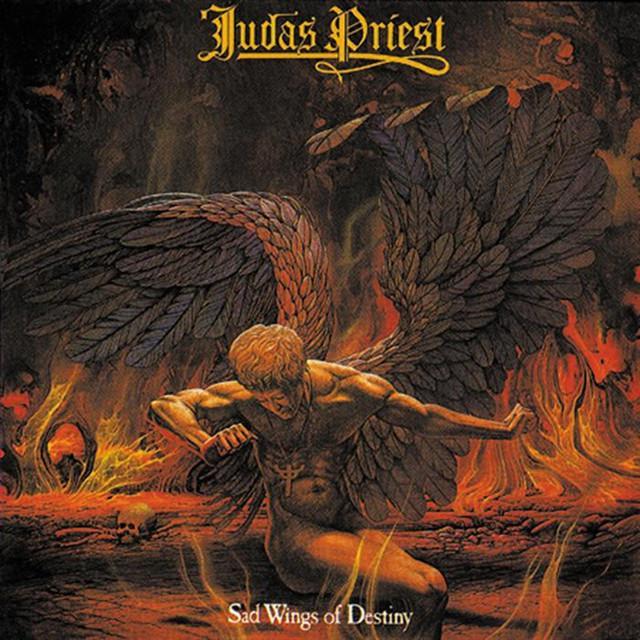
First released on Sad Wings of Destiny in 1976, the track runs 7:47 and has become one of the band's best-known early epics. It was written by Al Atkins, Rob Halford, K. K. Downing, and Glenn Tipton, and recorded for an album now widely treated as a landmark of classic metal. Sources on its release and credits broadly agree on those basics, as noted by reference overviews such as Wikipedia and Songfacts.
A breakup song with a darker center
At its core, the song describes a partner watching someone unravel. The opening paints her as a whiskey woman
, which quickly frames alcohol as more than a habit. It becomes a force that changes her choices, her mood, and her ability to connect.
The narrator sounds furious, but not cold. They hear someone lashing out because they still care. When the lyric suggests she is drivin' me insane
, it is not just insult; it is a sign of emotional exhaustion.
Interpretation: The song is not only blaming one person. It also shows how addiction spreads pain outward. One life is breaking down, but another life is being dragged with it.

Watch the official Victim Of Changes
music video
Who is the “victim” here?
That title is the song's smartest twist. At first, the woman seems to be the obvious victim because she is losing direction and numbing herself with drink. Later, the narrator reveals grief and possession at the same time, especially in the memory of who she once was mine
.
This is where the song becomes more human and more uneasy. The singer is not standing above the wreckage. They are inside it, hurt by what she has become and maybe by their own inability to save the relationship.
Two likely readings
- She is the victim. She is overwhelmed by addiction, loneliness, and time.
- Both are victims. She is consumed by change, while the narrator is crushed by watching it happen.
Songfacts notes that fans have long debated this exact issue, and that ambiguity is part of why the lyric still feels alive.
How the story unfolds line by line
The first section shows a woman trying to redirect her life but failing to find solid ground. The repeated idea of taking another drink suggests a cycle: pain, escape, brief relief, then more pain. When the song hints that things look better
after drinking, the relief feels temporary and tragic rather than joyful.
Then the lyric turns harsher. The narrator accuses, confronts, and explodes. This middle stretch sounds less reflective and more like a fight happening in real time.
After that, the emotional center shifts. Instead of pure anger, the song moves into mourning. The repeated word changes
lands like a verdict. The problem is no longer one bad night. It is transformation itself.
Once she was wonderful
Once she was fine
Those brief lines are crucial because they replace attack with memory. The narrator is grieving the gap between past and present.
Why the music makes the meaning hit harder
Part of the meaning of Victim Of Changes Judas Priest lies in its structure. According to Songfacts and other reference summaries, the finished song was created by merging two earlier compositions: "Whiskey Woman," associated with original singer Al Atkins, and "Red Light Lady," which Halford brought from his previous band. That fused origin helps explain why the track feels so dramatic and multi-part.
The arrangement mirrors emotional instability. It opens with a fade-in dual-guitar harmony, then drops into heavy riffs. Later, the song pulls back into a quieter passage before building again into soaring solos and one of Halford's most famous vocal climaxes.
Rob Halford described the song's impact by praising the dual guitars, the unusual arrangement, and the way it ends with force. Even in short summary form, that comment fits what listeners hear: tension, release, then total emotional overload.
Sound choices that reinforce the lyric
- Twin guitars suggest grandeur, almost like a tragic memory widening on screen.
- Stop-start dynamics mimic arguments and unstable emotions.
- The quiet middle feels like a moment of reflection after rage.
- Halford's final screams sound like pain turning into myth.
This is one reason critics and fans still treat the song as foundational. Writers such as Adrien Begrand and Bob Gendron have praised its historical weight and its huge riff power, while Martin Popoff ranked it high among great metal songs.
Artist context matters
Judas Priest were still early in their career when this song appeared on Sad Wings of Destiny. Yet "Victim of Changes" already shows several traits that would define them: sharp guitar interplay, theatrical intensity, and a willingness to make metal emotional rather than just loud.
It also helped shape Halford's legend. Many accounts point to this track as one of the clearest early examples of his wide range and command. The song has stayed central to the band's live history, appearing on major concert releases over the years.
Final takeaway
The meaning of Victim Of Changes Judas Priest is about more than one troubled relationship. It is about what happens when a person changes in ways that feel irreversible, and how love can turn into blame, memory, and helplessness all at once.
Interpretation disclaimer: Song meaning is never fully fixed, and Judas Priest have left room for debate. This reading treats the song as a story of addiction, loss, and shared damage, but listeners may hear other layers in its title and point of view.








