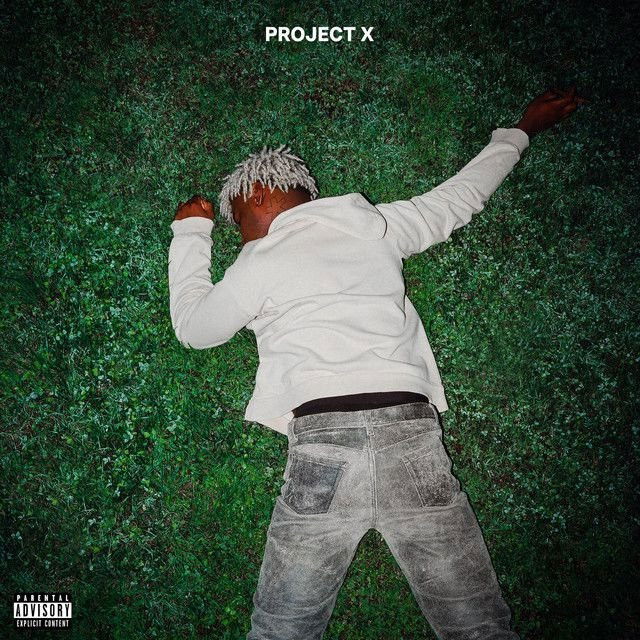
Run + Ran by Ken Carson
Ken Carson’s “Run + Ran” is less a story than a mood: a hard, repetitive victory chant about getting rich, gaining status, and proving people wrong. For readers searching for the meaning of Run + Ran Ken Carson, the core idea is simple. They use money talk, flexes, and constant motion to show what success feels like when it becomes identity.
"Run + Ran" - Ken Carson
Ayy, ooh (Star Boy, you're my hero)
We ain't never running out of money, we ain't running out of loot
Loading lyrics...
Unable to load lyrics
We're unable to display the lyrics at this time. Please try again later.
Rather than build a deep plot, the song stacks images of wealth, drugs, fashion, weapons, and attention. That pile-up matters. It turns achievement into atmosphere, as if they are saying that once they made it, every part of life changed at once.
The Real Point Behind the Bragging
At the center of the track is a basic claim: they came up fast, and now nobody can deny it. The repeated hook about having ran up them bands
is not only about cash. It also signals effort, speed, and payoff.
A key line paraphrases their path clearly: they stayed patient, stuck to a plan, and then showed doubters they were wrong. That makes the song more than empty boasting. The flexing works as proof of transformation.
Interpretation: the song treats wealth as evidence. In this reading, money is not the goal alone; it is the visible sign that they escaped a lower position and built a new self.
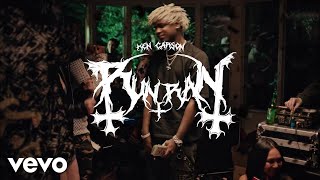
Watch the official Run + Ran
music video
From the Bottom to the Opium Era
One of the most useful details in the lyrics is the move from isolation to recognition. They describe riding alone, then mention signing to Opium. That matters because Ken Carson is part of Playboi Carti’s Opium label world, a scene known for distorted production, punk energy, and fashion-heavy branding. Facts about Carson’s career and label ties are documented in coverage by Complex and The Fader.
The song’s meaning sharpens when heard through that context. They are not just saying they got rich. They are saying they moved from outsider to visible figure inside a trend-setting rap camp.
That is why the lyrics also dwell on copied style and public attention. When they claim others want to be like them, the point is influence. Success here is measured not only by money, but by how many people watch, imitate, or chase them.
Why the Hook Matters So Much
The hook is built on blunt repetition, and that is the point. When they say they are never running out of money
, the line feels bigger than a financial statement. It sounds like a fantasy of endless momentum.
Repetition turns the song into a mantra. Instead of adding new information, it reinforces a mindset: abundance, confidence, and no fear of falling back.
There is also a small but important tension hidden inside that excess. People who repeat security so often may still be haunted by insecurity. Interpretation: the nonstop insistence on wealth can be heard as overcorrection, a way of speaking scarcity out of existence after having known it too well.
The 2Pac Name-Drop and Borrowed Power
When Ken Carson says they feel like 2Pac
, it is best read as an energy reference, not a direct comparison of legacy. The line borrows a symbol of charisma, danger, and cultural weight.
In the same breath, the song pairs that confidence with intoxication and luxury. That combination tells listeners what kind of power matters here: not moral seriousness, but aura. They want the room to feel their presence.
So the reference works like shorthand. Instead of explaining confidence, they attach themselves to a larger rap icon and let that image do the work.
Sound First, Meaning Second
“Run + Ran” also makes sense as a production-driven song. The credited writers provided in the user’s context are Tobias Dekker, Anton Martin Mendo, and Kenyatta Frazier Jr., with producer tags in the lyrics pointing to Outtatown and Star Boy. Both producers are closely linked to modern rage and melodic trap textures, heard across Opium-adjacent rap. Background on their production work appears in artist and producer databases such as Genius and Discogs.
The beat’s job is to make repetition feel exciting rather than empty. Its looping force matches the lyrical obsession with accumulation. The drums hit like forward motion, and the synth-heavy backdrop creates a cold, synthetic glow.
That means the song’s meaning is carried as much by feel as by words. They do not argue success; they perform it.
Themes Hidden Inside the Excess
Several themes keep returning:
- Self-creation: they present themselves as someone who made the jump upward.
- Proof through display: money, clothes, and travel act as receipts.
- Influence and envy: others copy the style but cannot become the source.
- Risk and numbness: references to substances and violence darken the celebration.
One short cluster sums up the motivational side best:
stayed down and came up
stuck to the plan
showed you I can
These lines are the song’s clearest spine. Beneath the flexing, they reveal a basic underdog message.
Final Read on “Run + Ran”
The meaning of Run + Ran Ken Carson comes down to earned swagger. It is a track about turning hustle into identity and turning success into a repeated sound. Their world in the song is flashy, reckless, and often abrasive, but it is also built on one simple emotional engine: they wanted proof they could win, and now they are surrounded by it.
That is why the song lands for fans. It is not subtle, but it is direct. It captures the rush of coming up so fast that life starts to feel like one long, loud confirmation.
Disclaimer: This interpretation is based on the lyrics, performance style, and public career context. As with most rap songs, some lines may reflect persona, exaggeration, or mood rather than literal autobiography.









