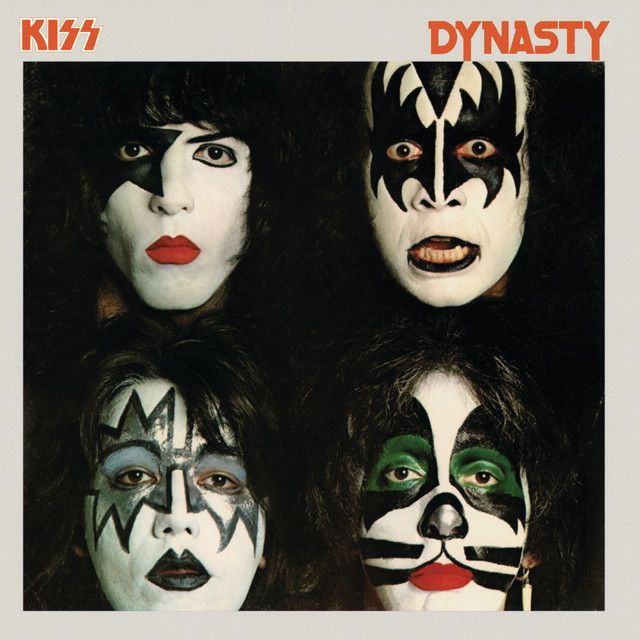
I Was Made For Lovin' You by KISS
They didn’t set out to write poetry—they set out to make people move. In 1979, KISS fused a club-ready beat with arena guitars and delivered a single that still raises eyebrows and fills stadiums. If you’re searching for the meaning of I Was Made For Lovin' You KISS, it’s simpler than the debate around it: lust, destiny, and a night where both people say yes.
"I Was Made For Lovin' You" - KISS
Ha, do-do-do-do-do-do-do-do-do
Do-do-do-do-do-do-do
Loading lyrics...
Unable to load lyrics
We're unable to display the lyrics at this time. Please try again later.
Why This Disco-Rock Pivot Still Sparks Debate
KISS were hard-rock kings by the late ’70s. Then they dropped Dynasty and led with “I Was Made for Lovin’ You,” a disco-inflected track produced by Vini Poncia. It became a worldwide hit, reaching No. 11 in the U.S. and topping charts in multiple countries.
Behind the scenes, the band was split. Paul Stanley drove the pop experiment with songwriters Desmond Child and Poncia. Gene Simmons and Peter Criss disliked the slick direction; Criss didn’t even play drums on the studio recording—session ace Anton Fig did. Fans argued whether this was savvy crossover or sellout. Decades later, the song remains a live staple, often performed heavier than the studio cut.

Watch the official I Was Made For Lovin' You
music video
Plainspoken Desire: What the Lyrics Really Mean
The lyric says the quiet part out loud. The narrator wants intimacy now, not someday. Lines like Tonight, I want to give it all
frame the entire song as a pledge of total presence and follow-through. Nighttime imagery—In the darkness
—suggests secrecy and thrill, but not deceit. The tone is eager and direct.
Interpretation: the song links erotic urgency to an idea of fate. When the chorus declares I was made for lovin' you
and answers with You were made for lovin' me
, it upgrades chemistry into purpose. It’s a pop way of saying, “This is what we’re here for.” By keeping the story to a single night with mutual consent and reciprocity, the lyric avoids melodrama and stays focused on simple, physical devotion.
Who’s Speaking, And Why “Tonight” Matters
It’s a first-person voice addressing a partner with confidence. They want to see desire reflected back—eyes, magic, and promise. The refrain’s insistence doubles as a request for equal enthusiasm. When the singer pushes Can you get enough of me?
, they’re not just boasting; they’re checking in.
Interpretation: “Tonight” is the boundary that organizes the song. It compresses longing, consent, and payoff into one shared window of time. The certainty of “made for” language attempts to banish doubt, turning a risky ask into a fated match.
The Chorus as a Mission Statement
Pop choruses work when they do the emotional heavy lifting. Here, the hook is both premise and proof. I can't get enough
captures the feedback loop of attraction; repetition turns it into a mantra. Interpretation: the chorus reframes lust as mutual destiny, using circular phrasing to make the promise feel inevitable—almost ritual.
How the Sound Carries the Heat
The music sells the message. A four-on-the-floor kick and handclaps pull from disco, while chugging rhythm guitars and Ace Frehley’s concise solo keep KISS’s rock DNA intact. Paul Stanley’s vocal stacks build a communal, chant-like lift in the hook. Vini Poncia’s production favors gloss: tight drums (played by Anton Fig), a springy bass line from Gene Simmons, and ear-candy “do-do” scats that telegraph dance-floor fun.
Interpretation: the arrangement’s hypnosis—steady pulse, repeated hook, minimal scene-setting—mirrors the lyrical simplicity. It’s not about narrative, it’s about sensation. By smoothing edges and brightening the beat, the record makes destiny sound danceable.
Backlash, Legacy, and Alternate Takes
Some fans bristled at KISS doing disco in the middle of a rock–disco culture clash. Band members have publicly voiced mixed feelings about the track. Yet the public verdict is clear: the single went gold in the U.S., hit No. 11 on the Hot 100, and topped charts abroad. Onstage, KISS often toughened it up, proving the core song works beyond its studio gloss.
Covers and reworks—from Latin pop to European dance to metal—show how durable the hook is. That durability is a clue to the meaning of I Was Made For Lovin' You KISS: strip away era-specific production and you still have a clean, undeniable proposition about mutual desire.
Takeaway
“I Was Made for Lovin’ You” is a straight-ahead seduction set to a groove designed for bodies, not arguments. Whether you hear a sellout or a smart crossover, the lyric’s claim—You were made for lovin’ me
—remains a bold, catchy way to make the case for one unforgettable night.
Disclaimer: Song meanings are interpretive and may differ from artist intent or listener experience.








