Why 'Alle Gegen Alle' Feels Like a Warning
The meaning of Alle Gegen Alle Laibach becomes clearer when the song is heard not as a simple statement, but as a staged display of power. The lyrics are brief, blunt, and highly visual. They describe black clothes, polished boots, political-looking symbols, loud cries, and a new dance that feels both thrilling and threatening.
"Alle Gegen Alle" - Laibach
Unsere Stiefel sind so schön.
Links den roten Blitz.
Loading lyrics...
Unable to load lyrics
We're unable to display the lyrics at this time. Please try again later.
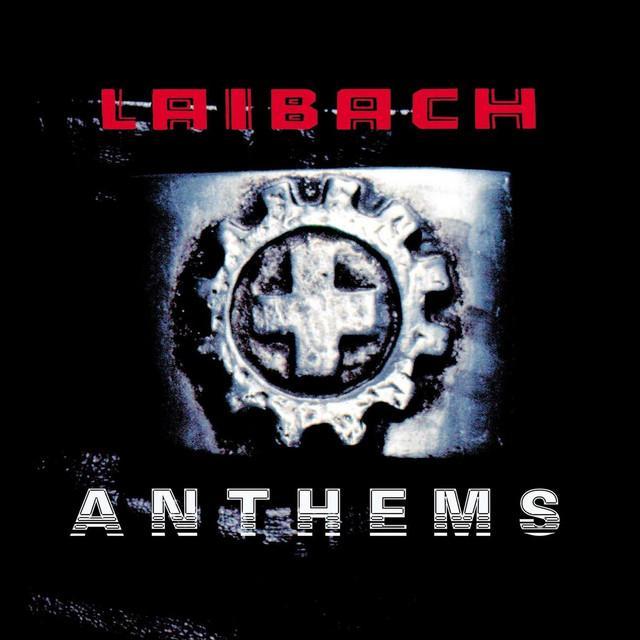
Laibach have long built songs around that kind of tension. The Slovenian group is widely known for using totalitarian aesthetics, military imagery, and industrial sound to blur the line between critique and performance, a reputation noted in major profiles and reference sources such as Encyclopaedia Britannica and AllMusic. In that context, this song sounds less like a celebration of unity and more like a warning about how easily crowds can be organized through symbols, rhythm, and force.
A Slogan Disguised as a Song
The title phrase, Alle gegen Alle
, means “all against all.” That idea drives everything else in the lyric. Rather than telling a detailed story, the song builds a collective identity out of uniforms and motion. The speakers do not sound like individuals. They speak as a group, almost like a marching block.
That group voice matters. They say Unsere Kleidung ist so schwarz
and Unsere Stiefel sind so schön
, framing appearance as a source of pride. The words are simple, but the effect is sharp. Clothing and boots are not just fashion here; they imply discipline, intimidation, and belonging.
Interpretation: The song suggests that ideology often begins with image. Before a crowd explains what it believes, it may show what it wears, how it moves, and what it salutes.

Watch the official Alle Gegen Alle
music video
The Symbols Do the Heavy Lifting
A few of the most striking lines point to visual emblems: den roten Blitz
and den schwarzen Stern
. Even without a full political explanation, those images feel loaded. Red and black are colors often tied to revolution, extremism, or militant identity. A lightning bolt suggests force and speed. A star suggests rank, doctrine, or allegiance.
The lyric does not explain these symbols in a stable way. That is part of the point. Laibach often work by presenting the language of power in exaggerated form, forcing listeners to sit with its attraction and danger. Instead of saying, “this ideology is bad,” they stage the emotional pull of mass identity so the listener can feel how it works.
Movement Turns Into Ritual
The song becomes even more unsettling when it shifts from dress and symbols to noise and motion. The group declares Unser Tanz ist so wild
and calls it Ein neuer böser Tanz
. In plain terms, they are not just marching; they are turning aggression into spectacle.
That is one of the smartest parts of the writing. Dancing usually suggests freedom, pleasure, or celebration. Here, dance feels militarized. It becomes a ritual of group energy. The “new evil dance” sounds like a trend, a command, and a threat all at once.
Unsere Schreie sind so laut.
Unser Tanz ist so wild.
Those lines link voice and body. The crowd shouts, then moves. In other words, emotion becomes choreography. Interpretation: The song may be showing how extremist energy can become seductive when it is packaged as style, rhythm, and collective release.
Why Laibach’s Version Hits So Hard
A key fact is that Laibach’s recording of “Alle gegen alle” appeared on NATO, released on October 10, 1994, by Mute, according to the album’s documented release history at Wikipedia’s overview of NATO. That album is a war-themed set of covers, including songs such as “War,” “In the Army Now,” and “Dogs of War.” This matters because it places “Alle gegen alle” inside a larger frame of militarism, conflict, and political theater.
The user-provided credits list Robert Görl as the writer, which fits the song’s origin as a work associated with Deutsch Amerikanische Freundschaft, the influential German act commonly abbreviated DAF. Laibach’s choice to cover it was not random. DAF were central to the development of electronic body music, and Laibach’s industrial style is well suited to that severe, repetitive pulse.
On a sonic level, the track’s power comes from mechanical rhythm and chant-like delivery. The beat tends to feel rigid rather than loose. That matters because the sound mirrors the lyric’s obsession with uniformity. Instead of inviting personal expression, the production pushes bodies into formation.
What the Song May Be Saying About Power
There are at least two strong readings of the meaning of Alle Gegen Alle Laibach.
Reading One: A critique of fascist style
The first reading is that the song exposes how authoritarian movements sell themselves through glamour. Black clothes, boots, emblems, shouting, and a synchronized dance all turn politics into aesthetic experience. The danger is not hidden; it is made attractive.
Reading Two: A broader vision of social conflict
Another reading is that the song is not only about one ideology. The phrase “all against all” can describe a whole society trapped in endless hostility. In that sense, the song becomes a portrait of modern political life, where every side hardens into identity and performance.
Both readings can be true at once. Laibach often thrive in that ambiguity.
Final Take on the Message
What makes this song memorable is its compression. In just a handful of lines, it creates a whole world of uniforms, symbols, noise, and ritual movement. The result is catchy on the surface and disturbing underneath.
For most listeners, the meaning of Alle Gegen Alle Laibach is not that conflict is noble. It is that conflict can be stylized until people stop noticing its ugliness. That is why the song still lands like a warning.
Disclaimer: This interpretation combines lyrical analysis, artist context, and album history. As with many Laibach songs, ambiguity is part of the design, so reasonable listeners may read it differently.








