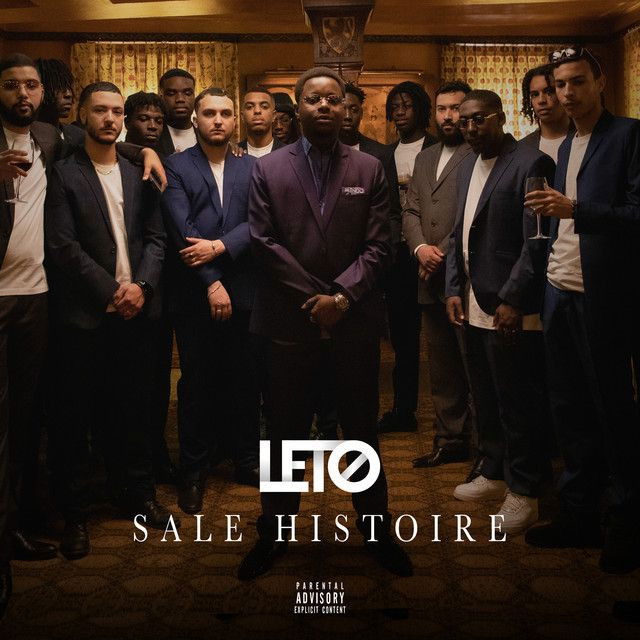
Sale histoire by Leto
If a listener wants the meaning of Sale histoire Leto, the clearest answer is this: the song tells a brutal street story where money, loyalty, danger, and faith all exist at the same time. Leto presents a world shaped by housing blocks, prison ties, paranoia, and the need to survive. Yet the track is not only hard or aggressive. Beneath the threats and swagger, it sounds tired, wounded, and almost prayerful.
"Sale histoire" - Leto
C'est la guerre pour le hall
La guerre pour un coin d'rue (touh-touh-tah)
Loading lyrics...
Unable to load lyrics
We're unable to display the lyrics at this time. Please try again later.
A dirty story with a human center
The title already sets the tone. Sale histoire suggests a messy, painful life story rather than a heroic tale. In the verses, they describe conflict as normal. The opening idea is that there is war for space and status in the neighborhood, not peace or stability.
That matters because the song keeps moving between public toughness and private damage. Leto mentions trust, money, weapons, prison, and betrayal, but they also admit fear and emotional weight. When the narrator says they trust their pen, their crew, and their money more than other people, the point is not confidence alone. It shows a world where trust has become scarce.

Watch the official Sale histoire
music video
Street survival, not street fantasy
One reason the meaning of Sale histoire Leto feels strong is that the details are specific. They refer to sending money to jailed friends, watching fake allies switch sides when cash appears, and learning that friendship can collapse under pressure. A short phrase like les pensées noires
points to dark thoughts, not just anger.
This is where the song becomes more than a list of threats. The narrator explains that pain does not disappear when money comes in. They can gain status and still feel empty. That contrast is central to the track’s message: success inside a damaged system does not heal the damage.
What the chorus really changes
The chorus gives the song its emotional frame. Instead of just repeating violence, it opens up a bigger idea about mortality and hope. The key line on ira tous au ciel
brings religion into the song, but not in a simple or pure way.
Before and after that phrase, the hook balances two urges: shine and pray. Leto places ambition next to spiritual need. In plain terms, they want to rise above their situation, but they also know that danger and guilt follow them.
Faut que j'brilleFaut que j'prieC'est plus qu'un rêve
Those lines are short, but they say a lot. The dream is no longer abstract. It has become a survival mission. Interpretation: the chorus suggests that shining is not vanity alone; it is proof that they made it out, or at least stayed alive long enough to be seen.
The song’s main themes
Loyalty and betrayal
Leto keeps returning to who stands firm when money enters the room. They warn that cash reveals character. In this world, betrayal is common, and loyalty is tested by prison, fear, and profit.
Pain under success
A major line of thought in the song is that income does not erase trauma. The narrator can sound victorious one second and emotionally exhausted the next. That tension gives the track depth.
Faith inside chaos
The song repeatedly brings in prayer and the Lord. That does not make the narrator calm or innocent. It shows someone trying to hold onto meaning while living inside moral disorder.
How the sound carries the meaning
The production tag points to Hood Star Beats, and the instrumental style fits modern French street rap: dark, spacious, and heavy. The beat leaves room for Leto’s voice to hit hard, while the hook feels more open and melodic than the verses.
That contrast is important. The verses are clipped and forceful, matching the talk of weapons, territory, and pressure. The chorus softens just enough to sound reflective. It feels like a confession rising out of the smoke.
Even ad-libs and repeated percussion-like sounds work as part of the atmosphere. They mimic impact and alarm, keeping the listener inside a tense environment. The music does not simply support the lyrics; it turns the whole song into a state of mind.
Artist context that helps
Leto is a French rapper known for hard-edged delivery and street-centered writing, and the provided credits identify Henoc Bofenda as the writer. That context matters because Sale histoire fits a style where realism, toughness, and personal scars often live together.
For U.S. listeners, the song may resemble trap or drill in emotional texture, but its language and local references keep it rooted in French urban life. The repeated focus on halls, blocks, and prison links the track to a community setting rather than a purely individual story.
A second reading: confession disguised as dominance
There is another useful way to hear the song. Interpretation: Sale histoire may be a confession hiding inside a threat performance. On the surface, Leto sounds untouchable. Underneath, they sound cornered by the same world they claim to control.
That reading is supported by phrases about suspicion, dark thoughts, and the need to pray. The narrator does not sound free. They sound armored.
Final takeaway on Sale histoire
The meaning of Sale histoire Leto is not just violence, money, or reputation. It is the portrait of a person trying to survive a broken environment without letting that environment fully erase their dream, their faith, or their sense of who matters.
In the end, the song hits because it never pretends the street is glamorous. It sounds costly. It sounds lonely. And it sounds like a life where shining and praying have become the same fight.
Disclaimer: This interpretation is based on the lyrics provided and publicly known artist context. As with any song, meaning can remain open to different readings.








