Why "Just Another Rainbow" Feels So Bittersweet
The meaning of Just Another Rainbow Liam Gallagher, John Squire starts with a clever reversal. A rainbow usually suggests wonder, luck, or a bright ending. Here, it means almost the opposite. The song turns that hopeful image into a sign of letdown, while still sounding big, alive, and strangely energizing.
"Just Another Rainbow" - Liam Gallagher, John Squire
This would be
Just another rainbow
Loading lyrics...
Unable to load lyrics
We're unable to display the lyrics at this time. Please try again later.
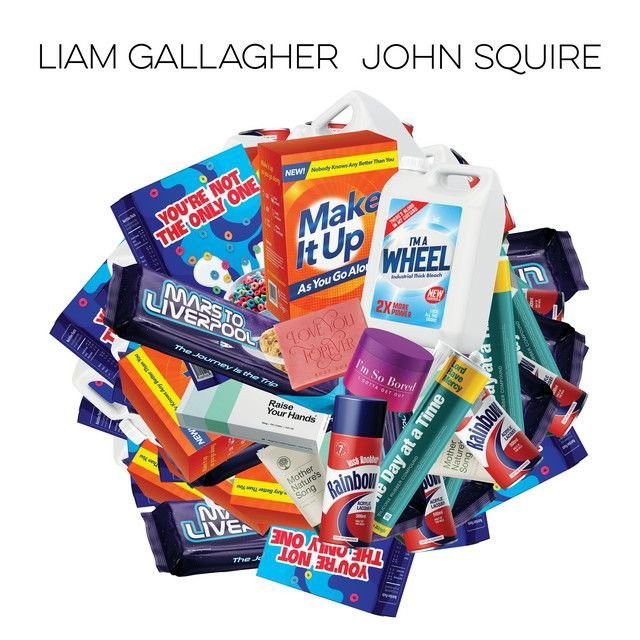
Released on January 5, 2024 as the lead single from the duo’s collaborative album Liam Gallagher John Squire, the track brought together two major Manchester figures: Oasis frontman Liam Gallagher and former Stone Roses guitarist John Squire. According to available release details, Squire wrote the song, while Greg Kurstin and Liam Gallagher produced it. It runs over five and a half minutes and leans fully into rock with psychedelic color and Madchester echoes.
A rainbow with no reward
On the surface, the lyric is simple: they keep looking upward and outward for meaning, but the payoff never comes. The key image is not a magical rainbow at the end of a struggle. It is just another rainbow
—something beautiful that has lost its promise.
That idea becomes clearer when the song pairs wonder with absence. The lyric mentions no pot of gold
, which undercuts the old fairy-tale ending people attach to rainbows. Instead of reward, they get repetition. Instead of closure, they get another passing sign in the sky.
Interpretation: This makes the song feel like an anthem about living with unmet expectations. It is not pure despair. It sounds more like they have learned that life rarely gives the neat prize people were taught to expect.
What the verses suggest about the speaker
The first verse frames the speaker as someone restless and searching. They seem to move through the world looking for a bigger answer, only to find another symbol that leads nowhere. Even the phrase I search the sky
implies hope, but also distance. The answer is always above them, never in their hands.
Later lines make everyday pressure creep in. The song shifts from cosmic images to the grind of ordinary life, including the blunt phrase paying the bills
. That detail matters because it pulls the rainbow down from dream space into adult reality.
Interpretation: The contrast suggests a person caught between imagination and routine. They still want transcendence, but daily life keeps interrupting the fantasy.
Why the chorus hits so hard
The chorus works because it repeats the title until it starts to sound heavy rather than bright. The image of the rainbow hanging over me
feels less like blessing and more like pressure. It is present, visible, even beautiful—but it does not help.
That is the emotional twist at the heart of the song. Many rock songs treat hope as a force that saves the speaker. This one treats hope as something more complicated: a thing that can linger above them while leaving them unchanged.
There is also a surreal line about the rainbow dripping on my tree
. It sounds vivid, messy, and slightly unnatural.
Interpretation: That image may suggest beauty turning sticky or invasive. The dream is no longer distant; it is seeping into their space, but still not becoming useful.
The color list and the line they cannot uncross
Near the end, the song names the rainbow’s colors in order and then lands on a striking final thought:
Red and orange, yellow and green
Blue, indigo, violet
We’ve crossed a line
This is the article’s only longer lyric quote, and it matters because it changes the song’s tone. Up to that point, the rainbow is mostly a symbol of failed promise. Here, it becomes a border.
Interpretation: We’ve crossed a line
may point to a relationship that has shifted, or to a personal awakening. They may now see through illusions they once trusted. The rainbow is not just scenery anymore; it marks the moment after innocence is gone.
How the music deepens the meaning
A big reason the song lands is that the sound does not wallow. It drives forward with swagger. Squire’s guitar riff gives the track a circular, hypnotic pull, while Liam Gallagher sings with his familiar nasal force. Reviews widely noted that the collaboration sounds very much like what listeners would expect from them: psychedelia, attitude, and Manchester lineage.
That matters for meaning. If the lyric alone suggests disappointment, the music suggests survival. John Squire said the most obvious take is disappointment, adding that you never get what you really want, but he also called it one of the most uplifting tracks they made together. That tension is the whole song.
Greg Kurstin’s production helps keep the track muscular rather than gloomy, and the presence of players like Joey Waronker on drums gives it movement and shape. The result is a song that sounds too alive to be defeatist.
Artist context makes the message richer
This pairing carries history. Gallagher comes from Oasis, a band deeply shaped by The Stone Roses, and Squire was one of the key architects of that earlier Manchester sound. So when they make a song about beauty, longing, and disappointment, it lands with extra weight.
For many listeners, the track also feels like a conversation between eras: late-1980s/early-1990s British alternative rock meeting older psychedelic ideas. That familiar sound is part of the message. They are not chasing novelty here. They are exploring what remains after youth, myth, and ambition meet real life.
Final takeaway on the song's message
The meaning of Just Another Rainbow Liam Gallagher, John Squire is less about cynicism than recognition. It says that beauty still exists, but beauty does not always fix anything. They can see the rainbow clearly and still know there is no treasure waiting.
That mix of disappointment and lift is what makes the song work. It sounds like a shrug, a stare into the sky, and a refusal to stop moving.
Disclaimer: This interpretation is based on the released song, artist comments, and musical context. Like John Squire suggested, listeners may hear it differently.






