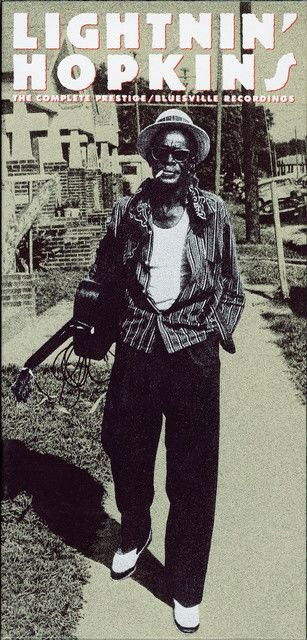
I Asked The Bossman by Lightnin’ Hopkins
They don’t just hear a breakup in Lightnin’ Hopkins’s plea—they hear a man trapped by someone else’s power. Set “down in Louisiana
,” this blues cuts to the bone: love meets authority, and authority wins. The core meaning of I Asked The Bossman Lightnin’ Hopkins centers on a lover begging a gatekeeper to let his partner come home and restore a life that’s fallen apart.
"I Asked The Bossman" - Lightnin’ Hopkins
Asked that Bossman to let my baby be
Down in Louisiana
Loading lyrics...
Unable to load lyrics
We're unable to display the lyrics at this time. Please try again later.
A Southern Plea About Power and Love
The narrator keeps asking a superior to “let my baby be
.” In plain language, they want the Bossman to release Margie so the couple can reunite. It’s heartbreak, but it’s also a power struggle. The singer is not fighting Margie; they’re pleading with the person who controls her fate.
Interpretation: The song frames romance inside a system where work, land, or law can decide private lives. Hopkins’s choice of a Bossman hints at a social order where one man’s word can overrule love.

Watch the official I Asked The Bossman
music video
Who’s Speaking—and Who Is the Bossman?
The voice is first-person and conversational. They tell us they once “were doing alright,” then things changed when the Bossman stepped in. The Bossman might be an employer, a landlord, a prison official, or a judge-like figure. Hopkins never says, and that ambiguity is the point.
Interpretation: By leaving “Bossman” undefined, the song captures many forms of control. Any authority that can part two people fits the role. This makes the lament feel bigger than one story.
The Story in Steps
- The couple is in the South, “
down in Louisiana
,” living simply but together. - The Bossman takes Margie away, and the singer calls it a “
low down, dirty shame
.” They’re naming the act as unfair. - Separation sets in. The singer wonders if they’ll ever “
see my little Margie’s face
” again. Hope flickers, but it’s dim. - A twist: the singer says “
on the papers she still is mine
.” Love and law aren’t matching; paperwork claims one thing, but power enforces another. - The plea repeats—“
please release my little Margie
”—as if repetition itself could break the wall.
What the Refrain Really Says
Calling it a “low down, dirty shame
” does more than vent. It labels the situation as moral failure. Interpretation: The refrain is a verdict. The singer can’t punish the Bossman, but they can judge him. Naming the wrong is a small act of power.
Symbols and Motifs That Carry Weight
- Bossman: A stand-in for any authority with outsized control.
- Papers: The gap between legal status and lived reality. Even if “papers” say Margie belongs in one place, power puts her elsewhere.
- Louisiana: More than a map dot. It conjures a world of fieldwork, debt, and peonage—systems where a person’s options can be set by someone above them.
- Repetition: The plea returns again and again, mirroring how people petition bosses, courts, or foremen—often without answer.
How the Sound Deepens the Story
Hopkins’s delivery is intimate and unhurried. The guitar shuffles with a heavy thumb and loose treble runs, leaving space for breath and worry. That pocket feels like waiting at a door that won’t open.
His voice leans conversational, more talk-singing than belting. Bends and blue notes shade words with ache. The likely 12-bar, AAB structure keeps verses cycling back to the same emotional place: say the trouble, say it again, then sum it up. Musically, the song creates a circle—the same plea, the same power, no change.
Two Convincing Readings
- Interpretation 1: Workplace control. The Bossman is an employer who uses job power or housing to separate the couple. The singer tries to negotiate, but can’t change the terms.
- Interpretation 2: Legal custody or incarceration. References to “papers” suggest a judge or warden. The singer may be pleading against a system, not just a man.
Each reading is supported by the same details because the blues thrives on open shapes. Hopkins lets listeners fill the story with the power structure they know.
Why This Blues Still Lands
The meaning of I Asked The Bossman Lightnin’ Hopkins stays timely because people still feel how systems strain love. The song refuses tidy answers. It names the harm, begs for mercy, and accepts that mercy might not come. That raw realism is why Hopkins’s blues continue to speak.
Takeaway
At heart, this is a mercy song. A man asks a gatekeeper to do the right thing. The music moves like a slow walk down a corridor, each step another try at the same locked door. The power imbalance is the villain, and the chorus makes sure we hear it.
Disclaimer: Interpretation reflects critical analysis and may differ from the artist’s original intent.








