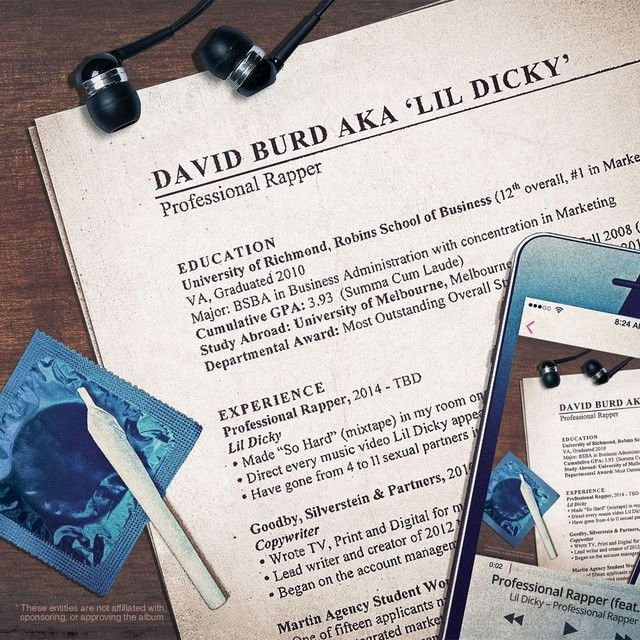
Why '$ave Dat Money' Makes Frugality a Flex
The meaning of $ave Dat Money Lil Dicky, Fetty Wap, Rich Homie Quan starts with a joke, but it does not end there. On the surface, the 2015 single turns rap luxury talk inside out. Instead of cars, chains, and wasteful spending, Lil Dicky brags about being cheap.
"$ave Dat Money" - Lil Dicky ft. Fetty Wap, Rich Homie Quan
Ay, where the gold at baby
Ay, where the clothes at baby
Loading lyrics...
Unable to load lyrics
We're unable to display the lyrics at this time. Please try again later.
That reversal is the whole engine of the song. It mocks status culture while also asking a real question: why do people spend money just to look rich? In that sense, the track is both comedy and critique.
The Real Target Is Fake Wealth
Lil Dicky builds the song around a simple contrast. In mainstream rap, money often appears as proof of power. Here, they treat restraint as the smarter kind of power.
Early on, the song makes that point directly by saying the rap game got it all wrong
. That line frames everything that follows. The verses are not random cheap jokes; they are a running argument against spending for appearances.
Instead of admiring flashy habits, the narrator lists everyday cost-cutting moves: off-brand products, old clothes, shared subscriptions, travel timing, and small bill disputes. These details make the song funny because they are ordinary. They also make it memorable because they feel lived-in.

Watch the official $ave Dat Money
music video
How the Hook Turns Saving Into a Slogan
The chorus is one of the smartest parts of the track. When Fetty Wap repeats we gon' save that money
, the song stops sounding like one person being stingy and starts sounding like a group motto.
That matters because the hook turns thrift into a public identity. In many rap songs, the chorus announces success through spending. Here, success is refusing to waste cash. Interpretation: the hook works like a protest chant against performative wealth.
It also helps that the line is extremely simple. Anyone can remember it, and that simplicity fits the message. Saving money is not glamorous language, but the song presents it as its own cool code.
The Verses Use Specificity as Comedy
The best jokes come from sharp, practical details. Lil Dicky is funny not because they say they are cheap, but because they explain exactly how. They mention things like checking prices, timing purchases, stretching household supplies, and avoiding convenience fees.
A short phrase like check the check
captures that mindset well. It suggests someone who studies every charge and refuses to be careless. Another line about asking what an ice cube costs pushes that habit into absurd territory, but that exaggeration is the point: they are making pettiness into performance art.
A Brief Detour That Proves the Rule
Rich Homie Quan's guest moment is especially clever because it sounds closer to a standard rap boast. Then Lil Dicky interrupts the idea and jokes that a full verse would have cost too much.
That gag is important to the song's meaning. It shows the track knows the style it is parodying, and it uses the feature to stage that contrast inside the song itself.
Sound, Style, and the Joke Beneath the Beat
Produced by Money Alwayz, the single was released on June 10, 2015, as part of Lil Dicky's debut album Professional Rapper and later reached No. 71 on the Billboard Hot 100, according to publicly available chart and release data. The song is often labeled comedy hip-hop, which fits its tone and structure.
Musically, though, it does not sound cheap. The beat is sleek, buoyant, and polished. That choice matters.
A thinner or novelty-style beat would have made the joke too easy. Instead, the production sounds like a proper radio rap single. Interpretation: that polished sound lets the anti-flex message land harder, because the song lives inside the exact style it is making fun of.
Why the Video Strengthened the Message
The music video made the concept even bigger. It became famous for trying to create a lavish rap visual without actually paying for the usual luxury setup, reportedly using borrowed locations, favors, and product placement. That real-world stunt matched the lyrics almost perfectly.
Where the gold at baby
Where the clothes at baby
Where the dough at baby
Those lines sound like a normal demand for rap-video excess. But in context, they are sarcastic. The song keeps raising the expectation of spectacle, then undercutting it with bargain logic.
The video's success helped the song travel beyond a one-liner. It showed Lil Dicky could turn a comic premise into a full concept. The clip also brought extra attention through celebrity cameos and its low-cost brag, reinforcing the same joke from another angle.
A Song About Anxiety, Too
There is another layer beneath the laughs. Saving money in the song is not only practical; it can sound defensive. Many lines suggest a fear of being overcharged, tricked, or made to look foolish.
That tension gives the song more bite. Beneath the jokes, they seem suspicious of systems that reward image over substance. Interpretation: the humor may hide money anxiety, or at least a deep discomfort with waste and social pressure.
That is why the song still connects. Plenty of listeners may never relate to champagne and sports cars, but they do understand wanting control over bills and resisting fake expectations.
Why '$ave Dat Money' Still Works
The meaning of $ave Dat Money Lil Dicky, Fetty Wap, Rich Homie Quan is bigger than simple cheapness. The song turns frugality into rebellion. It says a person does not need to spend wildly to feel confident, funny, or culturally sharp.
Its lasting trick is that it laughs at rap excess without fully rejecting rap pleasure. The beat still knocks. The hook still sticks. The flex is still a flex. It is just aimed in the opposite direction.
Disclaimer: This interpretation is based on the song's lyrics, performance, production, and public context. Like any piece of art, listeners may hear different meanings in it.








