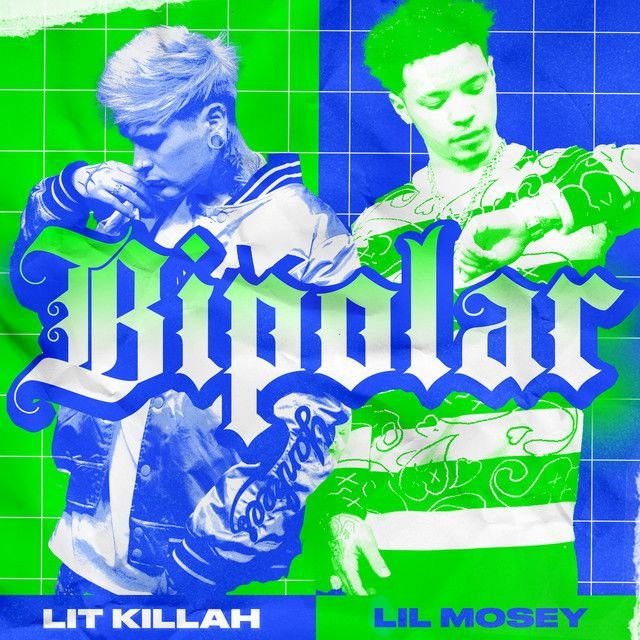
Why “Bipolar” Feels Like Emotional Whiplash
The meaning of Bipolar LIT killah, Lil Mosey comes down to a relationship that keeps changing shape. One person feels desired, then ignored. They feel chosen, then pushed away. That swing is what gives the song its hook, its tension, and its sense of panic.
"Bipolar" - LIT killah, Lil Mosey
Pero a su jugada me anticipé
De su peli soy el actor principal
Loading lyrics...
Unable to load lyrics
We're unable to display the lyrics at this time. Please try again later.
LIT killah and Lil Mosey turn that idea into a bilingual pop-rap song about mixed signals. It is catchy on the surface, but underneath the melody is a simple fear: they cannot trust what love will look like tomorrow.
A Romance Built on Uncertainty
At its core, the song describes emotional inconsistency. The narrator keeps reaching for someone who seems impossible to read. In one of the song’s key ideas, the partner “un día me ama”
and then suddenly pulls away. The point is not subtle: affection feels temporary.
That is why the song keeps circling back to confusion instead of closure. The narrator is not fully over the relationship, even after hurt. They still search, still wait, still ask where the other person went. That detail matters because it makes the song less like a clean breakup anthem and more like a portrait of attachment.
Interpretation: the track is really about emotional dependence as much as heartbreak. They know the pattern is damaging, but they still want the person back.

Watch the official Bipolar
music video
The Hook Turns Chaos Into a Label
The chorus gives the song its most memorable phrase: “tú ere’ bipolar”
. In the story of the song, that line is a way of naming unpredictability. The speaker is trying to explain why the relationship feels impossible to stabilize.
Still, it is important to separate the lyric from a medical reading. In this context, the word works as a pop metaphor for rapid changes in affection, not as a careful description of mental health. What the song emphasizes is behavior the narrator experiences as random, hurtful, and hard to decode.
That repeated labeling also shows the narrator’s mindset. When people feel emotionally overwhelmed, they often reduce a messy situation into one sharp phrase. Here, the hook becomes a shortcut for pain, blame, and confusion all at once.
How the Verses Build the Story
LIT killah’s sections sound wounded but proud. Early on, they suggest the narrator saw the other person’s move coming and tried to stay in control. Even so, the song quickly reveals that control was an illusion. They still admit they keep looking for this person and getting no answer.
That is where lines like “ni me contestas”
hit hardest. The silence matters more than any big argument. Being ignored becomes proof that the relationship has broken down.
Lil Mosey’s verse keeps the same theme but shifts the texture. His English lines make the push-pull feel more intimate and immediate. When he says “I’m going crazy”
, the song moves from complaint into obsession. He is not only describing her inconsistency; he is describing what that inconsistency does to him.
One day she love me
Next day swear things change
That brief contrast sums up the whole narrative. The emotional rules keep changing, and the narrator cannot keep up.
Sound That Mirrors the Push and Pull
Part of the meaning of Bipolar LIT killah, Lil Mosey comes from its sound. The production leans into melodic trap-pop: smooth vocal lines, a polished beat, and enough bounce to keep the song radio-friendly. That matters because the music never turns fully dark, even when the lyrics do.
This creates an effective contrast. The beat glides, while the story stumbles. The listener hears a song that feels easy to move to, but the characters inside it feel unstable.
LIT killah often works in the lane where Latin trap, pop melody, and internet-age polish overlap, and this track fits that style. Lil Mosey brings a similarly melodic rap approach; he is widely known for that singable flow, with hits like “Blueberry Faygo” reaching No. 8 on the Billboard Hot 100, according to publicly available chart summaries and discography coverage. Their pairing makes sense because both artists know how to make tension sound smooth.
Artist Context Makes the Song Stronger
“Bipolar” appeared in 2022 on SnipeZ, with Lil Mosey listed as a featured artist in his discography. The credited writers provided in the song information are Francisco Zecca, Lathan Moses Stanley Echols, and Mauro Román Monzón.
That context matters because the collaboration is part of a broader trend in Latin urban music and U.S. melodic rap crossing over. Instead of forcing one language or one market, the song uses both Spanish and English to make the same emotion feel universal: anyone can recognize the pain of inconsistency.
Two Plausible Readings of the Lyrics
There is the obvious reading: the partner is erratic, and the narrator is a victim of emotional whiplash. The recurring idea of “breakdown”
supports that. They feel worn down by the cycle.
But there is also another reading.
Maybe the Narrator Is Unreliable Too
Interpretation: the song may also show a narrator who is stuck in blame. They ask what they did wrong, but they do not spend much time reflecting on their own behavior. Even when they admit the relationship is full of games, they mostly point outward.
That ambiguity gives the track more depth. Listeners can hear either a real complaint or a one-sided breakup story told by someone who is too hurt to see the full picture.
Why the Song Connects
The song works because it captures a familiar modern feeling: constant communication, sudden silence, and emotional confusion without resolution. They do not get a final answer. They get replayed memories, changing signals, and a chorus that sounds like a conclusion but is really just frustration put to music.
In the end, the meaning of Bipolar LIT killah, Lil Mosey is less about diagnosis than about instability. It is a song about trying to love someone who never feels emotionally steady from one day to the next.
That interpretation is based on the lyrics, performance, and available song context, and other listeners may reasonably hear it differently.







