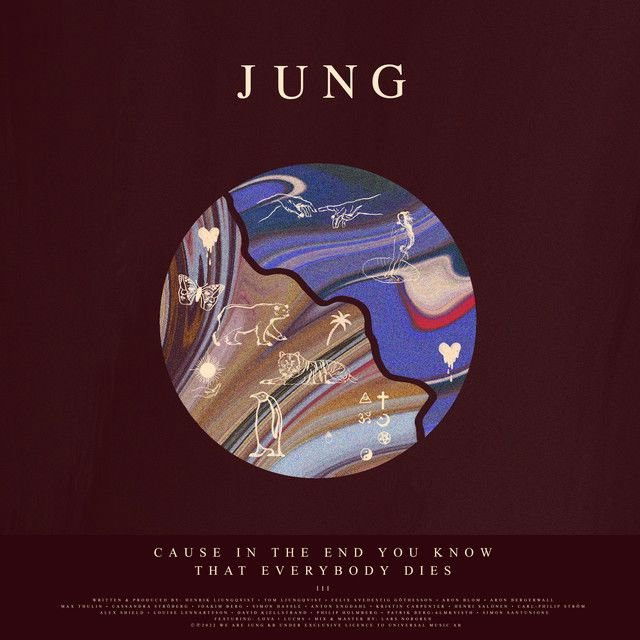
Why JUNG and LOVA Make Doom Sound Danceable
The meaning of Cause In The End You Know That Everybody Dies JUNG, LOVA starts with a contradiction. The song sounds built for release, but its lyrics keep staring at collapse. They place images of disaster, vanity, hunger, death, and nightlife in the same frame, asking how people keep moving when the world feels unstable.
"Cause In The End You Know That Everybody Dies" - JUNG, LOVA
What are you wearing?
Somebody's funeral
Loading lyrics...
Unable to load lyrics
We're unable to display the lyrics at this time. Please try again later.
Rather than offering a clean answer, JUNG and LOVA turn that tension into the song’s point. It is about survival in a noisy, overstimulated age. More specifically, it is about the strange habit of dancing, scrolling, dressing up, and going out while everything around them looks like it might be falling apart.
A Pop Song About Numbness, Not Freedom
At the core, the track captures emotional whiplash. One line jumps to a city on fire, another to a wedding or funeral, then to space travel, then to social desire. That instability matters. The song is not just listing random modern images; it is showing how crisis and spectacle now sit side by side.
When the lyric asks Where do we go?
, they are not only asking for a physical destination. They are asking what direction people take when disaster becomes normal background noise. The repeated uncertainty gives the song its anxious center.
Interpretation: The track suggests that many people do not process fear in a healthy or direct way. They absorb terrible news, feel helpless, and then slide into habit. That is why the chorus does not sound heroic. It sounds like motion without resolution.
Watch the official Cause In The End You Know That Everybody Dies
music video
The Chorus Turns Mortality Into a Party Question
The hook is where the song becomes especially sharp. It asks who's going out tonight?
and pairs that with everybody dies
. That contrast gives the song its dark humor. They take the biggest possible truth, mortality, and reduce it to a reason to keep the night moving.
That does not mean the song celebrates recklessness. In fact, the phrase unconsciously survive
sounds almost tragic. They are not thriving. They are getting through it on autopilot.
Crisis Everywhere, Empathy Nowhere
One of the song’s strongest ideas is how it exposes selective concern. The lyrics mention starvation in a way that calls out empty complaints. They also admit that people say they care about disaster, just not when it gets in the way of pleasure or convenience.
The most pointed example is the line about caring about crisis, but not at the end of the week. That image shrinks global suffering down to a scheduling issue. It is funny for a second, then bleak.
Interpretation: This may be the song’s main critique of modern life. People are not always cruel on purpose. They are overwhelmed, distracted, and trained to move on fast. The song captures that moral laziness without pretending the speakers stand above it.
The Speaker Is Not Innocent Either
A key detail is the song’s self-questioning. The voice says I'm not a monster
but then doubts whether they are really the good person they want to be. That moment keeps the song from sounding preachy.
Instead of blaming only society, the lyrics include the speaker in the problem. They notice violence as media, consume highlight reels, and struggle to know whether awareness equals goodness. This is one reason the song lands emotionally: they are not lecturing from a safe distance.
Images That Make the Meaning Clear
Several recurring motifs carry the song’s meaning:
- Fire and shaking cities: public collapse, climate dread, social instability
- Funerals and weddings: life’s biggest rituals placed side by side
- Space and money: misplaced priorities and spectacle capitalism
- Running and going out: action that may be escape rather than change
These images all point to the same tension. The world feels urgent, but the response is often performance. Even panic becomes aesthetic.
How the Sound Supports the Lyrics
Even without full production credits, the songwriting clearly aims for contrast. The words are uneasy, but the structure leans pop: a memorable hook, repetition, and chant-like momentum. That matters because the sound mirrors the subject.
A bright, driving arrangement can make dread feel easier to carry. The listener gets pulled into movement while the lyrics question why they are moving at all. That creates the song’s smartest effect: it lets them feel the seduction of distraction while also seeing through it.
LOVA’s presence also fits that balance well. Their style often works in the space where catchy pop meets emotional bluntness, and that helps the song deliver hard ideas without becoming heavy-handed. JUNG’s indie-pop instincts add lift, making the existential theme feel communal rather than isolated.
A Quick Look at the Songwriters
Based on the information provided, the song was written by Anton Engdahl, Henrik Ljungqvist, Kristin Elisabeth Hart Carpenter, and Tom Ljungqvist. That collaborative writing helps explain why the song feels broad in scope. It sounds less like a private diary entry and more like a shared social snapshot.
The Deeper Meaning of the Ending
Near the end, the repeated command to run and the question about where people go when the world goes under push the song past satire. Under the wit, there is real fear. The track knows that denial cannot last forever.
So what is the final takeaway? The meaning of Cause In The End You Know That Everybody Dies JUNG, LOVA is not simply that life is short, so they should party. It is that modern people often use pleasure, irony, and busyness to avoid fully facing collapse and mortality.
At the same time, the song does not judge that response too simply. It understands that when life feels unstable, even a night out can feel like survival.
Final takeaway
JUNG and LOVA turn existential dread into a pop mirror. They show how people laugh, dance, and keep plans while carrying fear they barely know how to name.
Disclaimer: This interpretation is based on the lyrics provided and general musical analysis. Song meaning can remain open, and listeners may hear a different emphasis in the same lines.








