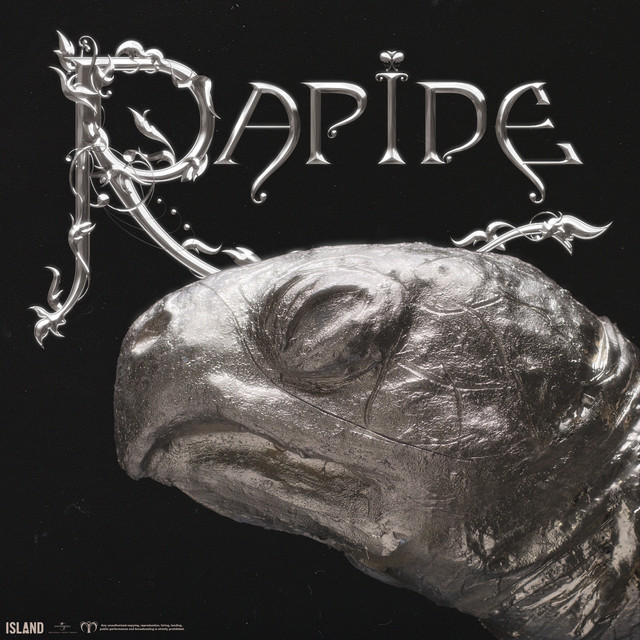
Why 'Rapide' by Mahmood Hits So Hard
The meaning of Rapide Mahmood comes into focus through a tense breakup story: attraction is still alive, but trust is gone. The song captures the messy stage after a relationship ends, when both people are still emotionally tied to each other, yet every memory feels dangerous.
"Rapide" - Mahmood
O forse era un altro locale, sono un po' strano
Ti amo solo quando veniamo
Loading lyrics...
Unable to load lyrics
We're unable to display the lyrics at this time. Please try again later.
Released on January 16, 2020, as the lead single from Ghettolimpo, “Rapide” marked a slightly different mood for Mahmood. It leaned into pop and R&B, was produced by Dardust, and went on to reach No. 5 in Italy and earn double-platinum certification, according to the available release and chart data. Those facts matter because they show how strongly this personal, uneasy song connected with listeners.
A breakup song built on push and pull
At the center of “Rapide” is a narrator who acts tough, reckless, and detached, but clearly is not over the relationship. They talk about going out, sleeping with other people, and refusing calls. On the surface, that sounds like freedom. Underneath, it sounds like hurt trying to disguise itself.
That conflict is one reason the song feels so sharp. The speaker admits intimacy was broken and trust was never stable. When they say non ci sarò
, the message is not just absence. It is emotional withdrawal: they would rather disappear than stay available for more damage.
Interpretation: the song is not simply about revenge after a breakup. It is about the unstable space between wanting someone back and wanting to protect oneself from them.

Watch the official Rapide
music video
The chorus turns tears into a larger symbol
The key image in the song is introduced with sono rapide chiuse nell'iride
. In plain terms, the singer sees tears gathering in the eye and compares them to rapids. That is a striking metaphor because rapids are fast, dangerous, and difficult to control.
This is where the meaning of Rapide Mahmood becomes clearest. Tears are not shown as soft or passive. They are powerful currents. The person being remembered still has the ability to pull the narrator into emotional chaos.
The final line of the chorus, nelle tue rapide non cadrò
, sounds like a vow. They will not fall back into that flood. Even so, the repeated chorus suggests that resistance is not easy. If they must keep saying it, part of them still feels the pull.
Small details make the relationship feel real
One of Mahmood’s strengths is the way he uses specific places and objects to make emotion feel lived-in. Loreto, Milan, a white room, afternoons by the lake, and even a familiar pair of sneakers all work like memory triggers. These details stop the song from becoming abstract.
The transportation images are especially revealing. The line about being made to get out of a Mercedes and take a train suggests a sudden drop from comfort, glamour, or intimacy into uncertainty. The exact event may be literal or symbolic.
Interpretation: this could represent being cast out of a relationship that once felt elevated and secure. The movement from a luxury car to public transit mirrors emotional demotion. They are no longer chosen, protected, or central.
Desire, betrayal, and self-defense
The verses are blunt about sex, cheating, and humiliation. Early in the song, the narrator admits love has become tangled with physical closeness, then accuses the other person of talking badly about them in public. Later, they refer to betrayal almost with bitter laughter, as if pain has become so common that cynicism feels safer than sincerity.
A telling line is mi difenderò
. That short phrase captures the song’s emotional engine. They are defending themselves not only from the ex, but from their own habit of trusting too much, or perhaps from trusting at all.
This defensive mood also explains the song’s harsher language. The profanity does not feel casual. It sounds like frustration breaking through a polished pop structure. That tension between elegance and rawness is a big part of why the track lands.
How the sound carries the emotion
Produced by Dardust, “Rapide” uses a restrained pop-R&B frame rather than huge dramatic peaks. The arrangement gives Mahmood room to sound delicate, bruised, and suddenly sharp. That matches the lyrics, which move between confession and resistance.
The production is simple in a smart way. The beat never overwhelms the vocal, and the chorus opens enough space for the central image to hit. Instead of making heartbreak sound grand, the song makes it sound close-up and immediate.
That choice fits Mahmood’s style. They often sing with a mix of control and fragility, and here that approach helps the listener hear every emotional switch: swagger, regret, memory, anger, and self-forgiveness.
Why the song connected so widely
“Rapide” stood out in Mahmood’s catalog because it softened some of the external flash heard in earlier singles and focused more tightly on emotional fallout. Critics noted that difference, and year-end lists in Italy placed it among 2020’s strongest songs. Its commercial success suggests the song’s emotional honesty reached beyond language barriers.
For U.S. listeners, that is part of the appeal too. Even without catching every Italian reference, the structure is recognizable: someone tries to act over a breakup, but every image proves they are still inside it.
The lasting meaning of Rapide Mahmood
In the end, the meaning of Rapide Mahmood lies in its portrait of heartbreak as a current, not a clean ending. The narrator wants distance, but memory keeps rushing back. They want to be untouchable, yet they are still wounded enough to cry, remember, and sing about it.
That is why the title works so well. The ex is not just a person from the past. They are a force. And the song becomes a promise to survive that force without being swept away.
Disclaimer: This article mixes verified release and credit information with lyrical interpretation. Interpretive sections are informed readings, not definitive statements of artist intent.







