Why "Toss It Up" Turns Seduction Into Warfare
The meaning of Toss It Up Makaveli sits in a strange but revealing split. On one side, the song is a slick bedroom track with flirtation, cruising, and a catchy hook. On the other, it suddenly becomes a label-war statement, aimed at rivals and former allies. That sharp turn is the whole point.
"Toss It Up" - Makaveli
My right hand, my other Capo in this big motherfuckin' war we got
My other Capo in this big ass, conglomerate called Death Row
Loading lyrics...
Unable to load lyrics
We're unable to display the lyrics at this time. Please try again later.
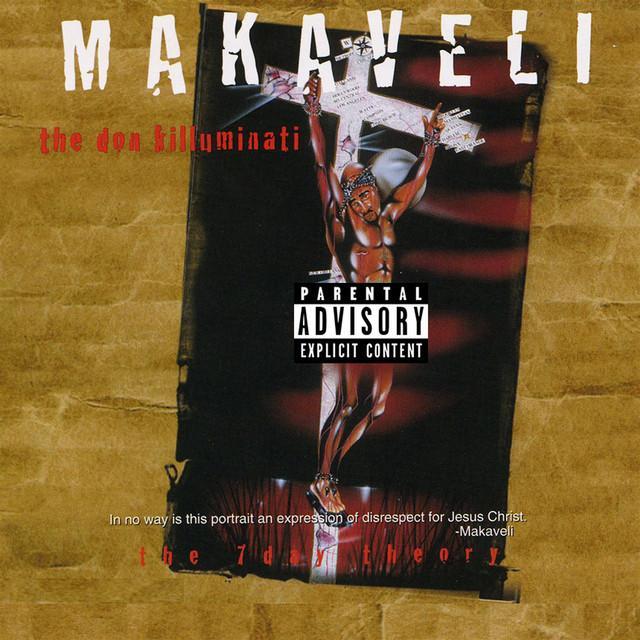
Released under Makaveli, Tupac Shakur’s final alias during his lifetime, the song appeared on The Don Killuminati. It came from a tense Death Row period, after Dr. Dre had left the label and East Coast-West Coast rap conflict was still shaping public perception. In that setting, “Toss It Up” is not just lustful or playful. It is also confrontational, strategic, and deeply tied to label identity.
Two Songs Inside One Frame
At first, the track presents itself as an intimate slow-burn. Tupac opens with direct desire, painting a scene of phone calls, private spaces, and sexual chemistry. Short phrases like Thug Passion
and look in my eyes
show how the verse mixes seduction with confidence and swagger.
But this is not a simple love song. Even in the sensual part, the voice is restless and performative. They are not describing tenderness in a soft, vulnerable way. They are staging power, movement, control, and appetite.
Interpretation: that matters because the erotic tone prepares the listener for the song’s larger message. Pleasure becomes another arena where charisma proves dominance.

Watch the official Toss It Up
music video
When the Hook Changes the Meaning
The chorus keeps repeating let me see you toss it up
, which works as a party line and a sexual invitation. The phrase is broad enough to suggest dancing, physical intimacy, and giving into the moment. That flexibility makes the song catchy.
Still, the hook also sets up a second meaning. “Toss it up” starts to sound like a challenge, almost like throwing something into competition. Once the diss section begins, the same refrain no longer feels only romantic. It becomes combative.
That shift is one of the smartest parts of the song. A hook that sounds loose and playful becomes fuel for taunting rivals.
The Mid-Song Turn Toward Conflict
The biggest clue to the meaning of Toss It Up Makaveli is the sudden pivot late in the track. After the smooth vocals and flirt-heavy verses, Tupac turns toward Death Row politics. He references the label’s sound, calls out betrayal, and mocks people he sees as fake players.
One short line, No longer Dre Day
, carries a lot of history. It points to Dr. Dre’s exit from Death Row and signals a closing chapter. Tupac frames that departure not as a loss, but as a purge. In his telling, the camp is moving into a harder, more loyal era.
He also aims at Puff Daddy and Bad Boy style, especially through the song’s production history. “Toss It Up” originally borrowed the feel of Blackstreet’s “No Diggity,” a major hit co-written and produced by Dr. Dre. Because of legal issues, the track was revised before release, a detail noted in coverage of the single release. That backstory makes the song feel even more pointed: it was competing with Dre both lyrically and sonically.
Sound as Message, Not Just Backdrop
Production matters here because the beat helps explain the song’s double identity. The groove is smooth, warm, and radio-friendly, with R&B vocals from Danny Boy, K-Ci, and Aaron Hall softening the edges. Their performances sell desire and replay value.
Then Tupac’s delivery cuts across that polish. His voice sounds less dreamy than urgent. Even when the words are sexual, he attacks the rhythm with force.
Interpretation: this contrast is central to the song’s meaning. The music invites listeners into a seductive atmosphere, but Tupac uses that atmosphere like camouflage. Once the diss arrives, the sweetness of the arrangement makes the aggression feel even colder.
Why the Guest Voices Matter
The guest singers are not just decoration. They strengthen the track’s split personality.
- Danny Boy helps connect the song to Death Row’s melodic side.
- K-Ci and Aaron Hall bring classic R&B heat and drama.
- Their lush vocals make Tupac’s later threats stand out more sharply.
So the collaborations do more than create a hook. They make the transition from romance to rivalry feel theatrical.
Sex, Status, and Label Loyalty
A useful way to read “Toss It Up” is as a song about conquest in multiple forms. In the first half, conquest is sexual. In the second half, it becomes professional and territorial. In both modes, the speaker wants control, attention, and proof of superiority.
That is why the imagery keeps moving outward. It starts in private rooms and parked cars, then shifts toward public reputation, street credibility, and industry loyalty. The same ego drives both parts.
Another short phrase, Cross Death Row
, makes that loyalty explicit. The real target is not only one person. It is disloyalty itself.
A Snapshot of Tupac’s Late Persona
Under the Makaveli name, Tupac leaned into a darker, more militant image. “Toss It Up” shows that persona in a compact form. He can be seductive, funny, crude, charming, and threatening within the same track.
That volatility is part of why the song still stands out. It is messy on purpose. Instead of choosing between club record, sex jam, and diss track, it tries to be all three.
Final Take
The meaning of Toss It Up Makaveli is not hidden. It is a song about desire and dominance, then about rivalry and revenge. Its real trick is how it fuses those ideas into one performance.
What begins as seduction ends as a warning. That tension gives the track its edge and makes it a revealing document of Tupac’s final Death Row era.
Disclaimer: This interpretation is based on the released lyrics, production context, and documented career history. As with most songs, some meanings remain open to listener interpretation.







