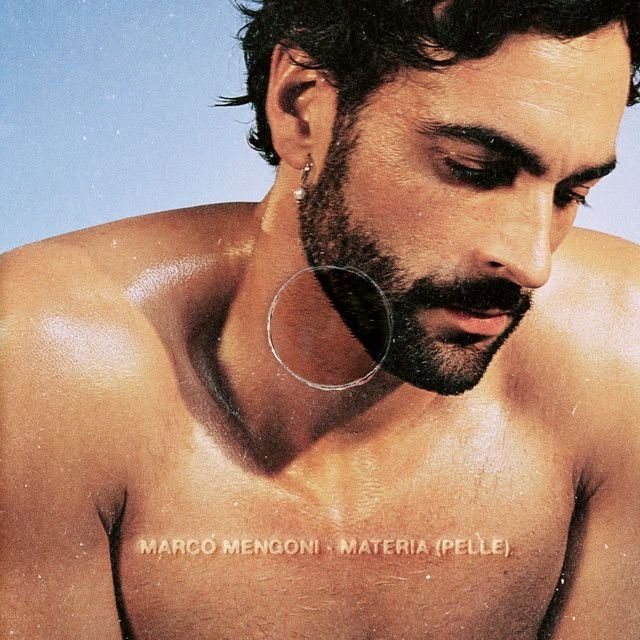
Due Vite by Marco Mengoni
They don’t write many breakup-or-makeup ballads like this anymore. Marco Mengoni’s Sanremo-winning “Due vite” (“Two lives”) is a late-night confession where love, memory, and anxiety collide. For readers seeking the meaning of Due Vite Marco Mengoni, here’s how the lyrics, symbols, and sound fit together.
"Due Vite" - Marco Mengoni
E non conosco ancora bene il tuo deserto
Forse è in un posto del mio cuore dove il sole è sempre spento
Loading lyrics...
Unable to load lyrics
We're unable to display the lyrics at this time. Please try again later.
Two Lives, One Restless Night: What It’s Really Saying
The title points to a split existence: the everyday life of reason and the nocturnal life of dreams. Mengoni has called the song a dialogue between “reason and the unconscious,” where night can feel even more real than day. In the story, two people are still bound together but drift through insomnia, hangovers, and silence. They ache to say what matters, yet deflect with small rituals.
Interpretation: “Two lives” also maps onto a relationship’s dual nature—tenderness and friction—coexisting in the same space. That tension surfaces in short images and repeated questions. Lines like non dormi mai
(“you never sleep”) suggest a partner’s restless mind, while the refrain treats love like a last-breath argument and a promise at once. The song asks if intimacy can hold when real life and dream life pull in different directions.
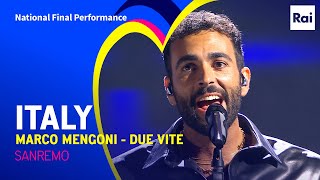
Watch the official Due Vite
music video
Who Speaks in the Song’s Midnight Dialogue?
The narrator is a “we,” speaking to a “you,” which makes the listener feel folded into the couple’s room. Early on, they claim they’re i soli svegli
—the only ones awake—framing the track as a private vigil. They waver between reaching out and retreating, offering care yet also calling out mistakes.
Interpretation: The “we” opens and closes around the other person like a tide. At times, it’s solidarity; at others, it’s pressure. When the voice admits the other non dormi mai
, it reads as concern but also fatigue. The intimacy here isn’t idealized—it’s human, looping, and occasionally sharp.
Scenes That Map a Relationship in Motion
The song drops a string of snapshots that track both closeness and distance:
- A domestic still-life:
un libro sul pavimento
in a house that “feels like ours,” hinting at absence and memory. - A sick-day ritual:
caffè col limone
to fix a hangover, a small, almost comic cure in a heavy night. - A blurry image: they “seem like a shaken photo,” love as motion you can’t quite focus.
- One more night out, one more near-miss, and a relieved “less bad” that they’re still together.
Interpretation: These slices ground big emotions in tactile stuff—floors, cups, photos. The couple is not tragic heroes; they’re people trying home remedies for a life that’s too loud.
The Hook: When the Moon Might Explode
The chorus imagines catastrophe to measure commitment. If this is the last song and the moon blows apart, will they still show up for each other? The hook pivots from scolding to protection in seconds, capturing love’s paradox.
Se questa è l’ultima canzone e poi la luna esploderà Sarò lì a dirti che sbagli Qui non arriva la musica
Interpretation: The apocalyptic image sharpens the stakes. Even if music—their usual language—can’t reach them, presence might. The refrain keeps asking where the other will go, as if movement itself is the problem.
Symbols That Do the Heavy Lifting
mostri e le fate
: They see themselves as both monsters and fairies—light and dark impulses in the same lovers. Duality isn’t a bug; it’s the system.- The roof and shouting: A release valve, taking private anger to open air when words won’t land indoors.
- Blurry photo and unwatched films: Attention fragments; time slips. They share space but not always focus.
- Flowers and a metal shirt: Softness beside armor—intimacy next to self-protection.
- The circling line
che giri fanno due vite
: Not straight progress but orbits, revisiting the same issues at new angles.
How the Sound Tells the Story
“Due vite” is a piano-led pop ballad that swells with strings and percussion. The arrangement starts spare and grows into a cathartic belt, matching the narrative arc from quiet doubt to pleading insistence. Produced by Davide Simonetta and E.D.D., the track favors clarity: close vocal, roomy reverb, and a late crescendo where Mengoni’s chest voice opens up.
Mengoni has cited inspiration from Lucio Dalla’s breathless, word-packed tension that finally explodes. You can hear that in the pacing—phrases push forward with little air, then bloom at the chorus. Vocally, they ride the line between tenderness and command, which mirrors the lyric stance: lover, confessor, and occasional scolder.
Alternate Readings Worth Considering
- Interpretation: Two lives as inner and outer self. The partner might be a mirror; the sleeplessness signals a mind that can’t align its daytime face and nighttime truth.
- Interpretation: Two lives as the couple’s separate rhythms. One can’t sleep; one holds the room steady. They keep missing each other’s timing but refuse to let go.
Both readings fit the song’s looping images and its blend of care and critique. The ambiguity makes the chorus hit harder: after all the spins, will they stay?
Quick Takeaway for First-Time Listeners
The meaning of Due Vite Marco Mengoni lands here: love is messy, circular, and sometimes more real at 3 a.m. than at noon. The song refuses easy closure but chooses presence anyway. Interpretation is subjective; your read may differ based on your own “two lives.”
Sources
- https://en.wikipedia.org/wiki/Due_vite
- https://www.vanityfair.it
- https://eurovision.tv/event/liverpool-2023/grand-final
- https://www.fimi.it
- https://www.gazzettadelsud.it/articoli/cultura/2023/02/12/due-vite-e-il-video-di-mengoni-ambientato-nelle-dune-di-piscinas-in-sardegna-8b9b8567-e5d4-4f9c-9fd8-6fd356e5b1e0/
- https://eurovoix.com/2023/10/12/marco-mengoni-la-derniere-chanson/








