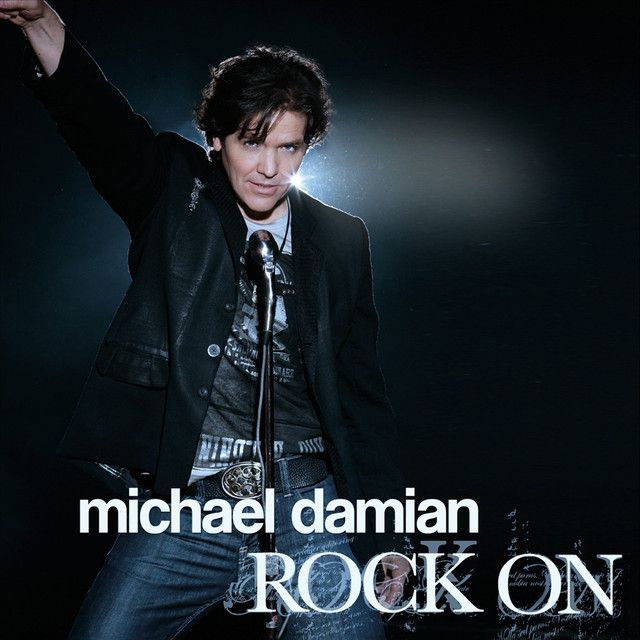
Rock On by Michael Damian
Why This Cover Still Raises Questions
The meaning of Rock On Michael Damian starts with a cover that became bigger on the charts than its source. Michael Damian’s 1989 version of David Essex’s 1973 song hit No. 1 on the Billboard Hot 100 for one week, while Essex’s original had already been a major international hit years earlier. Damian’s recording also appeared in Dream a Little Dream, tying it to late-1980s teen culture.
"Rock On" - Michael Damian
Rock on, ooh my soul
Hey kids boogey too, did ya
Loading lyrics...
Unable to load lyrics
We're unable to display the lyrics at this time. Please try again later.
Factually, the song was written by David Essex, and Damian recorded his cover with Larry Weir and released it in 1989. What makes the song interesting is that its words are not a neat story. Instead, they create a collage of youth, movies, old-school rock references, and restless desire.

Watch the official Rock On
music video
What the Song Is Really About
At its core, the song is about the feeling of rock-and-roll mythology. It celebrates the sound, style, and attitude of an earlier youth culture while also hinting that this world may be hard to hold onto.
The opening call, rock and roll
, sounds simple, but it does more than praise music. It acts like a slogan for freedom, coolness, and belonging. The song piles up references like summertime blues
and blue suede shoes
, which point back to classic rock history and teen rebellion.
Interpretation: rather than telling one event from start to finish, the lyric seems to show someone caught between memory and fantasy. They are not just remembering old rock culture. They are trying to live inside its mood.
The Hidden Tension Beneath the Hook
One of the most revealing lines is the question Where do we go from here?
That moment changes the song. Beneath all the swagger, there is uncertainty.
This matters because the chorus sounds confident, but the lyric keeps circling back to doubt and searching. The song’s energy says “keep moving,” while the words suggest they are not sure what comes next.
Interpretation: this tension is a big part of the meaning of Rock On Michael Damian. It is not only about celebrating youth. It is also about the fear that youth, style, and excitement fade fast.
A Girl, a Screen, and an Impossible Ideal
The verse about a blue jean baby queen
gives the song its most vivid image. She feels less like a real person and more like a dream made from movies, fashion, and pop icons.
When the lyric mentions seeing her on a movie screen and invokes James Dean, it connects desire to celebrity culture. That makes the girl seem distant and untouchable. She is glamorous because she is part person, part screen image, part fantasy.
Interpretation: the song may be chasing an ideal that cannot truly be reached. In that reading, the woman stands for more than romance. She represents the whole fantasy of perfect youth: cool, beautiful, rebellious, and always just out of reach.
How Michael Damian Changes the Meaning
David Essex’s original is famous for its strange, stripped-back production. Reports on the recording note that producer Jeff Wayne leaned into space and absence, building the track around rhythm and a doubled bass line instead of a full chord-heavy arrangement. That sparse sound helped make the original feel ghostly and hypnotic.
Michael Damian’s version goes another way. His cover uses a cleaner late-1980s pop-rock style: bigger drums, brighter guitars, fuller backing vocals, and a more radio-friendly sheen. That change affects interpretation.
With Damian, the song feels less eerie and more anthemic. The mystery softens. The cover turns the lyric into a slick teen-rock statement, which fit 1989 pop culture and helped it connect with a broad U.S. audience.
Why the Sound Matters So Much
Production is not just decoration here. It shapes how listeners understand the song.
In Essex’s version, the emptiness around the vocal makes the words feel dreamlike. In Damian’s version, the fuller arrangement pushes the hook forward and makes the song sound more direct. The same lyric can therefore feel different:
- Essex sounds haunted and detached.
- Damian sounds polished and urgent.
- Essex suggests memory.
- Damian suggests performance and momentum.
That is why some listeners hear Damian’s recording as a strong pop update, while others think it loses some of the original’s weirdness. Both reactions make sense.
The Role of Nostalgia in the Lyrics
The song is built from cultural fragments. It pulls from old songs, teen style, and movie-star imagery to create a mood of borrowed memory. Even if a listener did not grow up in the 1950s, they can still recognize the symbols.
That helps explain the song’s lasting appeal. It is about nostalgia, but not in a detailed or historical way. It uses familiar signs of “cool” America and rock rebellion so listeners can fill in the blanks themselves.
Interpretation: this is why the lyric feels both vivid and vague. It is less concerned with facts than with atmosphere.
Final Take on Its Lasting Appeal
The meaning of Rock On Michael Damian lies in its mix of excitement and emptiness. It celebrates rock-and-roll style, but it also hints that style alone cannot answer deeper questions about identity, longing, or the future.
Michael Damian’s cover makes that message more accessible by turning a strange 1970s song into glossy 1980s pop-rock. Even so, the heart of the song remains the same: a search for youth, coolness, and connection in a world made partly of memory and partly of myth.
Disclaimer: This article offers a mix of factual context and clearly labeled interpretation. Since songs can mean different things to different listeners, some readings remain subjective.








