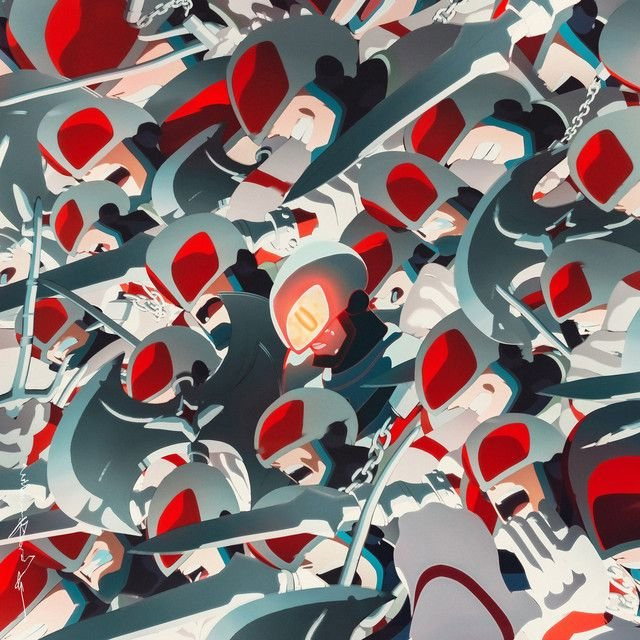
Why "U" Turns Longing Into Liberation
The meaning of U millennium parade, Belle starts with a simple tension: they want to reach someone, but they also want to become someone. That double pull gives the song its power. On the surface, it sounds like a rush toward love and discovery. Underneath, it is also about stepping into a new self inside a world where fear, fantasy, and freedom all blur together.
"U" - millennium parade, Belle
When our heartbeats collide, I won't mind
In a place we've never been before
Loading lyrics...
Unable to load lyrics
We're unable to display the lyrics at this time. Please try again later.
The song appears in Belle, the 2021 film directed by Mamoru Hosoda, where the virtual world called U becomes a space for reinvention and performance. In that setting, the song does more than introduce a place. It introduces a feeling: the hope that a digital mask might reveal a truer heart. Factual context around the film and soundtrack supports that reading, including the song's role as a title theme and its connection to Belle's entrance into that world.
The Heart of the Song Is a Search
At its core, "U" is about a speaker moving through uncertainty toward connection. They are not only looking for another person; they are trying to understand what real closeness means. When the lyric asks Is it you I will find?
, the question carries both romance and identity.
That is why the opening feels so open-ended. Phrases like heartbeats collide
suggest intimacy, but the setting is unfamiliar, almost cosmic. The song keeps pairing emotional closeness with distance, as if love requires a leap into the unknown.
Interpretation: the "you" may be a loved one, but it may also be the self they have not fully met yet. The lyrics support both ideas because the search keeps moving between another person and an inner voice.

Watch the official U
music video
A Song About Leaving Fear Behind
One of the strongest ideas in the verses is disconnection. The speaker describes the shock of life, the feeling of being cut off from the world they thought they belonged to. That image makes the song more than a love anthem. It becomes a song about alienation.
From there, the lyrics push toward self-trust. The line about nobody else deciding what they see in their heart argues that identity cannot be handed down by the crowd. In plain terms, the song says that people have to name themselves.
This is where the meaning of U millennium parade, Belle becomes especially clear for the film's audience. In Belle, the virtual space offers escape, but also a chance to express feelings that are hard to voice in ordinary life. The song captures that exact emotional tradeoff.
The Chorus Turns Private Feelings Into an Anthem
The chorus and pre-chorus expand the song's message from one person's longing into a collective call. Invitations like jump into the fire
and follow the North Star
sound theatrical, but they serve a purpose. They tell listeners not just to watch transformation, but to join it.
That is why the repeated party imagery matters. It is not really about a party. It is about crossing a threshold together. The song keeps saying that they are free to become whatever they want, which reframes freedom as active, not passive.
We are whatever we wanna be
We are free
Those short lines sum up the song's emotional center. The personal ache of the verses opens into a public declaration of possibility.
Stars, Veils, and the Shape of Hope
The imagery in "U" is grand on purpose. The moon, stars, galaxy, veil, and perfect sky all make the search feel bigger than everyday life. Instead of describing ordinary scenes, the song reaches for symbols of direction and transcendence.
The North Star is especially important because it suggests guidance. Likewise, the idea of passing through a veil of fantasy points to a border between appearance and truth. The song is not rejecting fantasy completely. It treats fantasy as a doorway that can lead to a deeper reality.
Interpretation: this is why the ending feels bittersweet rather than naive. When the song says it's now or never
, it does not sound like reckless escape. It sounds like an urgent decision to live honestly before time closes in.
Why the Sound Feels So Huge
The production helps explain the song's meaning just as much as the words do. According to soundtrack credits, Daiki Tsuneta wrote the music and lyrics, with a large arrangement that includes drum line snares, timpani, marimba, brass, piano, synths, and programmed beats. That mix gives the track a ceremonial, almost processional scale.
The percussion pushes the song forward like a march into a new world. The brass and layered vocals add triumph, while the electronic textures keep it tied to the digital space of Belle. Instead of sounding split between human and virtual, the song blends both.
That balance matters. The music says the same thing the lyrics say: technology may shape the stage, but the emotional breakthrough is still deeply human.
Artist and Film Context Deepen the Meaning
"U" was written by Daiki Tsuneta and serves as the title theme for Belle. In the film, it plays during the introduction of the world U and Belle's striking performance imagery, including the flying whale staging described in soundtrack documentation. The film itself became a major global success, premiering at Cannes in 2021 and earning strong critical reception.
That context matters because the song was built for a story about grief, performance, and self-reinvention. Even outside the movie, it works as an anthem for anyone who has felt invisible and wanted to become audible.
The Lasting Takeaway
The meaning of U millennium parade, Belle lies in its blend of longing and freedom. They are reaching for another person, but they are also reaching for courage, voice, and self-definition.
That is why "U" feels so uplifting. It understands fear, but it refuses to stay there. It turns uncertainty into motion and private loneliness into shared possibility.
Disclaimer: This interpretation mixes documented context with informed reading of the lyrics and music. As with any song, listeners may hear different meanings in "U."








