
Pensamientos by Morad
The meaning of Pensamientos Morad centers on survival, ambition, and the mental pressure of street life. Rather than glamorizing crime, the song sounds like a hard warning from someone who has seen what happens when people chase status too fast. Morad frames that world as normal for the people inside it, but destructive all the same.
"Pensamientos" - Morad
(La-la-la-la-la) le-le-le-le-le-le-le-le
(La-la-la-la-la-la-la-la) le-le-le-le-le-le, le-le-le-le-le-le-le-le
Loading lyrics...
Unable to load lyrics
We're unable to display the lyrics at this time. Please try again later.
Morad is a Spanish rapper known for direct storytelling shaped by life in working-class neighborhoods around Barcelona. Public profiles and music coverage regularly note how his music draws from that environment and from personal experience in the streets, which helps explain the blunt realism in songs like this. See Spotify artist profile and NME coverage.
A Song About Thought, Pressure, and Consequence
At its core, “Pensamientos” is about what people think, hide, and justify when they live close to illegal economies. The title points toward inner life, but the lyrics stay focused on action: silence, money, reputation, and the cost of one bad move.
Early on, Morad contrasts talking with staying quiet. When they say Si tú quieres puedes hablarlo
, the line suggests that some people want attention, public explanation, or online drama. He then counters that with a local code of silence, where people prefer to watch events unfold instead of speaking too much. That tension matters because the song treats words as risky. In this world, talking can expose weakness, invite trouble, or prove someone is pretending.
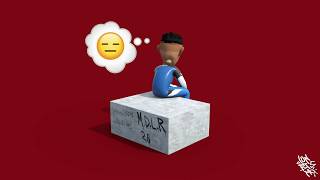
Watch the official Pensamientos
music video
Money Is the Engine, Not the Excuse
One of the strongest ideas in the song is that illegal work is tied to desire and lack. Morad says, in effect, that this business is not done for fun. He repeats the wish to have more than seemed possible before, and more than feels normal to carry in one’s pocket.
That repeated idea is the emotional center of the track. The song is not simply about criminal acts. It is about how economic hunger changes a person’s moral scale. The phrase má' e lo que
keeps pushing the idea of excess: more money, more power, more than a person once imagined.
Interpretation: Morad seems less interested in celebrating ambition than in exposing how ambition becomes warped under pressure. The dream is understandable, but the path is corrosive.
Tough Talk Gets Challenged
A major section of the song attacks fake hardness. Morad criticizes people who pose as dangerous, flashing weapons or acting ruthless, while really carrying fear, instability, or confusion. When he mentions problema mental
, he is not offering a clinical statement. He is using a sharp street insult to say that reckless posturing comes from a troubled mindset.
That section changes the song from observation to judgment. He is not impressed by performative violence. He argues that talking recklessly in the neighborhood can end in disaster, and he strips away any glamour around being “the bad guy.”
A la calle o al hospitalIn paraphrase, the choice is bleak: escalation leaves people harmed, jailed, or gone.
That is the song’s cold logic. Once violence starts, nobody wins. The future narrows fast.
The Story Moves Like a Warning Chain
The song unfolds in a clear sequence:
- Some people talk too much or try to explain themselves publicly.
- The local reality is built on silence, movement, and watching.
- Money pulls people toward illegal risk.
- Fake bravado makes that risk worse.
- Violence brings prison, burial, or regret.
That structure makes the song feel almost instructional. Morad is not telling one detailed plot with named characters. Instead, they present a cycle that repeats in many neighborhoods. The warning becomes more convincing because it sounds routine rather than dramatic.
Later, regret becomes important. He describes people who once stepped forward, took risks, lied under pressure, or wanted revenge, only to find that time changed how they felt. That shift gives the song more depth. The damage is not only physical or legal. It is emotional and moral too.
Why the Hook Feels So Haunting
The repeated vocal syllables and crew tag create a strange contrast. The chant-like le-le-le
hook is catchy, almost hypnotic, but it surrounds heavy ideas. That makes the song feel numb and tense at the same time.
When Morad shouts M.D.L.R
, they are asserting identity and allegiance. In context, the hook is not there to soften the verses. It works like a ritual marker, a way of saying that this worldview comes from a specific place and code. The repetition also mirrors obsessive thought, which fits the title.
Interpretation: The hook may represent how harsh realities become normalized. Even danger can start to sound routine when it is repeated every day.
How the Production Supports the Meaning
Morad’s music often uses sparse, drill-informed production with a heavy low end and a focused vocal mix. Even when official production credits are not easy to verify in one source, the sound on “Pensamientos” clearly follows that stripped, street-centered style associated with much of his catalog.
That matters for meaning. The beat leaves space around the voice, which makes each warning land harder. There is little warmth in the instrumental, and that emotional coldness fits the lyrics. The rhythm feels like a slow march rather than a celebration.
The vocal delivery is just as important. Morad does not sound theatrical. They sound matter-of-fact, as if describing rules everyone nearby already knows. That calmness makes lines about prison, injury, and regret feel more believable.
Final Meaning of Pensamientos Morad
So, what is the meaning of Pensamientos Morad? The song is a portrait of a world where money, silence, ego, and danger are tied together. It warns that illegal paths may begin in hunger or ambition, but they often end in loss, paranoia, or remorse.
Its smartest move is refusing easy glamour. Morad shows why people want more, but they also show what that want can cost. That mix of empathy and severity is what gives “Pensamientos” its force.
Disclaimer: This interpretation is based on the song’s lyrics, performance, and public artist context. As with all songs, some meanings remain open to listener interpretation.








