Why “Hayloft” Still Shocks: Mother Mother’s Dark Fable
The urgency of Hayloft hits from the first riff. It’s a sprint through a barn at night, told with gallows humor and a chant-like hook that won’t let go. For listeners asking about the meaning of Hayloft Mother Mother, the song is less a true-crime tale than a stylized fable about panic, power, and youthful desire pushed into danger.
"Hayloft" - Mother Mother
My daddy's got a gun
My daddy's got a gun
Loading lyrics...
Unable to load lyrics
We're unable to display the lyrics at this time. Please try again later.
What The Story Is Really Saying
Fact: the 2008 track tells of two teens caught in a rural hideaway as a father approaches with a weapon. The chorus—My daddy’s got a gun
—repeats like a siren. It compresses a whole backstory (forbidden romance, a rigid household) into one stark threat.
Interpretation: the song explores how fear distorts time. The repeated lines and looping riff make the moment feel endless, as if the story is stuck at the threshold of violence. The ending is unresolved, which makes the dread linger.
Watch the official Hayloft
music video
Who’s Speaking, And To Whom?
The lyrics mix third-person storytelling—young lovers
in the loft—with a first-person chorus: My daddy’s got a gun
. That shift suggests one of the teens is narrating the hook, while an outside voice frames the scene.
Interpretation: the hybrid point of view mirrors teenage panic. In crisis, thoughts swing between inner alarm and detached play-by-play. The song captures both at once.
How The Plot Unfolds (A Quick Timeline)
It started with the hayloft a-creaking With his long-john's on, Pop went a-creeping Out to the barn, up to the hay Young lovers in the hayloft
- The setting creaks to life—
hayloft a-creaking
—as a parent wakes. - A stalk begins:
Pop went a-creeping
, gun in hand. - The teens hide and freeze; the chorus becomes their heartbeat:
You better run
. - The song cuts out before the final blow, leaving only the threat.
Interpretation: by withholding the outcome, the track refuses to normalize the violence. Suspense becomes the message.
Why The Hook Matters
The hook pairs two commands: a declaration of force—My daddy’s got a gun
—and a survival instinct—You better run
. Emotionally, the refrain is the whole story boiled down to fear versus control.
Interpretation: the blunt phrasing sounds almost childish, which makes the menace feel even colder. The chorus mimics how a terrified mind loops a single warning.
Symbols In The Barn
- Hayloft: a secret space for romance that turns into a trap. It’s both refuge and cage.
- The father’s gun: literal danger, but also a symbol of patriarchal authority.
- Creeping footfalls: the slow, methodical build versus the teens’ frantic stillness.
- Rural night: isolation; help is far away.
Together, these motifs stage a clash between youthful freedom and rigid control. The song doesn’t moralize; it just turns up the pressure and asks the listener to sit with it.
How The Sound Carries The Threat
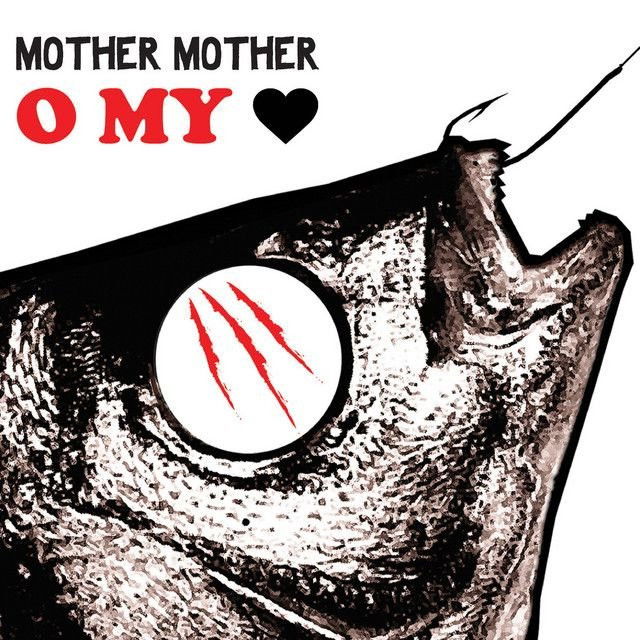
Hayloft was written by Ryan Guldemond and produced by Howard Redekopp for the album O My Heart. It rides an angular guitar figure and start-stop drums that feel like someone holding their breath. The tempo sits around a moderate sprint, but the accents make it feel faster.
Musically, it’s in A minor and briefly detours to B-flat minor before snapping back. That small modulation creates a jolt—like the floor shifting underfoot—just as the pursuit tightens. Layered, chant-like vocals and the staccato “ga-ga-ga” figures sound almost percussive, echoing adrenaline spikes.
Interpretation: every choice tightens the noose. The mix keeps the guitars wiry and vocals upfront so the warning lands like a flashing light.
Context: Release, Viral Afterlife, And The Sequel
Hayloft first appeared in 2008 and didn’t become a mainstream hit then. Twelve years later, it exploded on TikTok, turning into the band’s most-streamed track and pushing it to major certifications, including U.S. Platinum. That surge prompted the band to rebrand the original as “Hayloft I” and create “Hayloft II” in 2022.
The sequel imagines a darker resolution—revenge fantasies and reckoning—while keeping the manic energy. Interpretation: the new track doesn’t “solve” the first so much as explore what obsession and trauma can grow into when the chase never leaves your mind.
Alternate Readings Worth Considering
- Social satire: the almost playful delivery undercuts the violence, suggesting a send-up of macho, small-town authority.
- Psychological loop: the chorus may be internal—the phrase a mantra the teen repeats, not a literal warning yelled aloud.
Both readings fit the unresolved ending and help explain why the song thrives on repeat listens.
What It Adds Up To
For U.S. listeners discovering the meaning of Hayloft Mother Mother years after release, the track works because it turns a simple plot into a cinematic freeze-frame. It’s the sound of a moment that won’t end—and the feeling that choices made in secret can echo louder than a gun.
Disclaimer: This analysis reflects interpretation based on publicly available information and the lyrics; individual listeners may hear the song differently.
Sources
- https://en.wikipedia.org/wiki/Hayloft_(song)
- https://www.rollingstone.com/music/music-features/mother-mother-tiktok-hayloft-1079318/
- https://www.cbc.ca/music/read/mother-mother-tiktok-hayloft-1.6228564
- https://www.thestar.com/entertainment/music/2022/01/14/mother-mother-release-hayloft-ii.html
- https://www.riaa.com/gold-platinum/?tab_active=default-award&ar=Mother+Mother&ti=Hayloft









