Why 'Bhool Bhulaiyaa' Feels Like a Love Maze
The meaning of Bhool Bhulaiyaa Pritam, Neeraj Shridhar starts with a simple idea: attraction can feel like getting lost. On the surface, this is a fast, catchy Bollywood title track about a person chasing someone they cannot stop thinking about. Under that surface, it turns romance into confusion, repetition, and obsession.
"Bhool Bhulaiyaa" - Pritam, Neeraj Shridhar
And it ain't like I'd be gettin' naughty
I'm for real, you know, I don't play that
Loading lyrics...
Unable to load lyrics
We're unable to display the lyrics at this time. Please try again later.
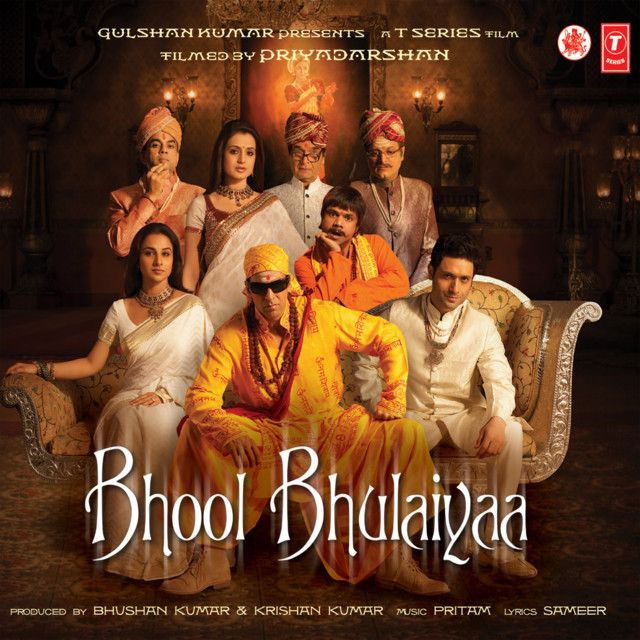
Released as part of the 2007 film Bhool Bhulaiyaa, whose title translates to “labyrinth,” the song carries the movie’s brand of mystery even when it sounds playful. The film was directed by Priyadarshan, with songs composed by Pritam, and the title track was sung by Neeraj Shridhar; the soundtrack became one of the notable Hindi film albums of that year, and the film later reached cult status. Those are established production facts tied to the movie and soundtrack’s release history.
The Hook Turns Love Into a Puzzle
The clearest lyrical idea appears in the repeated image of तेरी आँखें भूल-भुलैया
. Before and after that phrase, the song describes the love interest as mentally hard to read. Her eyes and words are not just attractive; they are a maze.
That matters because the song is not describing calm love. It is describing pursuit. The singer keeps moving through the “streets” of her dreams, still searching, still guessing, still pulled forward. In plain terms, the beloved becomes both destination and trap.
Interpretation: this maze image suggests that desire is exciting precisely because it is uncertain. The singer is not in a settled relationship. They are inside a chase powered by fantasy.
Watch the official Bhool Bhulaiyaa
music video
A Speaker Lost in Infatuation
The verses make that emotional state even clearer. Early English lines frame the search almost like a mission, and later lines move into late-night thoughts and idealization. When the singer says struck by love at first sight
, the song presents attraction as instant and overpowering rather than earned over time.
Another key phrase is तू मेरी खामोशी है
. In context, the singer is saying this person fills silence, intoxication, and private longing. Instead of describing who she really is, they describe what she does to him emotionally.
That is an important distinction. The lyrics are less about mutual love than about projection. He sees perfection, relief, restlessness, and fantasy all at once. Even the compliments feel larger than life, which fits Bollywood romance but also hints at obsession.
Three emotional beats in the lyrics
- Search: the singer starts by looking everywhere.
- Idealization: they present her as flawless and dream-like.
- Fixation: they imagine life, prayer, and identity revolving around her.
By the time the song reaches I keep prayin' all day
, longing has become a loop.
Why the Refrain Sounds Hypnotic
The repeated chant is the song’s most famous feature. Rather than acting like a plot summary, it creates mood through rhythm and repetition. In musical terms, the hook behaves almost like a trance pattern, making the listener feel the same circling motion that the lyrics describe.
हरे राम, हरे राम
हरे कृष्णा, हरे राम
In the song, this refrain functions more as sonic atmosphere than literal devotion. It adds urgency, memory, and ritual energy. Because the title track belongs to a psychological horror-comedy film, that circular chanting also fits the movie’s wider world of confusion, performance, and unstable perception.
Interpretation: the refrain makes infatuation sound like a spell. The singer is not just in love; they are caught in repetition.
Sound, Style, and the Bollywood Blend
A big part of the meaning of Bhool Bhulaiyaa Pritam, Neeraj Shridhar comes from how it sounds. Pritam’s composition blends club-ready rhythm, electronic layering, and a strong chant structure with Hindi film melody. Neeraj Shridhar’s vocal delivery is light, quick, and teasing, which keeps the song fun even when the words are intense.
That balance matters. If the same lyrics were sung slowly, they might sound darker or more possessive. Here, the beat keeps everything dancing forward. The result is a song that feels both flirtatious and slightly unsteady.
The Hindi-English switch also helps. English lines give it a modern pop voice, while the Hindi lines carry emotion and poetic imagery. That code-switching reflects 2000s Bollywood style and widens the song’s appeal without changing its core feeling: dizzy attraction.
How It Connects to the Film’s World
Factually, Bhool Bhulaiyaa is a 2007 Hindi psychological horror-comedy, and the title itself points to confusion, hidden spaces, and mental disorientation. Even though this song plays like a standalone dance track, it still fits that world.
The word “labyrinth” is not random branding. In the film, perception is unstable, identities blur, and what seems supernatural has psychological layers. The song mirrors that atmosphere by turning romance into a maze where the speaker cannot think straight.
So while the lyrics are not narrating the film’s full plot, they echo its emotional architecture: fascination, fear, mystery, and losing control.
The Best Way to Read the Song
The most useful reading is that this is a love song about being overwhelmed by another person’s mystery. Not deep partnership, not heartbreak, but the thrilling middle stage where desire creates confusion.
A second possible reading is more performative: the song celebrates the style of obsession common in Bollywood, where attraction becomes dramatic, public, and larger than life. That reading is supported by exaggerated praise like you keep drivin' me so crazy
and the repeated, chant-like structure.
In the end, the song lasts because it turns a familiar feeling into a memorable image. Love is not a straight road here. It is a maze, and the singer seems happy to stay lost in it.
Disclaimer: This interpretation is based on the lyrics, musical arrangement, and film context. As with many songs, listeners may hear different meanings in the same lines.







