
Blue Monday '88 by New Order
The meaning of Blue Monday '88 New Order starts with a tension that never fully resolves: a person is hurt, unsure, and still waiting for clarity that may never come. The 1988 version did not change the song’s emotional core. It sharpened its club power and helped push New Order’s classic into a new pop era.
"Blue Monday '88" - New Order
To treat me like you do?
When you've laid your hands upon me
Loading lyrics...
Unable to load lyrics
We're unable to display the lyrics at this time. Please try again later.
Originally released in 1983 and remixed for 1988, the song became one of the defining electronic singles of its time. The original was written by Bernard Sumner, Peter Hook, Stephen Morris, and Gillian Gilbert, and produced by the band. The 1988 remix was issued as Blue Monday 1988 and became a major hit, reaching No. 3 in the UK and No. 1 on the U.S. dance chart.
Where the Song’s Real Hurt Lives
At its center, the song sounds like someone speaking to a person who has power over them. The opening question, How does it feel
, is not casual. It frames the track as a confrontation.
From there, the singer sounds pulled between anger and dependence. When the lyric asks to treat me like you do
, they are naming harm, but they are also still stuck inside it. That tension is the key to the song’s emotional force.
Interpretation: Many listeners hear a failed relationship here, especially one shaped by control, mixed signals, or emotional manipulation. That is the clearest reading because the song keeps returning to confusion, touch, authority, and the need to be told what to feel.
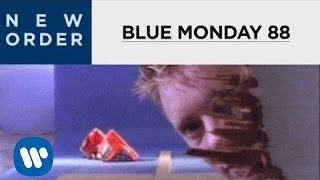
Watch the official Blue Monday '88
music video
A Voice That Cannot Trust Itself
One of the song’s smartest moves is how it makes uncertainty sound repetitive. The singer says they thought they were mistaken and asks again how they should feel. That repetition suggests a mind that has been destabilized.
The short line how should I feel
matters because it shows more than sadness. It suggests dependence. Instead of knowing their own emotions, the speaker waits for another person to define them.
That idea returns in a chilling way when the lyric implies the other person will say just how I should feel
. The song is not only about heartbreak. It is about losing confidence in one’s own inner voice.
The Strange Images Make Emotional Sense
Some lines seem abstract at first. The image a ship in the harbor
sounds distant from the song’s relationship drama, but it still fits the larger theme.
Interpretation: The ship may represent surrender, duty, or being pulled by forces outside the self. The phrase about obeying makes the image feel less romantic and more submissive. In other words, the song turns a big visual symbol into a sign of power imbalance.
The beach image near the end also matters. Beaches often suggest freedom or escape, yet here the scene feels cold and unresolved. By the final lines, the emotional temperature drops even more, ending on the idea of a heart turning cold.
Why the Sound Feels So Detached
A huge part of the meaning of Blue Monday '88 New Order comes from its production. New Order built the track around machine rhythms and sequenced synth patterns, including an Oberheim DMX drum machine and a Moog Source bass part. Coverage of the song’s making also notes that the band worked before MIDI was standard and relied on custom syncing solutions and early sampler experimentation.
That technical setup matters because the music feels precise, inhuman, and relentless. The beat does not comfort the singer; it boxes them in. Bernard Sumner’s vocal delivery is cool and almost flat, which makes the pain sound numb instead of dramatic.
Gillian Gilbert later explained that the synth melody sat slightly out of sync with the rhythm, an accident the band kept. That small imbalance gives the track one of its most haunting qualities. The groove moves forward, but something is always a little off.
What Changed in 1988
The 1988 remix did not rewrite the song’s meaning, but it changed how audiences felt it. With remix work credited to Quincy Jones and John Potoker, Blue Monday 1988 made the song brighter, more streamlined, and even more club-ready.
That shift matters because the song has always lived between sorrow and motion. In the remix, listeners can dance to alienation. That contrast is part of why the track stayed powerful across decades.
It also explains the song’s unusual legacy. It is often described as one of the most influential 12-inch singles ever, and it helped move alternative dance and synth-driven club music further into the mainstream. The 1988 version proved the track was not just an early-80s landmark. It could survive a new decade and still feel modern.
Did New Order Mean It Literally?
There is an important limit to any single interpretation. Peter Hook has said there was not necessarily a deep master plan behind the lyrics, suggesting Bernard Sumner simply went for a feeling rather than a fixed narrative.
That does not make the song empty. It means its emotional logic matters more than plot. Listeners do not need one official story to hear what the track communicates: pressure, uncertainty, distance, and damage.
Why the Song Still Connects
What keeps the song alive is its mix of clarity and mystery. The questions are direct, but the details stay slippery. People can hear a toxic romance, addiction, grief, or general emotional control inside the same structure.
That openness is a strength, not a flaw. The singer stands in a place many people recognize: hurt, self-doubting, and waiting for someone else to explain the pain.
In that sense, the meaning of Blue Monday '88 New Order is about what happens when rhythm keeps moving but trust has already collapsed. The song sounds built for the dance floor, yet emotionally it captures isolation better than many ballads ever could.
Disclaimer: This interpretation separates documented facts about the song’s release and production from critical reading of its lyrics. Meaning can remain open, and listeners may hear different themes in the song.








