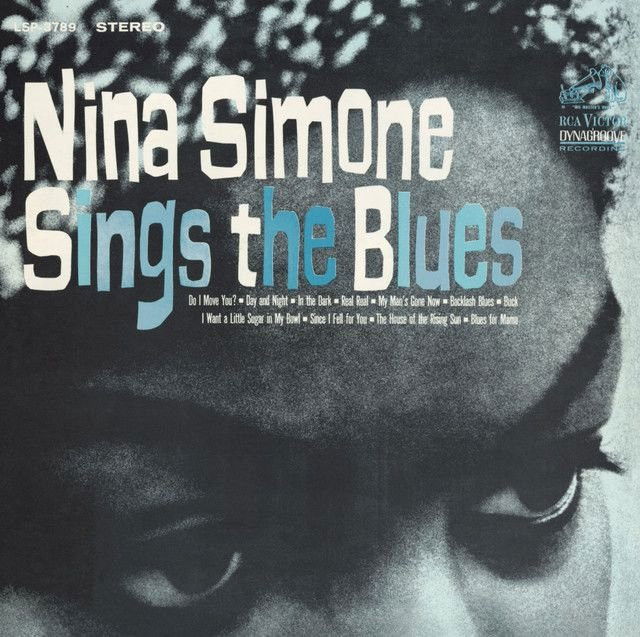
Blues for Mama by Nina Simone
A blues story about blame and survival
The meaning of Blues for Mama Nina Simone centers on a woman being judged after a relationship falls apart. The song does not simply repeat gossip. Instead, it stages a tense scene where rumors swirl, a man leaves, and the woman at the center is pushed to defend herself.
"Blues for Mama" - Nina Simone
I heard you wasn't feeling' good
They're spreadin' dirty rumors
Loading lyrics...
Unable to load lyrics
We're unable to display the lyrics at this time. Please try again later.
On the surface, the narrator reports what people are saying about “Mama.” They call her difficult, harsh, and somehow responsible for the breakup. But the song keeps shifting. What begins as neighborhood talk slowly turns into sympathy, advice, and a challenge to tell her side.
That turn matters. Rather than accepting the crowd’s version, the song asks what happens when a woman becomes the easy target.
Watch the official Blues for Mama
music video
The setup: gossip becomes a weapon
Early lines describe a community spreading stories about Mama. The details are cruel. People say she is mean and evil
, and they frame the man’s departure as proof that she failed.
This is one reason the song feels bigger than one breakup. It shows how private pain becomes public theater. The woman is not just hurting; she is being watched.
A key phrase is dirty rumors
. That small image tells listeners that the song is less interested in facts than in social punishment. Rumor stains a reputation fast, especially when gender rules are involved.
Who is speaking, and why does that matter?
The voice in the song is unusual. It speaks directly to Mama, asking what you gonna do now
. That repeated question can sound caring, but it also carries pressure.
Interpretation: The speaker may be a friend, a witness, or even a stand-in for the community itself. That ambiguity gives the song power. They are close enough to address Mama directly, but distant enough to report what “they say.”
That split point of view mirrors the song’s moral tension. It is both inside the pain and outside it.
A relationship in fragments
The plot arrives in pieces:
- People claim the man left because Mama drove him away.
- They say he is with someone else.
- They accuse Mama of fighting too much and not acting like a “proper” woman.
- The song pushes back and says she should defend herself.
- It ends by admitting that conflict is part of love.
That final step is crucial. The song refuses the simple story that one person is all wrong and the other is innocent.
Gender rules sit at the heart of the song
One of the sharpest ideas in “Blues for Mama” is the way it exposes sexism. The gossipers say Mama does not stand behind her man and even suggest she is acting outside expected womanhood. In plain terms, they are policing her behavior.
ain't nobody perfect
ain't nobody free
This brief refrain-like thought broadens the song beyond one couple. It says relationships are messy because people are flawed and constrained. No one gets through love without conflict.
Interpretation: The song may be criticizing the unfair standard placed on women to be endlessly patient, supportive, and quiet. Mama is blamed not only for losing a man, but for failing a role.
That idea fits both Nina Simone and Abbey Lincoln, two artists known for fierce intelligence and a refusal to shrink themselves for comfort. The co-writing credit is documented on the album page, and that pairing helps explain why the lyric feels so alert to power, dignity, and womanhood.
The emotional pivot: from accusation to defense
Midway through, the song changes direction. Instead of repeating attacks, it urges Mama to set the record straight
. That moment is the emotional core.
The lyric suggests she loved this man for years and that the truth is more mutual than the rumors admit. The relationship had conflict, yes, but both people wanted something from each other and likely failed each other too.
This is where the meaning of Blues for Mama Nina Simone becomes especially rich. It is not a simple revenge song or a pure lament. It is a defense brief for a woman whose story has been simplified by others.
How the sound deepens the message
“Blues for Mama” appears on Nina Simone Sings the Blues, released in 1967 as Simone’s first album for RCA Victor, recorded in New York in late 1966 and early 1967. Personnel listed for the album include Simone on vocals and piano, with players such as Eric Gale, Ernie Hayes, Bob Bushnell, Bernard Purdie, and Buddy Lucas, according to RCA-era album details.
That musical setting matters. The track lives in a blues structure, but Simone never treats the blues as passive sadness. Her phrasing sounds sharp, knowing, and dramatic. The band gives the song a grounded pulse, while the vocal rides above it like testimony.
The blues tradition often turns pain into witness. Here, the groove gives the rumors weight, but Simone’s delivery gives Mama dignity. They do not sound crushed by the story; they sound like they are measuring it.
Why the song still lands today
Modern listeners can hear “Blues for Mama” as a song about public judgment, especially toward women after a breakup. In the age of social media, that feels familiar. People still build fast narratives from fragments and assign blame before hearing the full truth.
The song also survives because it avoids easy innocence. It admits disagreement, pride, and hurt. Mama may not be perfect. The man may not be either. The deeper point is that the crowd’s version is too neat.
Final take on its meaning
At its core, “Blues for Mama” is about a woman caught between heartbreak and reputation. It shows how blame hardens around her, then carefully opens space for complexity, fairness, and self-defense.
Interpretation: Nina Simone and Abbey Lincoln seem to use the blues form to challenge a familiar script: woman loses man, woman gets blamed. By the end, the song argues for something harder and truer—that love brings conflict, communities distort pain, and dignity begins when someone answers back.
Disclaimer: This interpretation is based on the lyrics, recording context, and documented album history. As with most great songs, listeners may reasonably hear additional meanings.








