Why Nino Ferrer’s House Still Hurts
A memory song that becomes a social critique
The meaning of La maison près de la fontaine Nino Ferrer starts with a simple image: a childhood home. But the song does not stay simple for long. It begins as a warm recollection of a place full of texture, smell, and small rituals, then turns into a sharp reflection on what modern life replaces.
"La maison près de la fontaine" - Nino Ferrer
Couverte de vignes vierges
Et de toiles d'araignée
Loading lyrics...
Unable to load lyrics
We're unable to display the lyrics at this time. Please try again later.
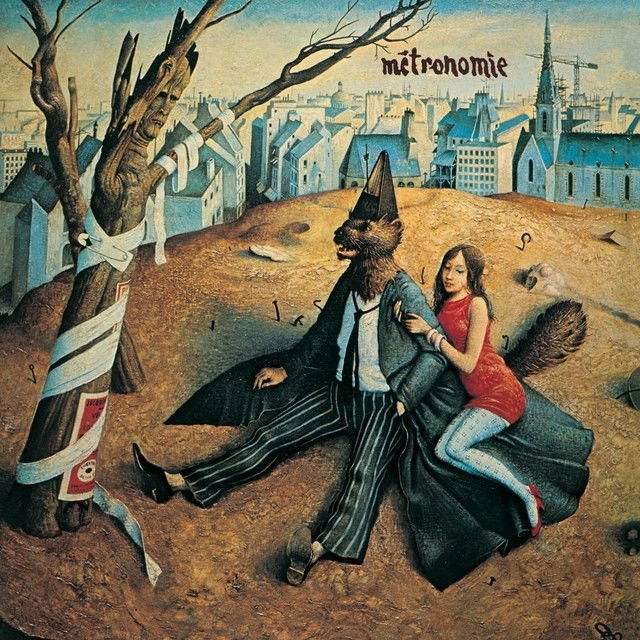
Released in 1972 on Métronomie, the song became one of the standout successes from an album Ferrer viewed as artistically ambitious. In Ferrer’s career, that matters: they were far more than a novelty-hit singer, with roots in jazz and interests in rock, funk, and folk-rock, as outlined in major biographical summaries of their work. The song’s popularity helped make that more serious side visible.

Watch the official La maison près de la fontaine
music video
The lost house is really a lost world
In the first half, the lyrics build a whole environment through sensory detail. The house is described as old, overgrown, and slightly messy, but it feels alive. Phrases like la fontaine
and l'enfance
tie the place to both nature and youth.
This matters because the song is not praising wealth, order, or comfort. The house smells of jam and clutter. It is imperfect, but deeply human. Ferrer turns ordinary details into emotional anchors, suggesting that home is made from lived experience rather than neat design.
The children fish, swim, and roam freely. The mention of the local priest alongside girls and ducks gives the world a playful, communal quality. It feels rural, social, and unsupervised in a way that many listeners read as a portrait of pre-industrial freedom.
How the timeline changes the song’s meaning
First: childhood as texture and time
The early verses move through memory almost like a slideshow. The song links the house not just to objects, but to seasons and vast feelings. When Ferrer pairs everyday details with ideas like l'automne
and l'éternité
, they make childhood feel both specific and endless.
Interpretation: this is why the nostalgia lands so hard. The memory is not only personal. It feels mythic, as if one home can hold an entire era.
Then: demolition and replacement
The turning point arrives when the house near the fountain becomes a house near public housing, then effectively disappears into a new built environment. The lyrics introduce l'usine
and a supermarket, replacing birds, silence, and trees.
This is more than scene-setting. It shows a shift from nature to industry, from local play to economic planning, and from sensory richness to chemical odor. The old landscape had wasps and nests; the new one smells of fuel and sulfur.
C'n'est pas si mal
Et c'est normal
C'est le progrès
Those lines are brief, but they reshape the whole song. They sound calm on the surface, yet many listeners hear irony in them.
The song’s real target: the language of “progress”
The genius of the ending is that it never shouts. Instead, it uses flat, almost official language. By saying the transformation is normal, the song exposes how easily destruction can be excused when it arrives with the label of progress.
That is a big part of the meaning of La maison près de la fontaine Nino Ferrer. Ferrer is not only mourning a building. They are questioning the social story that says every replacement is improvement.
Interpretation: the song can be heard as an early ecological and anti-urbanization lament. It notices environmental loss, but also cultural loss: less silence, less intimacy, less connection to place.
Why the communal voice matters
Another key detail is the narrator’s voice. The lyrics often use a shared “we,” not a solitary “I.” That choice widens the song’s reach. This is not just one person missing one house. It sounds like a generation remembering what vanished around them.
That communal memory helps explain the song’s durability in France and beyond. Even listeners who never knew rural childhood directly can recognize the pattern: a beloved place disappears, and society tells them not to complain.
How the music supports the lyrics
The production strengthens that emotional contrast. Ferrer’s broader catalog drew from jazz, pop, rock, and folk colors, and this song uses a gentle, melodic approach rather than heavy drama. That softness is important.
Instead of attacking modernity with loud anger, the arrangement lets the sadness do the work. The melody carries wistfulness, while Ferrer’s vocal delivery feels reflective rather than theatrical. The result is subtle but devastating: the music sounds like memory itself, smooth enough to drift, but clear enough to sting.
Placed on Métronomie, a 1972 album Ferrer considered especially ambitious, the song also shows how accessible songwriting could coexist with larger artistic goals. It is concise, but it opens onto history, class, landscape, and identity.
Why the song still resonates now
For U.S. listeners, the song can feel surprisingly current. Its core idea fits debates about suburban sprawl, environmental decline, and the flattening effect of chain retail. The local and messy give way to the efficient and standardized.
That is why the song remains more than nostalgia bait. It asks what gets lost when a society values convenience over memory. It also asks who gets to define improvement in the first place.
In the end, the house near the fountain becomes a symbol for all the places people carry after they are gone. Ferrer turns one vanished setting into a quiet protest against forgetting.
Disclaimer: This interpretation mixes documented context with informed reading of the lyrics and music. Like most great songs, it can support more than one meaning.







