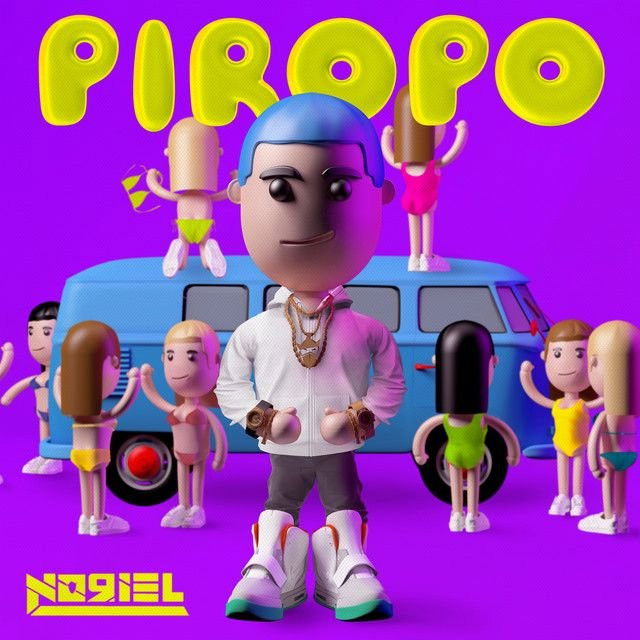
Piropo by Noriel
They hear it first as a party spark: a swaggering voice tossing compliments in the air and daring the dance floor to answer back. “Piropo” turns the Latin American tradition of the flirty street remark into a full-blown club fantasy, where rhythm, teasing, and bravado collide.
"Piropo" - Noriel
(No-no-noriel)
(Súbelo un poquito ahi, ahora)
Loading lyrics...
Unable to load lyrics
We're unable to display the lyrics at this time. Please try again later.
Street Compliment, Club Voltage: What It’s Really Saying
At its core, the meaning of Piropo Noriel is the thrill of bold flirtation amplified by perreo. The narrator locks onto a woman’s presence and fires off puns and metaphors to show desire and nerve. A phrase like Tanta curva y yo sin freno
frames attraction as a high-speed ride—dangerous, exciting, and hard to stop.
They toy with apology and provocation. When he tosses in disculpa lo obsceno
, it’s a half-smirk acknowledgment that he’s crossing lines. The point isn’t tenderness; it’s chemistry in motion, hyped by the beat and a crowd that came to dance.

Watch the official Piropo
music video
Who’s Talking, and Who’s Being Talked To
The voice is first person, aiming straight at a woman in the club. He states his wants and pushes the envelope, then shrugs with yo no te lo niego
—he won’t deny what he likes. He frames her as an equal player, too, suggesting she’s into the same scene.
Still, there’s a tension. He hints she might be “ajena” (attached), adding taboo and conquest vibes. This leans into the genre’s brash masculinity. Listeners who enjoy perreo’s heat may take it as fantasy role-play; others may feel the objectification. The track invites both reactions.
Hook Logic: Why the Chorus Hits
Choruses in perreo work when they declare a simple, shareable truth. Here, the narrator insists she enjoys the game: te gusta el bellaqueo
and te encanta el perreo
. He caps it by saying she’s no eres ninguna santa
, implying she’s not pretending to be pure.
Interpretation: The refrain reframes the whole song as mutual appetite. Whether or not that’s fully accurate, the hook sells the idea that the night is about shared heat, not one-sided pursuit. That’s why it locks in the club—the crowd chants it back as a knowing wink.
Symbols and Double Entendre, Explained
“Curves and brakes” turn desire into a driving metaphor. Tolls and expressways upscale the tease: rather than asking for a number, he jokes about paying the “fee” to pass. Food lines exaggerate hunger, flipping domestic clichés into punchlines. These are standard reggaetón tools—extended metaphors to keep energy high and bars memorable.
There’s also media flex and status signaling. The reference to filming on premium TV is less about literal plans and more about clout, spectacle, and control. Producer tags and shout-outs turn the track into a mini-roll call, stamping identity and scene loyalty onto the beat.
Sound Check: How the Beat Sells the Story
Musically, “Piropo” rides a dembow chassis: four-on-the-floor kick feel, snapping snares, and a sub-bass that leaves room for vocals to punch. Ad-libs stack in the gaps so lines feel like punches and taunts, not diary entries. Stop–start syllables mimic the club’s strobe energy—perfect for DJs to loop and dancers to anticipate drops.
Noriel’s delivery toggles between slick and rowdy. He leans into rhythmic phrasing so punchlines land right on the snare. The mix favors clarity over complexity, letting the hook’s simple claims do the heavy lifting while the production keeps bodies moving.
Culture Check: The Piropo Debate
A “piropo” can be charming or cringey, depending on time, place, and tone. The track sits on the playful side of that spectrum—loud, shameless, meant for the dance floor. But the language still objectifies, and some will flinch at the conquest talk. That friction is part of the genre’s modern debate: can club fantasy and respect coexist?
For many fans, the answer depends on context. In a perreo space where people choose to play with heat and humor, the song reads as consenting theater. Outside the club, the same lines can feel like pressure. “Piropo” thrives in the room it was built for.
Two Plausible Readings
- Interpretation 1: A straight-up celebration of perreo, where both parties signal interest and the hook makes their consent loud and catchy.
- Interpretation 2: An exaggerated portrait of catcalling bravado—so over-the-top that it winks at itself, inviting the crowd to laugh at the audacity while still enjoying the beat.
Takeaway: The Meaning of Piropo Noriel in One Breath
It’s a high-energy flirt turned theater—desire as spectacle, swagger as rhythm. If the song pushes buttons, it’s because it plays with a real-world ritual and blasts it through club speakers.
Disclaimer: Song meanings are subjective. This analysis reflects one close reading of the music and lyrics, not definitive artist intent.








