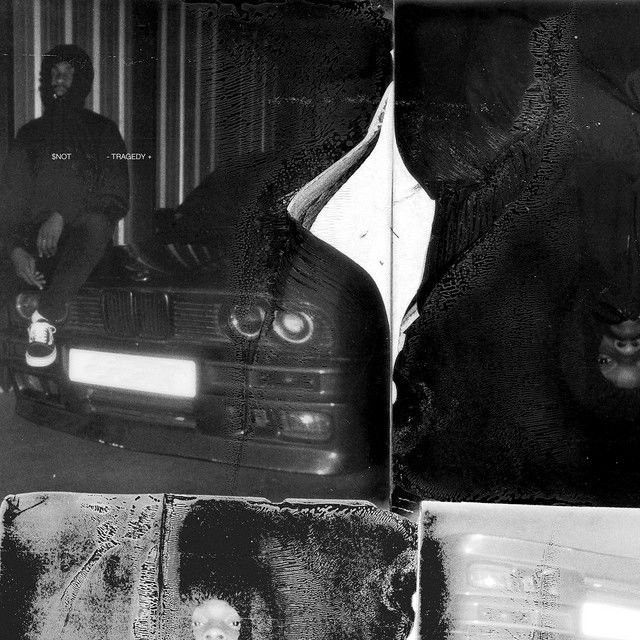
GOSHA by $NOT
A cold flex. A blacked‑out mood. $NOT’s breakthrough track turns a designer reference into a whole identity, using minimal words and a heavy-lidded flow to project power with distance. Here’s the meaning of GOSHA $NOT, and why the song’s images still stick.
"GOSHA" - $NOT
Gosha, and
Pretty things, but
Loading lyrics...
Unable to load lyrics
We're unable to display the lyrics at this time. Please try again later.
So what’s the deeper meaning hiding in the flex?
At its core, the song is about self‑definition through style and control. The hook’s brand callout—black fit, Gosha
—is more than a label; it’s a uniform. He builds a persona that’s expensive, spare, and untouchable. That uniform signals status without shouting.
Interpretation: The track argues that in an era of constant sharing, the strongest look is restraint. The lyrics flash wealth and danger, but the delivery stays calm. That chill communicates power even louder than the flex itself.

Watch the official GOSHA
music video
Who’s speaking, and who’s being addressed?
The narrator is $NOT, speaking in first person to two audiences at once: everyone watching his rise and a single partner he keeps close. When he mentions tech and luxury—no keys
—he’s both bragging and whispering to someone in the passenger seat. Privacy is a value; fame stays outside the window.
Interpretation: The “you and me” thread runs under the bravado, framing a relationship kept off social media and separate from the crew. The tone stays guarded, like he’s protecting a calm center from a loud world.
From first flex to closed circle: a quick timeline
- Opening imagery sets the look:
Nice chain
, motion, and designer fits. It’s status by silhouette. - Anti‑institution energy hits next:
Fuck school
rejects rules and gatekeepers. He’ll define success on his terms. - Romance appears in brief flashes—pretty things, pools, and a vow of trust—hinting at softness beneath the shell.
- The world outside feels hostile; he tightens his circle, showing weapons and loyalty. The message: don’t test it.
Each beat advances a single idea: style is a shield. Flexing isn’t just vanity; it’s boundary‑making.
Why the hook keeps repeating “Gosha”
Hooks in minimalist rap often work like logos. Here, black fit, Gosha
is a brand stamp for the whole song’s mood—matte black, low‑flash, high‑cost. When he adds a curt dismissal like not your game
, he’s drawing a line around the scene. If you don’t read the code (clothes, cadence, composure), you’re not inside it.
Interpretation: Repetition makes the word feel like a mantra. “Gosha” becomes less a brand and more a worldview: understated, selective, and hard to access.
Symbols and images that do the heavy lifting
- Chains and ice: Wealth that glitters but stays cool. They mark rank without emotion.
- Fast car cues:
no keys
suggests frictionless entry—he moves where others can’t. - Angelic romance:
Angel in the Stardust
softens the palette, a private tenderness that counters harsh edges. - Weapons and soldiers: They’re not literal all the time; they signal readiness and hierarchy—commanding a unit, protecting the brand.
- School and rules: The refusal to comply casts him as self‑taught, a product of scenes that reward originality over credentials.
Together, these images map a life of armor: shiny on the outside, quiet at the core.
How the sound carries the meaning
The production is stripped down—sub‑bass, crisp hats, negative space. That sparseness mirrors the lyrics’ economy. $NOT’s voice is measured and almost stoic, which makes every flex feel heavier. When the beat leaves room, the hook lands like a tag, stamping the song with its own design code.
Interpretation: Minimalism amplifies menace and mystery. Instead of complex flows, he chooses clean pockets and air. The result feels like walking into a dark room lit by a single display case.
Clearing up the title: fashion, not folklore
“Gosha” here points to a Russian streetwear designer whose label surged in the 2010s. The word can mean something different in other contexts, such as a historical term for women living in purdah in parts of South Asia. That meaning is unrelated to the track’s focus on clothes and image. The song is clearly about fashion as identity and boundary.
Alternate reads worth considering
- Interpretation 1: A critique by exaggeration. By stacking symbols—chains, cars, guns—the song could be mocking empty flex culture even as it sells it.
- Interpretation 2: A loner’s love song in disguise. The loudest boasts frame a quiet promise; the real heart is the small, secret bond he refuses to share with the crowd.
Final takeaway
The meaning of GOSHA $NOT is a study in controlled image. Clothes become a language, the hook a logo, and the delivery a locked door. Behind the matte‑black look is a code: keep your circle close, keep your feelings closer.
Disclaimer: Song interpretations reflect critical analysis and are not definitive statements of artist intent.









