
Why 'Moon & Stars' Feels Romantic and Hollow
The meaning of Moon & Stars $NOT, Maggie Lindemann comes from a push and pull: the song sounds like a wild promise of romance, but its details keep undercutting that dream. They present love as speed, escape, and fantasy, then quietly reveal anxiety and emotional distance underneath.
"Moon & Stars" - $NOT ft. Maggie Lindemann
Ayy, bitch, I'll take you to the fuckin' (ayy, uh)
I'll take you to the fuckin' moon and stars
Loading lyrics...
Unable to load lyrics
We're unable to display the lyrics at this time. Please try again later.
Rather than offering a stable love story, the track captures a relationship that feels intense in the moment and uncertain after the high fades. That contrast is what gives the song its edge.
A Love Song Built on Escape
At first, the hook sounds simple and huge. The central image, moon and the stars
, turns romance into something cosmic. They are not just offering a date or a night out; they are offering a feeling of leaving ordinary life behind.
But the song quickly shows that this promise is more fantasy than plan. The repeated invitation to go far with me
is followed by a line that shrinks the idea back down. That contradiction matters. They want the thrill of limitless love, yet they do not sound emotionally ready to carry it.
Interpretation: The chorus works like a dream people tell each other when reality feels smaller, messier, or more painful than they want to admit.
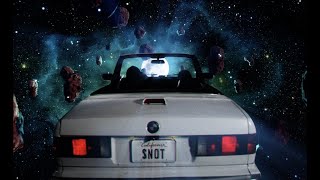
Watch the official Moon & Stars
music video
The Verses Mix Flexing With Fragility
$NOT’s part is full of fast images: a coupe, movement, status, and being seen. When they mention seeing their name and moving to the front, the song connects romance to success and visibility. Love becomes part of a larger self-image built on motion and attention.
Still, that confidence cracks. One of the song’s most revealing ideas comes when affection is described as the fix to my drugs
. Paraphrased, they treat the other person less like a partner and more like relief. That is not the language of security. It is the language of need.
The darkest turn comes near the end of the verse, where the song suddenly brushes against self-destructive thinking. Even without dwelling on it, that moment changes the whole track. It suggests that the flashy scenes are not just celebration. They may also be distraction.
Maggie Lindemann Changes the Emotional Temperature
Maggie Lindemann’s section gives the song a different kind of vulnerability. Her voice moves the track away from flexing and toward intimacy. Instead of promising spectacle, she focuses on closeness, travel, and the unstable line between lust and care.
When she sings about turning a suitcase into a home, she frames the relationship as restless but committed. They are always in motion, yet they still want a place to belong. That idea deepens the song because it shows what the earlier space imagery may be hiding: a desire for emotional shelter.
Her verse also includes a key question about staying up all night if love cannot become something real. That line reframes the song. The issue is no longer whether they can chase intensity. It is whether intensity means anything lasting.
One Short Passage, One Big Tension
The emotional center of the song can be seen in this brief section:
Ain't no place in this world
that I won't go with ya
Turn that suitcase into a home
These lines sound devoted, but they also carry instability. Travel suggests freedom, while a suitcase suggests impermanence. Home and motion are pressed together. That tension mirrors the full song: they want a relationship that feels boundless, yet they cannot stop reminding listeners how temporary it may be.
Why the Sound Fits the Theme
The production style supports that emotional split. The beat leans airy and melodic, which makes the track feel dreamlike. At the same time, the rhythmic bounce and vocal repetitions keep it grounded in rap and alt-pop attitude.
That blend matters for the meaning of Moon & Stars $NOT, Maggie Lindemann. The soft atmosphere sells the fantasy. The clipped phrasing and repetitive hook make the desire feel obsessive, almost circular. They keep returning to the same promise because they are trying to make it true.
Maggie’s smoother delivery contrasts with $NOT’s more detached energy. Together, they sound like two sides of the same relationship: one chasing emotional closeness, the other dressing uncertainty in style and motion.
Symbols That Carry the Song
Several motifs shape the track’s meaning:
- Moon and stars: romance, fantasy, escape, impossible promises
- Car imagery: speed, freedom, status, living in the moment
- Suitcase/home: travel versus stability
- Games and control: attraction mixed with power imbalance
None of these symbols feel random. They all point back to the same emotional question: can a relationship built on thrill become something safe and real?
The Strongest Reading of the Song
Interpretation: The song is about using romance as an escape route. They offer huge, beautiful images because ordinary emotional honesty feels harder. The relationship is exciting, but it may also be a way to avoid pain, loneliness, or self-confrontation.
A second reading is simpler but still convincing: this is a portrait of modern love as all-consuming and temporary at once. The feelings are real, but they are being lived through speed, fantasy, and late-night intensity rather than calm trust.
Final Thought on the Track’s Meaning
In the end, the meaning of Moon & Stars $NOT, Maggie Lindemann is not just about devotion. It is about how devotion can sound when people are overwhelmed, drifting, and trying to turn chemistry into comfort. The song reaches for the sky, but its heart stays stuck in uncertainty.
That is why it lands. It sounds romantic, but it never lets them forget how fragile that romance is.
Disclaimer: This interpretation is based on the released lyrics, vocal delivery, and production choices. Like most songs, it can support more than one valid reading.









