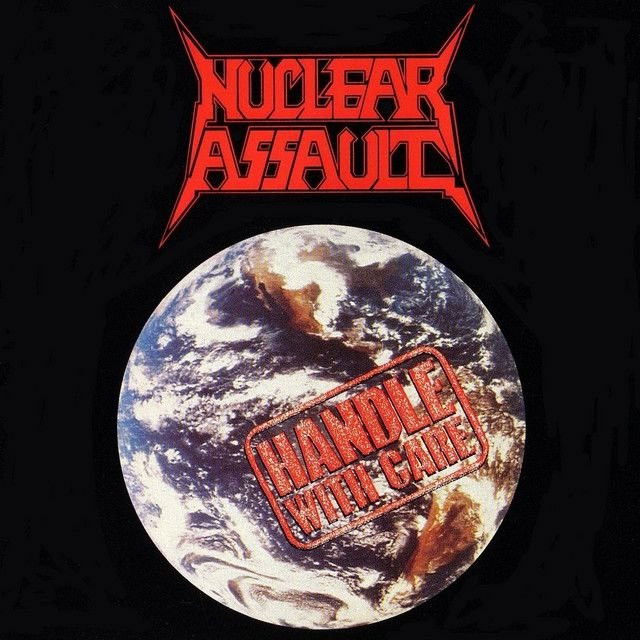
Why 'Search & Seizure' Feels So Claustrophobic
The meaning of Search & Seizure Nuclear Assault starts with a simple idea: an ordinary day can turn hostile in seconds. The song opens with a routine drive, then flips into a police stop, a drawn weapon, bail, and a late-night arrest. That fast shift is the point. Nuclear Assault make daily freedom feel fragile.
"Search & Seizure" - Nuclear Assault
Not in the mood for ordeals
Get in my car just to go for a ride
Loading lyrics...
Unable to load lyrics
We're unable to display the lyrics at this time. Please try again later.
They were a major part of the East Coast thrash scene, a movement known for speed, anger, and social criticism. In that setting, “Search & Seizure” fits naturally. It is not just telling a story; it is turning fear of authority into something loud, fast, and hard to ignore.
A Normal Morning Turns Into a Threat
At first, the narrator is just alive and moving through the day. The details about driving and checking the mirror create a grounded scene. Then one glance backward changes everything. The song’s world is suddenly ruled by flashing lights and suspicion.
That is why the repeated title matters. By boiling the experience down to Search and seizure
, the band uses cold legal language to describe something deeply personal and frightening. The phrase sounds official, but the feeling underneath it is panic.
Interpretation: the song is about more than one traffic stop. It suggests that state power can enter everyday life without warning and reduce a person to a target.
Watch the official Search & Seizure
music video
The Story Moves Like a Chase Scene
One reason the lyrics hit hard is their structure. They move in clean, fast beats:
- A morning drive begins normally.
- Police lights appear behind the car.
- The stop becomes immediately threatening.
- The narrator gets home, but safety does not last.
- Officers return and make an arrest.
That sequence gives the song momentum. It also creates a feeling of no escape. Even after bail, the speaker thinks home means protection, but the knock at the door proves otherwise.
The line about want to step out of the car?
is especially effective because it sounds familiar and procedural. Yet in context, with a gun already drawn, it does not feel like a neutral request. It feels like the moment control is fully lost.
Fear, Innocence, and Power
The emotional center of the song comes from the narrator’s confusion. They ask what they did wrong and insist they do not break laws. Whether listeners take that literally or not, the important thing is the feeling: the speaker sees themself as trapped inside a system already treating them like a criminal.
Short phrases like sirens scream
and moment of pause
show how the body reacts before the mind can catch up. This is not abstract politics. It is adrenaline, dread, and humiliation.
Interpretation: the song can be heard as a criticism of overreach and profiling. The last insult, Come with us, longhair
, suggests appearance may shape how authority sees the narrator. In a metal context, that detail matters. Long hair was part of the culture, and it could mark someone as rebellious before they even spoke.
Why the Hook Sounds So Cold
The chorus is just the title repeated, but that simplicity gives it force. Instead of offering relief or explanation, the hook sounds like a charge sheet. It is blunt, stripped down, and impersonal.
That matters because the verses are full of movement and emotion. The hook interrupts all of that with official language. The contrast makes the narrator feel smaller. A person with a racing heart is being answered by a system with paperwork and force.
There is also a sharp irony here. Outside this song, “search and seizure” can sound like technical law-enforcement language. The phrase also appears in military and maritime contexts such as U.S. “visit, board, search, and seizure” operations, where it describes boarding and inspection tactics (Wikipedia). Nuclear Assault take similar hard-edged language and bring it into civilian life, where it feels invasive rather than orderly.
Thrash Metal Makes the Meaning Land Harder
The meaning of Search & Seizure Nuclear Assault is carried as much by sound as by words. Thrash works through speed, tight riffing, and pressure. That style mirrors the song’s narrative perfectly: there is little room to breathe.
The guitars feel like acceleration. The drums push like a rising pulse. The vocals do not soften the scene; they drive it forward with urgency. In practical terms, the arrangement acts like the flashing lights in the rearview mirror—constant, aggressive, and impossible to ignore.
That is one of thrash metal’s strengths. It can turn a social complaint into a physical sensation. Listeners do not just understand the narrator’s fear. They feel cornered with them.
A Small Story With a Bigger Social Edge
On the surface, this is a compact narrative song. But its wider meaning comes from what it leaves unresolved. There is no real explanation, no fair hearing, and no emotional release. There is only process, force, and repetition.
That makes the song feel political even without a speech. Nuclear Assault do not need to spell out a full argument about policing. They show the imbalance instead. One person goes for a drive; the state arrives armed.
Interpretation: some listeners may hear the song as satire, with a slightly dark, almost absurd escalation from car stop to home arrest. Others may hear it more literally as a protest song. Both readings work because the band keep the focus on intimidation rather than legal detail.
The Lasting Takeaway
What makes this track memorable is how efficiently it turns routine life into a nightmare. The song’s language is simple, but the emotional design is sharp: freedom, interruption, fear, and capture. That is why the meaning of Search & Seizure Nuclear Assault still lands.
In the end, the song is less about solving a case than exposing a feeling: that authority can show up suddenly, speak in flat legal terms, and leave a person shaken long after the sirens stop.
Disclaimer: This interpretation is based on the lyrics, the band’s thrash metal context, and publicly available background. As with any song, meaning can vary by listener.







