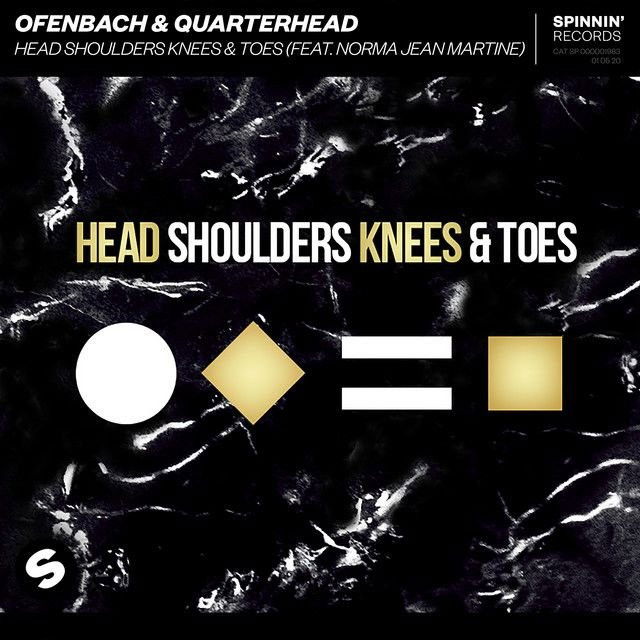
Why ‘Head, Shoulders, Knees & Toes’ Hits Every Nerve
They come for the feel-good bounce, but they stay for the emotional rush. Ofenbach and Quarterhead’s production, paired with Norma Jean Martine’s vocal, turns a simple children’s-chant phrase into a grown-up vow of devotion. If you’ve ever searched for the meaning of Head, Shoulder, Knees & Toes Ofenbach, Quarterhead, Norma Jean Martine, here’s the takeaway: it’s about love you can feel in every cell.
"Head, Shoulder, Knees & Toes" - Ofenbach, Quarterhead, Norma Jean Martine
My bones
Your music gets me through the highs and lows
Loading lyrics...
Unable to load lyrics
We're unable to display the lyrics at this time. Please try again later.
A Love That Lives in the Body
The title’s anatomy list is not a gimmick; it’s the song’s thesis. When the narrator says they feel it in their head, shoulders, knees and toes
, they’re saying it’s full-body, undeniable. The add-on, my bones
, deepens that idea. This is not a crush that flickers in the mind; it settles in the frame.
They link that physicality to resilience. The music—and the person behind it—carries them through life’s swings, the highs and lows
. By rooting emotion in the body, the chorus gives listeners something to chant and to believe. It’s sticky, but it’s also sincere.
Watch the official Head, Shoulder, Knees & Toes
music video
Who’s Talking, and Why It Feels So Intimate
The song speaks in first person to a second-person “you.” That “you” is a lover, a savior, and, in a meta sense, the music itself. When the narrator repeats keeping me from feeling all alone
, it’s a tender confession. The line distills the promise of pop: connection that cuts through isolation.
Because the hook is so direct, the intimacy lands fast. There’s no complicated metaphor to unpack, just a clear message: you are the difference between emptiness and warmth. The result is a club track that feels like a whispered truth.
From Search to Surrender: The Mini-Story
There’s a simple timeline tucked into the verses:
- Searching: They pray to “a thousand different stars,” chasing love across time and faces.
- Finding: They finally meet the “you,” and the chase stops.
- Fusing: Love becomes biological—like a transfusion—so close it’s inside them.
This arc makes the chorus hit harder. It’s not a random chant; it’s the celebratory release after a long, lonely quest. The body imagery serves as proof that the search truly ended.
The Hook That Hugs Back
The chorus works because it’s both playful and primal. The body roll of the title gives listeners an easy script for dancing, while lines like running through my veins
make the emotion feel urgent. That phrasing implies permanence and dependence, almost like a life source.
Interpretation: the refrain turns love into oxygen. It reframes attachment as something necessary and nourishing, not just exciting. That’s why the chant never feels hollow—even after several repeats.
Symbols You Can Feel: Bones, Lungs, Veins
The song rotates through three powerful images. Bones suggest structure—the part of us that keeps us standing. Lungs show breath and presence, echoed in the plea let me breathe you
. Veins indicate circulation and continuity, the evidence that love isn’t fleeting.
Together, these images map a body that has welcomed someone (or something) inside. The “heartbeat in my soul” idea fuses physical rhythm with inner life, which neatly mirrors dance music’s heartbeat: the kick drum.
How the Production Makes the Feeling Physical
Sonically, it’s built for motion. Four-on-the-floor drums lift each phrase, while bright piano stabs and a rubbery bassline keep the groove buoyant. The drop centers the vocal hook so crowds can sing it back in unison. Subtle builds and claps open the mix, like lungs expanding before the hook lands.
Norma Jean Martine’s delivery carries warmth and edge—clear enough for radio, urgent enough for the floor. Ofenbach and Quarterhead shape the dynamics so every return to the chorus feels like stepping back into light. The production doesn’t just carry the words; it enacts them.
Other Ways to Hear It
Interpretation: the “you” could be the lover that ended a restless search. But many listeners hear a second layer—a love letter to music itself. Lines about being kept from loneliness and being able to breathe make sense as a tribute to how songs get people through hard nights.
A third reading sees it as a festival moment scripted for togetherness. The body-parts hook gives a cue for crowd movement, turning thousands of strangers into one organism. That collective pulse is the song’s hidden subject.
Takeaway: The Body Remembers
In the end, the song succeeds because it makes emotion tactile. By the time the last chorus fades, the listener has embodied the message—head to toes, bones to veins. That’s the lasting meaning: love and music feel most real when we can feel them everywhere.
Disclaimer: Song meanings are subjective and reflect one interpretation for discussion and education.








