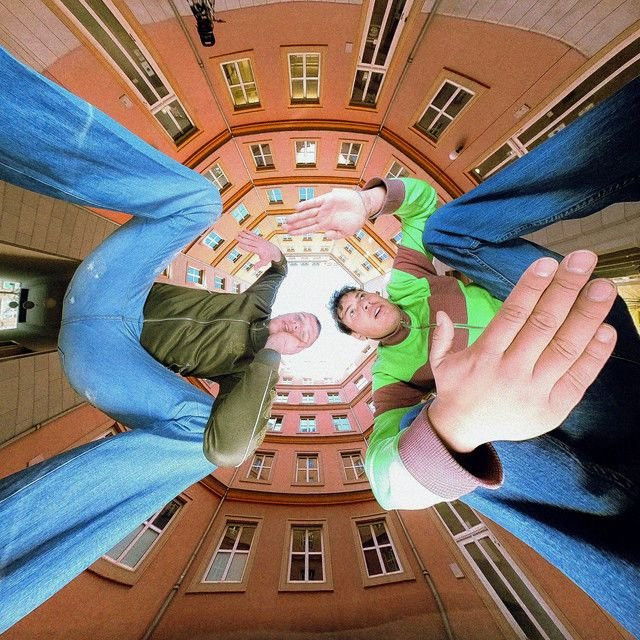
INZIDANCE Is a Party Anthem With a Rotting Core
The meaning of INZIDANCE $OHO BANI, Longus Mongus starts with a joke and ends somewhere darker. On the surface, this is a wild club track: sweaty rooms, shouted hooks, and a dance command built to spread through a crowd. Under that surface, though, the song keeps showing the cost of that energy.
"INZIDANCE" - $OHO BANI, Longus Mongus
(Ich trink' Sekt mit O zum Frühstück, zieh' 'ne Bahn, bevor ich schlaf')
(Küche niemals sauber, Schädel immer voll auf Schaden)
Loading lyrics...
Unable to load lyrics
We're unable to display the lyrics at this time. Please try again later.
Rather than telling a clean story, they pile up snapshots of a night out that feels both exciting and broken. The result is a song that sounds like a celebration, while constantly hinting that the party is already going wrong.
A Hook Built on Wordplay and Bad Timing
The title is the key. Interpretation: “INZIDANCE” appears to fuse the German word associated with incidence rates with the English word “dance.” That makes the hook funny, timely, and uneasy at once.
When they repeat Die Inzidance steigt
, the line works in two directions. It sounds like a dance floor chant, but it also suggests rising danger. That double meaning gives the song its whole identity: people keep moving even when common sense says stop.
The chorus pushes that idea harder with egal, wie der Track heißt
. Paraphrased, the message is simple: the song itself barely matters. The crowd is there for motion, escape, and overstimulation, not for reflection.

Watch the official INZIDANCE
music video
What the Song Is Really Showing
At heart, the track is about compulsive nightlife. They present a cycle of drinking, drug use, dancing, waking up damaged, and then doing it again.
The verses are full of messy details. They mention intoxication early, then move to images of an unclean kitchen, a hurting head, and a body running on fumes. Those details matter because they stop the song from becoming pure fantasy. Even while the beat invites release, the writing keeps pointing back to physical and emotional wear.
One of the bluntest lines is es ist nie genug
. That phrase reveals the emotional engine of the song. Whatever they are chasing, it never satisfies them for long.
Three big ideas running through the lyrics
- Escapism: dancing and substances blur reality.
- Excess: every high demands another push.
- Self-parody: they know how ridiculous they sound.
That third point is important. The track is not written like a moral lecture. It is loud, funny, and exaggerated. But the exaggeration is exactly what makes the emptiness visible.
Two Personas, One Collapse
$OHO BANI and Longus Mongus do not play the same role in the song. Interpretation: $OHO BANI often sounds slicker and more in control, while Longus Mongus leans into grime, damage, and absurdity.
That contrast shows up in the self-descriptions. One line frames cleanliness as swagger with sauber so wie Seife
. Another answers it with a much filthier self-image. Put together, they create a split portrait of nightlife: the polished image people perform and the wrecked reality underneath it.
There is also a comic quality to how they describe themselves. They seem aware that the scene is ugly, but they keep turning that ugliness into a punchline. This makes the song feel less like a straight brag and more like a knowingly trashy snapshot.
How the Chorus Turns Chaos Into Ritual
The repeated command to do the dance gives the track a ritual quality. It is less about individual feeling than group behavior. Once the hook starts, everyone follows it.
Mach' den Inzidance
Mach' den Inzidance
Even in this short refrain, the point is clear: repetition replaces thought. The hook becomes a kind of crowd programming, which fits the song’s larger image of people surrendering to impulse.
This is why the club setting matters so much. The room is described as hot, crowded, and fully in motion. That environment turns private bad choices into a shared social event.
Sound, Energy, and Why the Track Feels So Immediate
The production supports the meaning by keeping things simple, hard, and chant-ready. Even without unpacking every technical choice, listeners can hear how the beat is built for physical reaction first. The rhythm is direct, the hook is repetitive, and the vocals are pushed forward like commands.
That matters because the sound mirrors the song’s theme. There is very little space for doubt or introspection in the arrangement. The track rushes ahead the same way the narrators do.
Interpretation: this lack of space is part of the message. The song does not pause because the characters do not pause. They keep chasing impact, noise, and movement.
Is It a Critique or a Celebration?
The smartest answer is: both. The song absolutely enjoys its own chaos. It is catchy, funny, and designed to hit in a club. But it also keeps exposing the ugly aftereffects of that same chaos.
That tension is what makes the meaning of INZIDANCE $OHO BANI, Longus Mongus more interesting than a basic party anthem. They are not simply praising excess. They are staging it so vividly that its emptiness becomes hard to miss.
In that sense, the track captures a very modern contradiction: people know the night is bad for them, know the scene is absurd, and still throw themselves into it anyway.
Why the Song Sticks
The song lasts because the joke is bigger than the joke. “INZIDANCE” is memorable not just because of its hook, but because it turns reckless behavior into a sharp little cultural image. The dance floor becomes a place where denial, desire, and boredom all meet.
So what is the takeaway? They make nightlife sound thrilling, stupid, funny, and bleak at the same time. That mix is the real hook.
Disclaimer: This article offers interpretation based on the song’s lyrics, performance, and context. Unless the artists have confirmed a meaning directly, some readings remain informed opinion.








