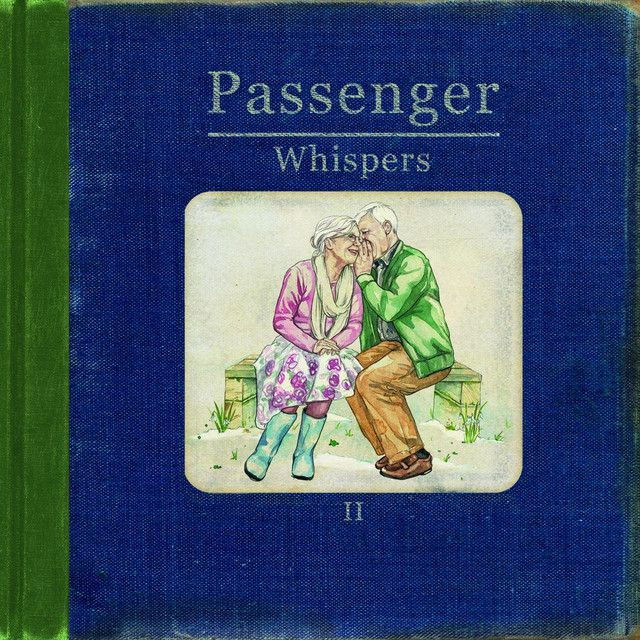
Why "A Thousand Matches" Hurts So Much
A breakup song about love that still remains
The meaning of A Thousand Matches Passenger centers on a painful idea: two people can still love each other and still decide they cannot stay together. That is what gives the song its weight. It is not about betrayal or anger alone. It is about timing, restlessness, and the hard truth that love does not always solve a practical problem.
"A Thousand Matches" - Passenger
Sleeping she looked like an actress in theory and in practice
I said there's got to be a better way
Loading lyrics...
Unable to load lyrics
We're unable to display the lyrics at this time. Please try again later.
Passenger, the stage name of Michael David Rosenberg, is known for intimate acoustic songwriting, especially since All the Little Lights. In this song, they tell a very specific story, but the feeling is broad and familiar. One person is built to move; the other is built to stay. The track turns that mismatch into a gentle argument, then into acceptance.

Watch the official A Thousand Matches
music video
The central conflict: motion versus home
The song opens in a cramped, almost comic scene, with the narrator displaced and uncomfortable. That detail matters because it makes the relationship feel lived-in, messy, and real. From there, the woman in the song delivers the image that frames everything: a thousand matches
.
Interpretation: This image suggests a person who keeps testing danger, pushing life forward, and creating sparks. A match can mean passion, but it can also mean instability. If someone keeps striking matches, they may eventually start a fire they cannot control. Her question is not only about risk. It is about pattern. She seems to know that when things become intense, he may leave rather than stay and face the consequences.
That is why the line about one person going and the other staying keeps returning in different forms. The song is not asking whether they love each other. It is asking whether they can build one life together when their instincts pull in opposite directions.
A story told through small, human moments
The argument never becomes melodrama
One of the smartest parts of the writing is how ordinary the scenes feel. There is frustration, a wall hit in anger, and a joke about the wall being supportive in the best of ways
. That bit of humor matters. It shows a couple trying to survive a serious talk with wit, even while they are both close to breaking.
Passenger often writes with conversational detail, and that style fits here. According to Passenger's official lyrics page, the song lives inside everyday gestures rather than grand declarations. The result is a breakup that feels believable because it is awkward, sad, and sometimes briefly funny.
The heart-shaped stone says more than a speech
The stone shaped like a heart is the song's clearest symbol. She gives him something solid and simple, but also admits he will probably lose it. On the surface, it is a teasing comment about his habits. Underneath, it points to a deeper fear: he cannot hold onto things for long, not objects, not places, maybe not even stability itself.
Sometimes you break your own heart
To set yourself free
Those lines act like the song's thesis. They explain that the separation is not caused by a lack of feeling. It is a choice to accept pain now instead of living in a relationship that keeps fighting its own nature.
What the chorus really means
The chorus is devastating because both people are right. He says love should be spoken aloud, and she answers that love can remain even when people part. The key phrase is let 'em go
. In many songs, that idea sounds noble or clean. Here, it sounds reluctant.
Interpretation: The chorus argues that mature love is not always possession. Sometimes it is honesty. If staying together would force one person to deny who they are, then letting go becomes an act of care, not rejection.
That is why the song lands so hard with listeners. It speaks to relationships where nobody is the villain. The pain comes from incompatibility, not cruelty.
How the music carries the emotion
Passenger's style is usually rooted in folk-pop, with acoustic guitar, clear vocals, and melodies that feel close to spoken conversation. "A Thousand Matches" follows that pattern. The arrangement is not there to distract; it is there to frame the words.
The likely effect of the production is restraint. A soft instrumental setting gives the story room to breathe, and the vocal delivery keeps the sadness human rather than theatrical. When a song like this avoids big sonic drama, every pause feels heavier. The listener hears hesitation in the spaces between lines, which suits a couple struggling to say what both already know.
Why the final station scene matters
The closing walk to the station gives the song its emotional destination. Stations are classic symbols of movement, departure, and choices that cannot be delayed. By placing the goodbye there, Passenger turns a private breakup into a physical crossing point.
The line about what people want and what they need rarely growing together is one of the song's most mature ideas. It suggests that desire and wellbeing do not always match. They may want each other, but they may need different lives.
Final reading: what the song leaves behind
The meaning of A Thousand Matches Passenger is ultimately about loving someone enough to stop pretending love will fix everything. It honors devotion while admitting limits. That honesty is what makes the song sad, but also strangely comforting.
Interpretation: The title image, the heart-shaped stone, and the station goodbye all point to the same lesson: some relationships burn bright, teach something real, and still cannot become a shared home.
That is not failure. In this song, it is the hardest kind of truth.
Disclaimer: This interpretation is based on the lyrics, recording style, and publicly available artist context. Like many songs, it can support more than one valid reading.








