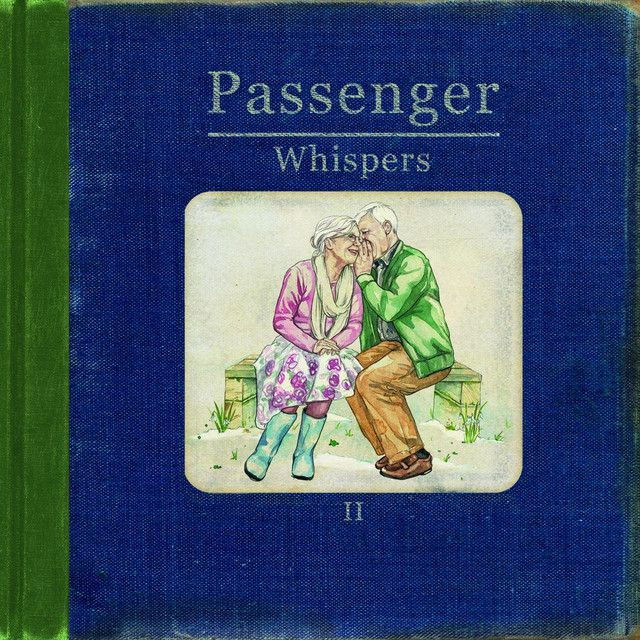
Why 'Catch in the Dark' Hurts So Much
A love song about emotional instability
The meaning of Catch in the Dark Passenger centers on loving someone who is deeply guarded, inconsistent, and hard to hold onto. The song is not just about romance. It is about the exhausting pattern of being needed in private but never fully chosen in public or in daylight.
"Catch in the Dark" - Passenger
Says to leave my front door open
I come home to find her smoking
Loading lyrics...
Unable to load lyrics
We're unable to display the lyrics at this time. Please try again later.
Passenger is the stage name of Michael David Rosenberg, the English singer-songwriter best known for intimate folk-pop writing and stripped-back storytelling. According to Passenger's official site and major streaming credits, Rosenberg wrote the song himself. That matters because the track feels intensely personal: plain language, sharp images, and a narrator who knows the situation is bad but cannot leave it.
From the first verse, the woman reaches out only when she is in pieces. The narrator responds every time. That creates the song's central imbalance: one person arrives in crisis, the other stays in hope.

Watch the official Catch in the Dark
music video
The verses sketch a cycle, not a single night
The story sounds conversational, but it builds a repeating emotional loop. She calls when she is hurting. He returns to find signs of damage and distance. She is described as bad at hope and bad at coping, which suggests someone trapped in self-protection.
When the lyric says broken
and later describes her as never letting people in, the song frames her as both vulnerable and unreachable. The narrator sees her pain clearly, but that insight does not create stability.
Three key moments in the relationship
- She turns up in distress and uses his care as shelter.
- They drink, talk, and circle the same problems.
- She leaves before anything lasting can form.
That pattern is why the song feels sadder than a simple breakup ballad. They are not losing a healthy relationship. They are stuck inside one that never becomes real.
Why the chorus is the song's emotional key
The central image is brilliant because it is so simple. Loving her is like playing catch in the dark
. In plain terms, the narrator is trying to hold onto something he cannot properly see, predict, or receive. Catch requires trust, timing, and cooperation. Darkness removes all three.
That metaphor also explains the narrator's role. He is not passive, but he is reacting rather than living. He keeps his hands out, waiting for connection, apology, honesty, or commitment. Sometimes something reaches him. Often it does not.
The next image raises the stakes. He calls himself a tear drop
in an ocean of flames
. Paraphrased, his sadness is tiny compared with the chaos around her. His love cannot put out the larger fire.
She says if we're single at 40
We'll get married
This is the song's one brief fantasy. It sounds sweet at first, but in context it is evasive. She offers a future safely far away, not a commitment in the present. The promise works more like emotional delay than real hope.
What the woman seems to represent
Interpretation: The woman can be read in two ways.
First, she may simply be a complicated ex or on-and-off partner. The lyrics support this most directly: late-night calls, drinking, emotional mixed signals, and a disappearing act by morning.
Second, she may represent a type of person Passenger often writes about: someone wounded enough to crave closeness, but too frightened to trust it. In that reading, the song is less accusatory than tragic. She is not a villain. She is emotionally unavailable and self-defeating.
That nuance is important. The song never turns cruel. Even when the narrator admits he is a fool, there is tenderness in the way he observes her habits. He understands her damage. He just cannot survive it forever.
Sound and production: quiet music, sharp pain
Passenger's catalog often leans on acoustic guitar, light percussion, and a vocal style that sounds close to the listener. This song fits that approach. The likely effect is intentional: a soft arrangement keeps the focus on emotional detail rather than melodrama.
A busy production would weaken the lyric. Here, the gentler folk-pop setting mirrors the narrator's patience and sadness. They are not screaming their frustration. They are living with it.
That matters to the meaning of Catch in the Dark Passenger because the sound underlines the theme of restraint. The narrator feels deeply, but the performance stays controlled. That gap between strong feeling and quiet delivery makes the song ache.
The line about men who do not stay
One of the song's most revealing moments comes when she asks why her relationships fail. He tells her what her friends already think, and it goes badly. This detail shows two things at once.
First, he knows her patterns well enough to name them. Second, honesty does not fix anything. She wants comfort more than truth, or perhaps truth hurts because it lands too close.
That scene also explains why he remains stuck. He is not just a lover. He has become part confidant, part rescuer, part witness. Those roles can feel intimate even when they never become secure.
Why the ending lands so hard
By the end, they have moved from vague future talk to an empty bed by early morning. He reaches for her, and she is gone. That final action turns the whole song into one last lesson: absence is her truest pattern.
The ending does not need a dramatic confrontation. Its power comes from repetition. She leaves with no warning because, emotionally, she was never fully there.
Final takeaway for listeners
For many listeners, the meaning of Catch in the Dark Passenger is about loving someone they cannot save. It captures the lonely space between chemistry and commitment, empathy and self-protection, hope and denial.
Passenger gives that experience a memorable image and a human scale. The song does not argue that love is false. It suggests that love alone is not enough when trust, timing, and emotional openness are missing.
Interpretation disclaimer: Song meanings can vary by listener. This reading is based on the lyrics provided, Passenger's broader songwriting style, and the song's emotional and musical context.







