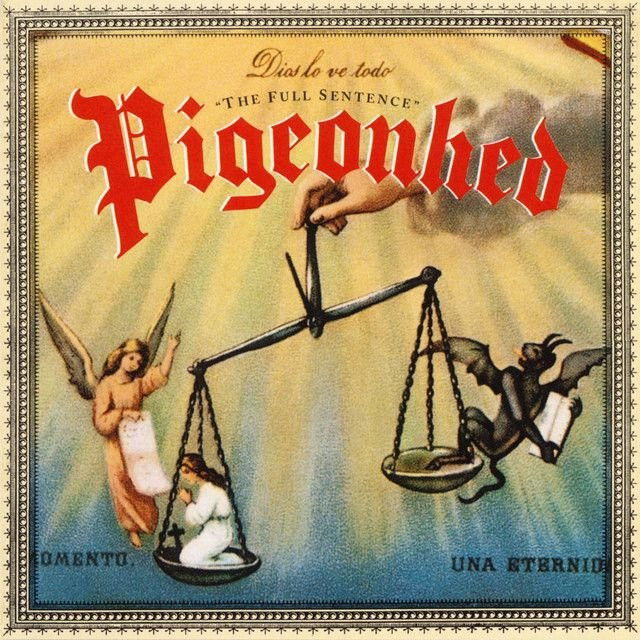
Battle Flag by Pigeonhed
Why This Song Still Hits Hard
The meaning of Battle Flag Pigeonhed starts with pressure. The song sounds like a riot inside one mind and a warning aimed at the world outside it. In plain terms, it turns rage, disgust, and survival instinct into a chant for action.
"Battle Flag" - Pigeonhed
Smells of corruption
I manipulate to recreate
Loading lyrics...
Unable to load lyrics
We're unable to display the lyrics at this time. Please try again later.
Pigeonhed, the Seattle project built around singer Shawn Smith and producer Steve Fisk, first released the song in 1997 on The Full Sentence. A year later, the better-known Lo Fidelity Allstars remix helped push it wider, and that version became the one many listeners know from film, TV, and trailers. According to chart and release summaries, the remix reached No. 6 on Billboard's Modern Rock chart and No. 36 in the UK. Those facts help explain why the song feels bigger than a cult favorite: it became part of late-1990s alternative culture.
Watch the official Battle Flag
music video
The Core Meaning: Corruption, Conflict, and Resistance
At its center, the song attacks systems that feel dirty, fake, or predatory. Early lines point to that idea by connecting power with rot. When the narrator says smells of corruption
, they are not making a small complaint. They are framing the whole world of the song as contaminated.
From there, the lyrics move between personal strain and public revolt. The words suggest someone trapped in a machine that demands obedience, then suddenly flips into defiance. That is why the song keeps sounding both political and psychological.
Interpretation: The track is less a literal story than a state of mind. It presents a person who sees manipulation everywhere and answers it with fury. The title "Battle Flag" fits because a flag is a symbol you raise when conflict is no longer hidden.
A Mind Split in Two
One of the song's strongest images is the idea of inner division. The repeated phrase two hemispheres battlin'
gives the listener a picture of a brain at war with itself.
That image matters because it stops the song from becoming only a protest anthem. The struggle is not just with police, crowds, or corrupt authority. It is also happening inside the speaker. They are overloaded, unstable, and almost daring themselves to keep going.
I'm blown to the maxim
Two hemispheres battlin'
Those two lines, taken together, suggest mental overload. The first line sounds explosive; the second explains why. The battle is external, but also chemical, emotional, and spiritual.
How the Verses Build a Threatening World
Several lines create a mood of coercion. Commands, countdowns, and confrontational questions make the song feel like a hostage scene, a police chase, and a revolution speech all at once. Phrases like tell me what you need
are not comforting here. They sound invasive, as if someone is being pushed to confess, submit, or break.
That is why the profanity matters artistically, even if it is abrasive. It strips away politeness and makes the song feel cornered. Nobody in this track sounds calm, safe, or interested in compromise.
There is also a recurring idea of damaged morality. When the narrator mentions launder my karma
, the song blends spiritual language with criminal language. That twist implies guilt that cannot be cleaned easily. It is a sharp way of saying modern corruption reaches even the soul.
The Chorus Turns Anger Into Action
The song's emotional peak comes when private frustration becomes collective movement. The repeated call about a revolution and the need to organize changes the frame. Suddenly, this is not only one person cracking under pressure. It is a crowd waking up.
The key idea in revolution behind my eyes
is that change begins as vision before it becomes action. First, they see the world differently. Then they want structure, solidarity, and motion.
Interpretation: This is why the song has lasted in sports promos, crime dramas, and trailers. It does not simply say "fight." It says a breaking point has already been reached, and now energy needs direction.
Sound and Production: Why the Message Feels So Physical
The original Pigeonhed version carries a grimy alternative groove, but the Lo Fidelity Allstars remix sharpened the song into a big beat weapon. That remix brought harder breakbeats, a more aggressive loop-driven pulse, and a club-rock force that made the message feel even more cinematic.
This production context matters to the meaning of Battle Flag Pigeonhed. The song is about conflict, and it sounds conflicted: raw vocals against rigid rhythm, swagger against panic, groove against collapse. The beat does not calm the lyrics. It weaponizes them.
That is likely one reason the remix found such a long afterlife in movies, television, and game marketing. Its sound delivers instant tension. Even without every word, listeners can hear danger, pursuit, and uprising.
Artist Context Helps Explain the Tone
Pigeonhed came from a Seattle scene known for mixing rock, funk, soul, and experimental production. Shawn Smith brought a deeply expressive voice, while Steve Fisk had a reputation for adventurous, textured work. The songwriting credit also includes Prince in the supplied credits, which fits the song's funk edge and sexual-political swagger, though release databases more commonly credit Pigeonhed as the writing entity.
That mix of backgrounds helps explain why "Battle Flag" is not neat protest rock. It is sweaty, funky, paranoid, and weird. It wants bodies to move even while the lyrics talk like the world is cracking.
One More Way to Read It
There is another plausible reading beyond politics. Interpretation: the song may also describe addiction, compulsion, or self-destruction. References to sickness, breathing, and death imagery make that possible. In that reading, the external enemies become part of a larger cycle of craving and collapse.
That ambiguity is part of the song's power. It works as social anger, inner breakdown, or both at once.
The Lasting Takeaway
The meaning of Battle Flag Pigeonhed lies in its fusion of revolt and mental overload. It captures the moment when disgust turns into motion, and when personal fracture starts to look like public rebellion.
They made a song that feels dirty on purpose, because its world is dirty. They made it danceable, because anger often spreads faster when it moves.
Disclaimer: This interpretation is based on the lyrics, recording context, and public release history. Like many intense songs, "Battle Flag" supports more than one valid reading.